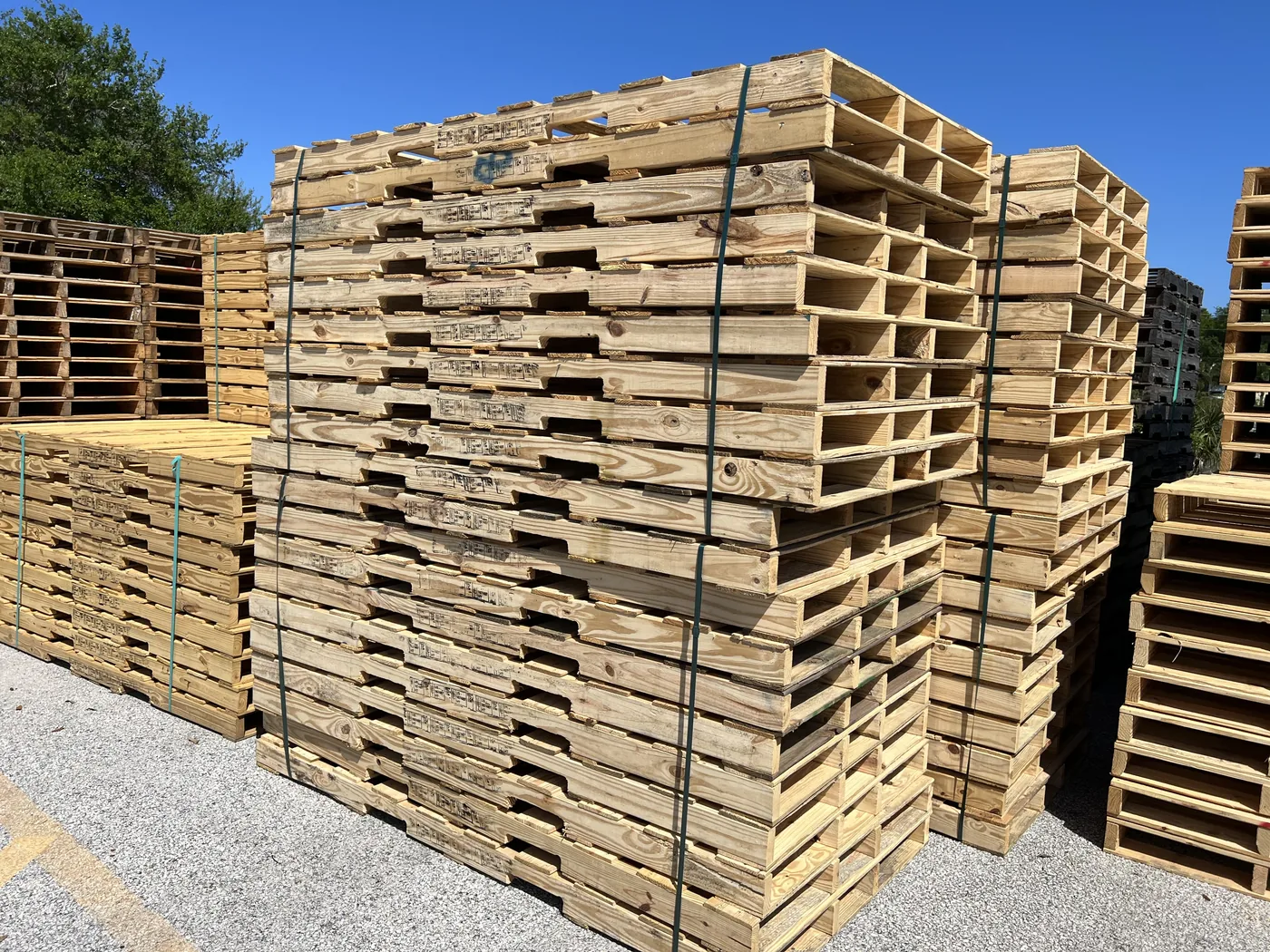
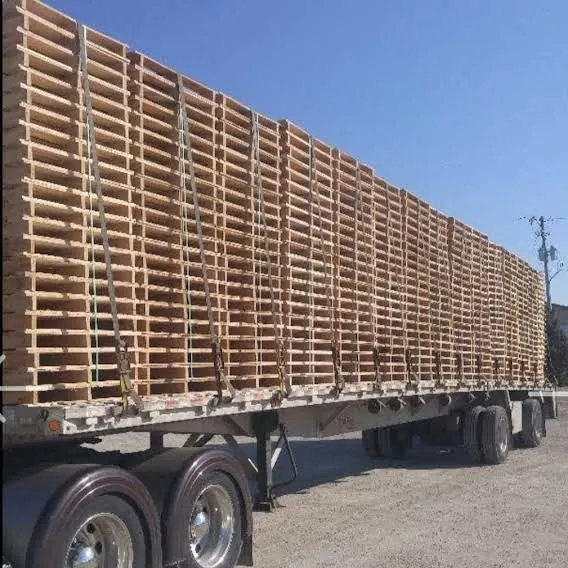
Buckhorn Inc vs United States Pallets: Reusable Bulk Containers vs Whitewood Pallets
Buckhorn Inc is a Menasha Corporation subsidiary specializing in reusable bulk containers, industrial bins, and custom molded packaging for automotive, agriculture, and industrial applications. For enterprise procurement teams comparing Buckhorn against USP, the products are largely complementary rather than directly competitive.
Feature + economics comparison
| Dimension | Buckhorn Inc | United States Pallets |
|---|---|---|
| Product family | Molded plastic bulk containers + bins + custom industrial packaging | Wood + custom + engineered pallets across all verticals |
| Primary application | Bulk material handling + parts containers + agricultural | General pallet supply across all industries |
| Overlap with USP | Custom industrial pallet + skid engineering (partial) | Custom industrial pallets + skids (full) |
| Program model | Dedicated closed-loop or one-time capital purchase | Per-load or standing weekly open-market |
| Per-unit cost | $60-$400+ per container depending on spec | $9-$22 new pallet / $40-$150 heavy-duty custom |
| When both are relevant | Buckhorn for containers, USP for pallets under the containers | Same |
When Buckhorn Inc wins the procurement decision
Buckhorn wins when your requirement is specifically reusable bulk containers or industrial parts bins, not pallets.
When United States Pallets wins the procurement decision
United States Pallets wins for the pallet portion of any program, particularly custom engineered heavy-duty pallets 5k-15k lb load class that support bulk containers or oversized industrial equipment.
Switching cost + hybrid strategy
Complementary suppliers - most enterprise industrial accounts run Buckhorn for reusable containers + USP for pallets under and around those containers. Not a switching decision.
How enterprise procurement teams evaluate Buckhorn Inc vs United States Pallets
Enterprise procurement teams evaluating Buckhorn Inc against alternative pallet programs typically structure the decision as follows. First, decompose the total cost of ownership across 12 cost lines beyond per-pallet unit price - freight lane from staging yard, heat-treatment fuel, labor at receiving desk, chargeback exposure from retailer scorecard, missing-pallet fees for pool programs, audit reconciliation adjustments, finance team labor, reverse-logistics credit as offset, contract termination cost, and documentation flow-down. Both Buckhorn Inc and United States Pallets should decompose their program pricing to these inputs transparently in the RFP response - if either supplier cannot decompose, that is a marketing quote not an economics quote and should be scored accordingly.
Second, weight retailer + DC acceptance friction based on your specific customer footprint. If your outbound goes primarily to Buckhorn Inc-favored destinations, Buckhorn Inc has a legitimate structural advantage. If your outbound is mixed or trends non-Buckhorn Inc, United States Pallets' universal-acceptance whitewood spec captures the acceptance edge.
Third, model contract flexibility + termination cost. Multi-year framework agreements from either supplier lock in pricing but constrain optionality. United States Pallets does not require multi-year exclusivity, which is a real economic option value in a market with unpredictable lumber price cycles + retailer consolidation.
Frequently asked questions about Buckhorn Inc vs United States Pallets
Can I run both Buckhorn Inc and United States Pallets in parallel?
Yes. Many enterprise accounts run hybrid supplier strategy: Buckhorn Inc for lanes where its model wins based on specific retailer participation, existing multi-year contract, or stable predictable volume; and United States Pallets for lanes where transparent per-load pricing, custom sizing, or ISPM-15 export documentation matter more. There is no contract exclusivity from United States Pallets side; the choice is entirely operational and can be revisited per lane as your program evolves.
How quickly can United States Pallets stand up a program on my lanes?
First delivery typically inside 48-72 hours of quote acceptance for standard 48x40 GMA. Custom sizes ship 5-10 business days depending on engineering + tooling. Standing weekly programs kick in on the second delivery once cadence is confirmed with your receiving desk. Peak-season overflow capacity commitments (Q4 retail, harvest, seasonal ramps) are negotiated in writing before program start.
What documentation flow-down does United States Pallets provide?
Standard package: COI (Certificate of Insurance) filed before first delivery, W-9, supplier onboarding packet, GS1-128 SSCC labeling for retail DCs, ISPM-15 IPPC stamp with ALSC accredited facility traceability on export skids, AS9100 + MIL-STD-2073 flow-down for aerospace + defense, cGMP-compatible bacterial-load COA for pharma + biotech. Per-load photo documentation available on request for high-scrutiny receiving desks.
What happens if a shipment misses spec?
Same-day remediation. If a shipment arrives non-conforming to spec, contact the operations team at sales@unitedstatespallets.com with the PO reference and photo of the issue, and we dispatch a replacement load inside the receiving window. If the miss caused a chargeback from your retailer, we credit the chargeback against your next invoice.
Do you have references from accounts my size?
Yes. On request, we share references from named enterprise accounts operating in your industry vertical at comparable volume tiers. References are shared via signed NDA to protect account privacy. Named-buyer reference verification is standard procurement practice and we support it.
Get a written program quote for your account
If your procurement team is evaluating Buckhorn Inc against alternative pallet programs for your 2026 contract, submit the request-quote form and our operations team returns a written comparison quote for your specific account footprint within one business day. The quote decomposes to the four inputs (lumber index, heat-treatment fuel, freight lane, reverse-logistics credit) so you can audit it against your incumbent supplier line-by-line. No obligation, no follow-up calls unless you ask.