For most pallet buyers, freight is the largest and least-controlled part of the delivered cost. The pallets themselves are a known unit price; getting them to the dock - on time, in the right mode, without surprise accessorial charges - is where budgets are quietly won or lost. Understanding the logistics layer is what turns a delivered-pallet number from a mystery into a managed line item.
The foundational choice is mode. Less-than-truckload (LTL) suits small, frequent replenishment but carries freight-class and handling penalties. Full truckload (FTL) is more economical per unit once you can fill a trailer - roughly 600 standard 48x40 GMA pallets in a 53-foot dry van, fewer for oversized or double-stacked loads. Flatbed with tarping, refrigerated (reefer) loading, intermodal, and rail each serve specific lane, product, and cost profiles, and drop-trailer programs remove dock-scheduling friction for high-volume sites.
On top of mode sit the mechanics that determine the final invoice: the bill of lading and who is shipper of record, NMFC freight classification, carrier selection and lane strategy, detention time when trailers sit, fuel surcharges, and whether a load cubes out (fills the space) before it weighs out (hits the weight limit). Cross-border and export flows add customs-broker coordination and seaport staging. The guides below cover each so you can specify freight precisely instead of accepting whatever a carrier quotes.
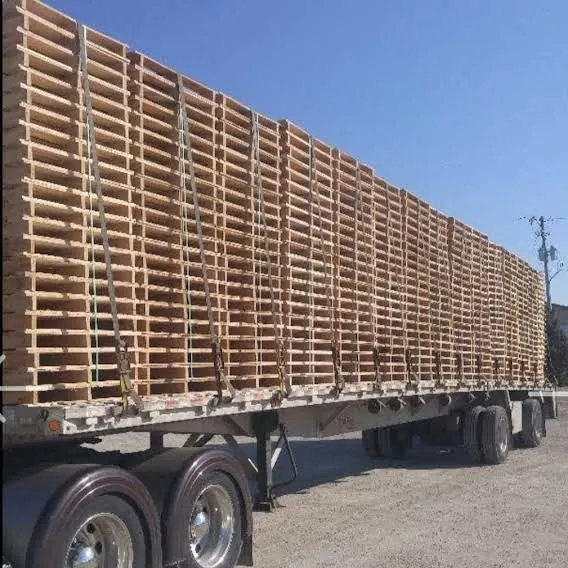
Controlling Pallet Freight Cost End to End
Mode selection. Match the mode to the shipment. LTL for small, frequent draws; truckload once you can fill a van; flatbed for oversized or side-loaded freight; reefer for temperature-controlled product; intermodal and rail for long, steady lanes where transit time is flexible. Truckload-versus-LTL and cube-out-versus-weigh-out are the two decisions that most often move the delivered cost.
Documentation and liability. The bill of lading defines the contract and the shipper of record defines who carries liability and files claims. NMFC freight classification sets the LTL rate and is a common source of reclass surprises - getting the class right up front avoids post-delivery adjustments. Customs-broker coordination and shipper-of-record clarity are non-negotiable on cross-border and export lanes.
Accessorials and timing. Detention time, fuel surcharges, and dock-scheduling misses are the accessorial charges that inflate invoices. Drop-trailer programs, disciplined pickup routing, and trailer-loading software reduce dwell and missed windows. Carrier selection and lane strategy determine both base rate and reliability.
Specialized flows. Intermodal and rail pallet shipping, reefer loading, flatbed tarping, cross-border trucking, customs-broker coordination, and seaport export staging each carry their own rules and documentation. The guides below detail how to specify and stage each so freight is predictable rather than reactive.
Delivered-cost visibility and reverse flows. The goal of managing all of the above is a single, trustworthy delivered-cost-per-pallet number by lane - the figure that lets you compare suppliers honestly and spot creeping accessorial charges before they compound. Reverse logistics matters too: coordinating buyback and empty-pallet pickup on the same lanes that deliver new stock cuts empty miles and recovers value at end of life. Treating outbound delivery and reverse pickup as one routing problem is where sophisticated operations take the last cost out.
Articles in This Category
- 3PL Coordination for Pallet Programs
Logistics guide on 3pl coordination for pallet programs for pallet shipping, carrier coordination, and supply chain optimization. - Cross-Border Pallet Trucking
Logistics guide on cross-border pallet trucking for pallet shipping, carrier coordination, and supply chain optimization. - Cube-Out vs Weigh-Out Loading
Logistics guide on cube-out vs weigh-out loading for pallet shipping, carrier coordination, and supply chain optimization. - Customs Broker Coordination
Logistics guide on customs broker coordination for pallet shipping, carrier coordination, and supply chain optimization. - Drop-Trailer Pallet Programs
Logistics guide on drop-trailer pallet programs for pallet shipping, carrier coordination, and supply chain optimization. - Flatbed Pallet Tarping Best Practices
Logistics guide on flatbed pallet tarping best practices for pallet shipping, carrier coordination, and supply chain optimization. - Intermodal Pallet Shipping
Logistics guide on intermodal pallet shipping for pallet shipping, carrier coordination, and supply chain optimization. - Pallet Bill of Lading Templates
Logistics guide on pallet bill of lading templates for pallet shipping, carrier coordination, and supply chain optimization. - Pallet Carrier Selection
Logistics guide on pallet carrier selection for pallet shipping, carrier coordination, and supply chain optimization. - Pallet Detention Time Charges
Logistics guide on pallet detention time charges for pallet shipping, carrier coordination, and supply chain optimization. - Pallet Freight Classification
Logistics guide on pallet freight classification for pallet shipping, carrier coordination, and supply chain optimization. - Pallet Fuel Surcharges
Logistics guide on pallet fuel surcharges for pallet shipping, carrier coordination, and supply chain optimization. - Pallet Pickup Routing
Logistics guide on pallet pickup routing for pallet shipping, carrier coordination, and supply chain optimization. - Pallet Trucking Lanes
Logistics guide on pallet trucking lanes for pallet shipping, carrier coordination, and supply chain optimization. - Rail Pallet Shipping
Logistics guide on rail pallet shipping for pallet shipping, carrier coordination, and supply chain optimization. - Reefer Pallet Loading
Logistics guide on reefer pallet loading for pallet shipping, carrier coordination, and supply chain optimization. - Seaport Export Staging
Logistics guide on seaport export staging for pallet shipping, carrier coordination, and supply chain optimization. - Shipper of Record for Pallet Shipments
Logistics guide on shipper of record for pallet shipments for pallet shipping, carrier coordination, and supply chain optimization. - Trailer Loading Software for Pallets
Logistics guide on trailer loading software for pallets for pallet shipping, carrier coordination, and supply chain optimization. - Truckload vs LTL Pallet Shipping
Logistics guide on truckload vs ltl pallet shipping for pallet shipping, carrier coordination, and supply chain optimization.
Frequently Asked Questions
When should I ship pallets LTL versus truckload?
Use less-than-truckload (LTL) for small, frequent shipments that cannot fill a trailer - you pay for the space and freight class you use. Switch to full truckload once you can fill or nearly fill a van, because per-unit cost drops sharply. Roughly 600 standard 48x40 GMA pallets fit a 53-foot dry van floor-loaded single-high.
How many pallets fit in a truck?
A 53-foot dry van holds about 26 standard 48x40 pallets floor-loaded in a single layer straight, or roughly 30 turned, and up to about 60 when double-stacked and the load allows it. Oversized or heavy pallets reduce the count. Exact figures depend on pallet footprint, stack height, and whether the load cubes out before it weighs out.
What is the difference between cube-out and weigh-out?
A load cubes out when it fills the trailer's space before hitting the weight limit, and weighs out when it hits the weight limit before filling the space. Light, bulky freight cubes out; dense freight weighs out. Knowing which applies determines whether double-stacking, load pattern, or mode change actually lowers your cost per unit.
How are pallets classified for freight?
LTL shipments are rated by NMFC freight class, which reflects density, handling, stowability, and liability. Pallets and palletized freight are assigned a class that sets the base LTL rate; misclassification is a common cause of post-delivery reclass charges. Confirm the correct NMFC class up front and note it on the bill of lading.
What are detention charges and how do I avoid them?
Detention is charged when a trailer waits at a dock beyond the free loading or unloading window (commonly two hours). Avoid it with accurate appointment scheduling, dock readiness, drop-trailer programs that decouple the truck from the dock, and realistic routing. Detention and fuel surcharges are the accessorials that most often inflate a freight invoice.
What is a drop-trailer program and when does it help?
In a drop-trailer program the carrier leaves a loaded or empty trailer at your site to load or unload on your own schedule, then swaps it later. It removes dock-scheduling friction and detention risk for high-volume sites with steady flow, at the cost of dedicating trailer capacity. It pays off where dock congestion or tight appointment windows cause repeated delays.
What documentation do export pallet shipments need?
Export loads need ISPM-15 heat-treated pallets with a legible IPPC stamp, plus the bill of lading, commercial documentation, and coordination with a customs broker. Seaport export staging aligns the load to vessel cut-off times. Clarifying shipper of record determines who carries liability and files claims across the border.