Pallet procurement quietly determines whether a distribution operation runs smoothly or lurches from shortage to shortage. Buyers who treat pallets as a commodity to be purchased reactively on the spot market pay more, absorb more volatility, and spend more staff time firefighting than buyers who run a structured program. The difference is not volume - it is method.
The first decision is the pricing model. Spot buying is flexible but exposes you to lumber-market swings; the Random Lengths SYP #2 index can move 20% in a quarter, and unhedged buyers feel every point of it. Index-linked contracts with a protection band trade a little upside for a lot of predictability. Fixed-price standing orders lock cost entirely for a defined term. Which model fits depends on your volume stability, your appetite for risk, and how tightly your own pricing is committed downstream.
Around the pricing model sit the mechanics that make a program work: minimum order quantities and volume tiers, credit terms (COD and net-15 while credit is established, moving to net-30/45/60), financing and floor-plan options for capital-intensive builds, consignment and vendor-managed inventory to push carrying cost onto the supplier, and multi-site coordination for operations that span regions. The guides below cover each mechanism, plus the RFQ templates, vendor-vetting checklists, spend-analytics methods, KPIs, and total-cost-of-ownership models that turn pallet buying into a managed function instead of a recurring emergency.
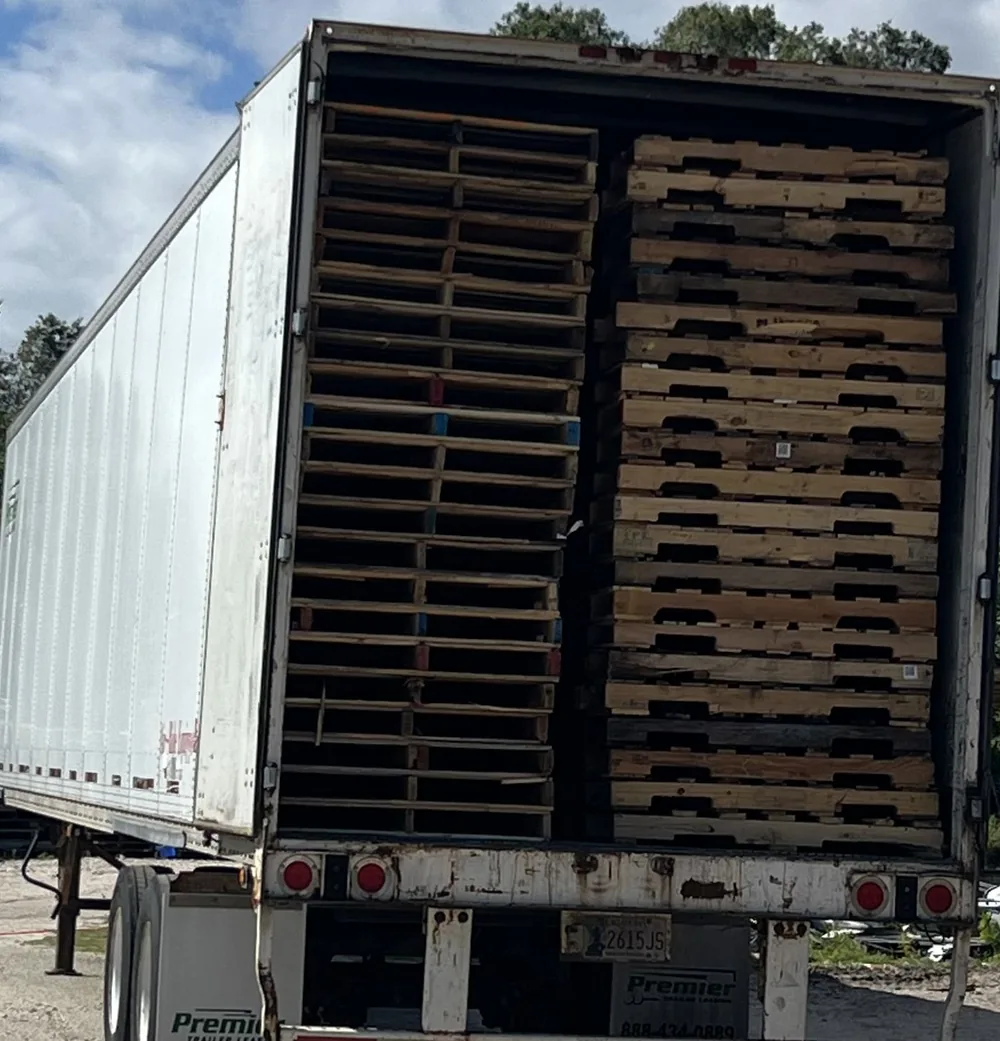
Building a Mature Pallet Procurement Program
Pricing and risk. Choose a pricing model deliberately. Spot, index-linked with a protection band, and fixed standing-order pricing each suit a different volume and risk profile. Volume-tier negotiation and supplier consolidation lower unit cost, but the larger lever is usually converting volatile spot spend into a hedged contract structure that stabilizes your own downstream pricing.
Terms and financing. Credit terms are working capital. COD or net-15 is normal for the first few loads while a supplier establishes your credit; net-30 is the standard target, with net-45/60 available to volume accounts. Where builds are capital-intensive or seasonal, floor-plan financing, consignment, and other financing options keep cash free without starving supply.
Inventory models. Vendor-managed inventory (VMI) and consignment shift carrying cost and stock-out risk to the supplier, who replenishes against agreed min/max levels. These models reward operations with predictable draw and reliable forecasting; they punish erratic demand with awkward true-ups. The guides explain when each pays off.
Process and measurement. A repeatable RFQ (with a standard template and a disciplined vendor-vetting rubric), strategic-sourcing methodology, procurement KPIs, spend analytics, and TCO modeling that counts freight, dwell, repair, and disposal - not just unit price - are what let a procurement organization prove value and defend budget. Multi-site procurement and procurement org design scale the same discipline across regions.
Market intelligence and continuous improvement. Mature programs do not re-bid blindly each year - they track the lumber index, benchmark supplier performance against agreed KPIs, and feed spend analytics back into the next negotiation. Knowing your true cost per delivered pallet by site, lane, and grade turns every renewal into a data-backed conversation, and turns emergency procurement into the rare exception rather than the monthly norm. The guides below give you the templates and models to run that cycle.
Articles in This Category
- COD vs Net Terms for Pallets
Procurement guide on cod vs net terms for pallets including vendor evaluation criteria, contract structure, and financial considerations. - Emergency Pallet Procurement
Procurement guide on emergency pallet procurement including vendor evaluation criteria, contract structure, and financial considerations. - Export Pallet RFQ
Procurement guide on export pallet rfq including vendor evaluation criteria, contract structure, and financial considerations. - Multi-Site Pallet Procurement
Procurement guide on multi-site pallet procurement including vendor evaluation criteria, contract structure, and financial considerations. - Net-30 Terms for Pallets
Procurement guide on net-30 terms for pallets including vendor evaluation criteria, contract structure, and financial considerations. - Pallet Consignment Programs
Procurement guide on pallet consignment programs including vendor evaluation criteria, contract structure, and financial considerations. - Pallet Contract Structure
Procurement guide on pallet contract structure including vendor evaluation criteria, contract structure, and financial considerations. - Pallet Financing Options
Procurement guide on pallet financing options including vendor evaluation criteria, contract structure, and financial considerations. - Pallet Floor-Plan Financing
Procurement guide on pallet floor-plan financing including vendor evaluation criteria, contract structure, and financial considerations. - Pallet Pricing Models
Procurement guide on pallet pricing models including vendor evaluation criteria, contract structure, and financial considerations. - Pallet Procurement KPIs
Procurement guide on pallet procurement kpis including vendor evaluation criteria, contract structure, and financial considerations. - Pallet Procurement Organization Design
Procurement guide on pallet procurement organization design including vendor evaluation criteria, contract structure, and financial considerations. - Pallet RFQ Template
Procurement guide on pallet rfq template including vendor evaluation criteria, contract structure, and financial considerations. - Pallet Spend Analytics
Procurement guide on pallet spend analytics including vendor evaluation criteria, contract structure, and financial considerations. - Pallet Strategic Sourcing Process
Procurement guide on pallet strategic sourcing process including vendor evaluation criteria, contract structure, and financial considerations. - Pallet Supplier Consolidation
Procurement guide on pallet supplier consolidation including vendor evaluation criteria, contract structure, and financial considerations. - Pallet Total Cost of Ownership
Procurement guide on pallet total cost of ownership including vendor evaluation criteria, contract structure, and financial considerations. - Pallet Vendor Vetting
Procurement guide on pallet vendor vetting including vendor evaluation criteria, contract structure, and financial considerations. - Pallet Volume Tier Negotiation
Procurement guide on pallet volume tier negotiation including vendor evaluation criteria, contract structure, and financial considerations. - Vendor-Managed Pallet Inventory (VMI)
Procurement guide on vendor-managed pallet inventory (vmi) including vendor evaluation criteria, contract structure, and financial considerations.
Frequently Asked Questions
Should I buy pallets on the spot market or under contract?
Spot buying is flexible and fine for irregular, low-volume needs, but it exposes you to full lumber-market volatility. If your volume is steady and your own downstream pricing is committed, an index-linked contract with a protection band or a fixed standing-order price stabilizes cost and staff time. The more predictable your draw, the more a contract pays off.
How do index-linked pallet prices work?
Index-linked pricing ties your per-pallet cost to a published lumber benchmark - commonly Random Lengths SYP #2 - so both parties share transparent market movement. A protection band (for example plus or minus 15%) caps how far price can swing within a term, giving you predictability without a fully fixed price that a supplier would risk-load.
What does it take to get net-30 terms on pallets?
Most suppliers run the first one to three orders on COD or net-15 while establishing your credit, then extend net-30 after a credit application with trade references - typically approved within a couple of business days. Volume accounts with payment history can negotiate net-45 or net-60. Terms are effectively free working capital, so they are worth negotiating deliberately.
What is vendor-managed inventory (VMI) for pallets?
Under VMI the supplier owns replenishment against agreed minimum and maximum stock levels at your site, monitoring usage and restocking before you run out. It shifts carrying cost and stock-out risk to the supplier and frees your team from reorder management. It works best with predictable draw and reliable forecasting; erratic demand makes true-ups awkward.
How is pallet consignment different from VMI?
With consignment the supplier stages inventory at your site but you only pay as pallets are consumed, so unused stock stays the supplier's asset on your floor. VMI is about who manages replenishment; consignment is about when title and payment transfer. Operations often combine them - consigned stock replenished under a VMI agreement.
How do I run a pallet RFQ properly?
Standardize the request: exact specs (size, grade, treatment, load rating), annual and per-order volume, delivery cadence and locations, terms, and documentation requirements. Send the same template to every vendor so bids are comparable, score responses on a consistent vetting rubric (capacity, lead time, quality system, references), and evaluate on total cost of ownership rather than unit price alone.
What costs should a pallet TCO model include?
Total cost of ownership goes well beyond unit price: inbound freight, dwell and detention, storage and handling, repair and re-grade, disposal or buyback recovery, defect and rejection rates, and the administrative cost of managing the vendor. A cheaper pallet with high freight, short life, and no buyback often costs more delivered than a higher-spec pallet in a managed program.