The material a pallet is built from decides almost everything that matters downstream: what it costs, how many trips it survives, whether it clears customs, and how much weight it can carry on a rack. Before you compare suppliers on price, it pays to understand what you are actually buying - because a $7 recycled Grade B stringer pallet and an $18 new block pallet are different tools for different jobs, not cheap and expensive versions of the same thing.
Most pallets in North American distribution are wood, and most of that wood is Southern Yellow Pine (SYP) #2 - the dominant new-build lumber because it is dimensionally stable, holds a nail well, and is priced competitively against Pacific Northwest and hardwood stock. Mixed hardwood (oak, maple, ash, hickory) enters where loads are heavy or abusive and a 600+ specific-gravity board earns its premium. Beyond wood, plastic (HDPE and polypropylene) wins in hygienic, closed-loop, and wash-down applications; presswood and molded pallets ship light and nest for export; and steel or aluminum pallets serve heavy-duty racking and specialized industrial flows.
Grade is a second axis independent of species. New GMA pallets are built to a known specification; recycled Grade A pallets are inspected, defect-free, and carry near-new load ratings; recycled Grade B pallets are structurally sound but show repaired boards and are rated for lighter industrial duty. Layered on top of both are the construction details that separate a pallet that lasts from one that fails early: deck-board thickness, stringer spacing, block versus stringer design, fastener type and corrosion resistance, moisture content, and heat treatment. The guides below break each of these down.
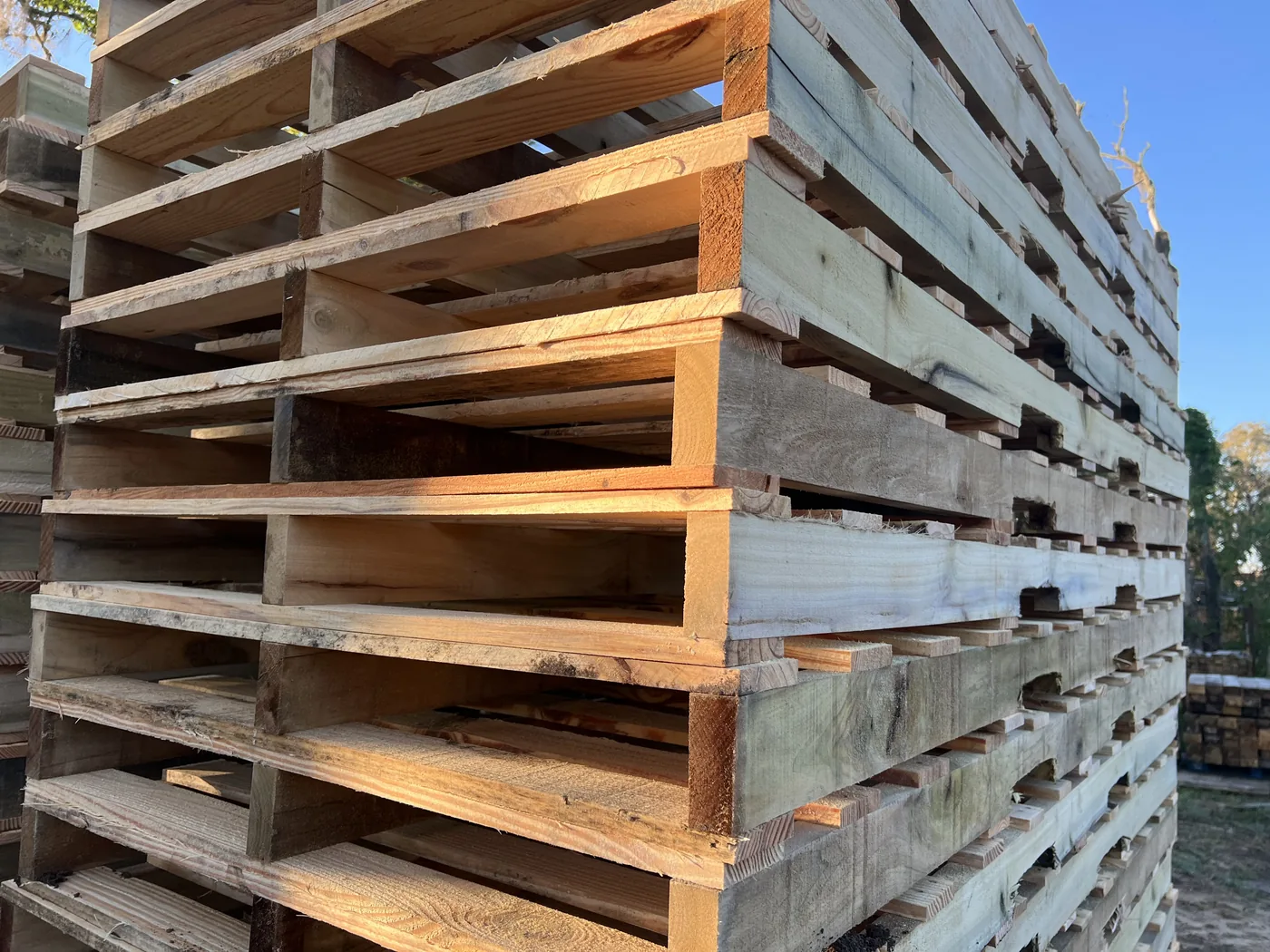
How to Choose the Right Pallet Material
Wood species. Softwood (chiefly SYP, sometimes Douglas fir) is the default for general distribution: consistent, economical, and easy to repair. Hardwood blends cost more but resist splitting under heavy dynamic loads and are the right call for automotive, machinery, and dense building-material freight. Softwood-versus-hardwood is a load-and-budget decision, not a quality ranking - matching species to the actual load spec is where money is saved or wasted.
Grading and moisture. Lumber grade (No. 2 versus No. 3) governs how many knots, wane, and defects are allowed, which in turn drives nail-holding and load capacity. Moisture content matters just as much: stock kiln-dried below 19% is dimensionally stable, resists mold and decay, and is a prerequisite for heat-treated export pallets. Heat treatment (HT) and kiln drying (KD) are often confused - they overlap but are not the same certification, and only HT satisfies ISPM-15 for international shipping.
Construction geometry. Block pallets (nine support blocks, continuous decks, true four-way entry) outlast stringer pallets because load forces distribute across more contact points. Deck-board thickness, stringer spacing, and fastener pattern determine dynamic, static, and racked load ratings under ASME MH1. Fastener choice is the quiet failure point: screw-shank galvanized nails resist withdrawal and corrosion, while plain fasteners loosen and rust in humid or wash-down environments.
Non-wood options. Plastic pallets carry a higher unit cost but pay back in closed loops through hundreds of hygienic, consistent-weight trips. Presswood and molded pallets are light, nestable, and export-exempt from ISPM-15. Metal pallets serve the heaviest racking and fire-sensitive applications. Corrugated (cardboard) pallets fit ultra-light, single-use, air-freight-sensitive shipments. Each has a narrow but real sweet spot documented in the guides below.
Articles in This Category
- Cardboard Pallets: Single-Use Export
Materials science guide for cardboard pallets: single-use export including industry standards, technical specifications, and procurement considerations. - Chemical Treatment for Pallets
Materials science guide for chemical treatment for pallets including industry standards, technical specifications, and procurement considerations. - Douglas Fir Pallets
Materials science guide for douglas fir pallets including industry standards, technical specifications, and procurement considerations. - Eco-Pallets: High Recycled-Content Construction
Materials science guide for eco-pallets: high recycled-content construction including industry standards, technical specifications, and procurement considerations. - Heat Treated vs Kiln Dried Pallets
Materials science guide for heat treated vs kiln dried pallets including industry standards, technical specifications, and procurement considerations. - Kiln-Dried Pallets for Cold Chain
Materials science guide for kiln-dried pallets for cold chain including industry standards, technical specifications, and procurement considerations. - Metal Pallets: Steel and Aluminum
Materials science guide for metal pallets: steel and aluminum including industry standards, technical specifications, and procurement considerations. - Mixed Hardwood Pallets
Materials science guide for mixed hardwood pallets including industry standards, technical specifications, and procurement considerations. - No. 2 Lumber Grade for Pallets
Materials science guide for no. 2 lumber grade for pallets including industry standards, technical specifications, and procurement considerations. - No. 3 Lumber Grade for Pallets
Materials science guide for no. 3 lumber grade for pallets including industry standards, technical specifications, and procurement considerations. - Oak Pallet Specifications
Materials science guide for oak pallet specifications including industry standards, technical specifications, and procurement considerations. - Pallet Block Construction
Materials science guide for pallet block construction including industry standards, technical specifications, and procurement considerations. - Pallet Decay Resistance and Wood Treatment
Materials science guide for pallet decay resistance and wood treatment including industry standards, technical specifications, and procurement considerations. - Pallet Deck Board Thickness Standards
Materials science guide for pallet deck board thickness standards including industry standards, technical specifications, and procurement considerations. - Pallet Dimensional Stability
Materials science guide for pallet dimensional stability including industry standards, technical specifications, and procurement considerations. - Pallet Fastener Corrosion Resistance
Materials science guide for pallet fastener corrosion resistance including industry standards, technical specifications, and procurement considerations. - Pallet Fasteners: Nails, Staples, Screws
Materials science guide for pallet fasteners: nails, staples, screws including industry standards, technical specifications, and procurement considerations. - Pallet Moisture Content Standards
Materials science guide for pallet moisture content standards including industry standards, technical specifications, and procurement considerations. - Pallet Paint and Coating Options
Materials science guide for pallet paint and coating options including industry standards, technical specifications, and procurement considerations. - Pallet Stringer Spacing Standards
Materials science guide for pallet stringer spacing standards including industry standards, technical specifications, and procurement considerations. - Plastic Pallets: When and Why
Materials science guide for plastic pallets: when and why including industry standards, technical specifications, and procurement considerations. - Presswood (Compressed Wood) Pallets
Materials science guide for presswood (compressed wood) pallets including industry standards, technical specifications, and procurement considerations. - Softwood vs Hardwood Pallets
Materials science guide for softwood vs hardwood pallets including industry standards, technical specifications, and procurement considerations. - Southern Yellow Pine Pallets
Materials science guide for southern yellow pine pallets including industry standards, technical specifications, and procurement considerations. - Wood Species for Pallet Construction
Materials science guide for wood species for pallet construction including industry standards, technical specifications, and procurement considerations.
Frequently Asked Questions
What pallet material is best for my product?
There is no single best material - it depends on load weight, reuse cycle, hygiene needs, and whether the pallet ships internationally. Southern Yellow Pine covers most general distribution economically; mixed hardwood handles heavy or abusive loads; plastic wins in closed-loop, wash-down, and hygienic flows; presswood and corrugated fit light, export, or single-use shipments. Match the material to the actual load spec rather than defaulting to the cheapest unit price.
What is the difference between softwood and hardwood pallets?
Softwood (mainly Southern Yellow Pine) is lighter, cheaper, dimensionally stable, and easy to repair - the default for general distribution. Hardwood blends (oak, maple, ash, hickory) at 600+ specific gravity resist splitting under heavy dynamic loads and last longer in abusive service, but cost more and weigh more. It is a load-and-budget trade-off, not a quality ranking.
When should I choose plastic pallets over wood?
Plastic pays back in closed-loop systems where the same pallets circulate for hundreds of trips, in hygienic or wash-down environments (food, pharma, medical), and where consistent tare weight matters for automated handling. The higher unit cost is amortized over reuse. For open, one-way, or highly variable distribution, wood usually remains more economical.
What is the difference between heat-treated and kiln-dried pallets?
Kiln drying reduces moisture content for dimensional stability and mold resistance. Heat treatment (HT) raises the wood core to 56 degrees C for 30 minutes to meet ISPM-15 for international shipping. The processes overlap but are not identical - a pallet can be kiln-dried without being ISPM-15 certified, and only the HT stamp clears customs for export.
What moisture content should a pallet have?
New build stock is typically kiln-dried below 19% moisture content. Below 19% resists mold, fungal growth, and dimensional change, and is the standard threshold for heat-treated export pallets. Green (undried) lumber is heavier, prone to warping and mold, and unsuitable for long storage or export.
Do pallet fasteners really matter?
Yes - fasteners are a common early-failure point. Screw-shank or ring-shank galvanized nails resist withdrawal and corrosion far better than smooth fasteners, which loosen under vibration and rust in humid or wash-down settings. Fastener corrosion resistance is especially important for food-grade, refrigerated, and coastal operations.
Are recycled-content pallets as strong as new ones?
Recycled Grade A pallets are inspected, defect-free, and carry load ratings at or near new specification - about 2,500 lb dynamic and 4,600 lb static for a standard 48x40 under ASME MH1. Recycled Grade B pallets are structurally sound but show repaired boards and are rated for lighter industrial loads. Proper grading, not the recycled label, determines strength.