Pallet Recycling Lifecycle Analysis 2026
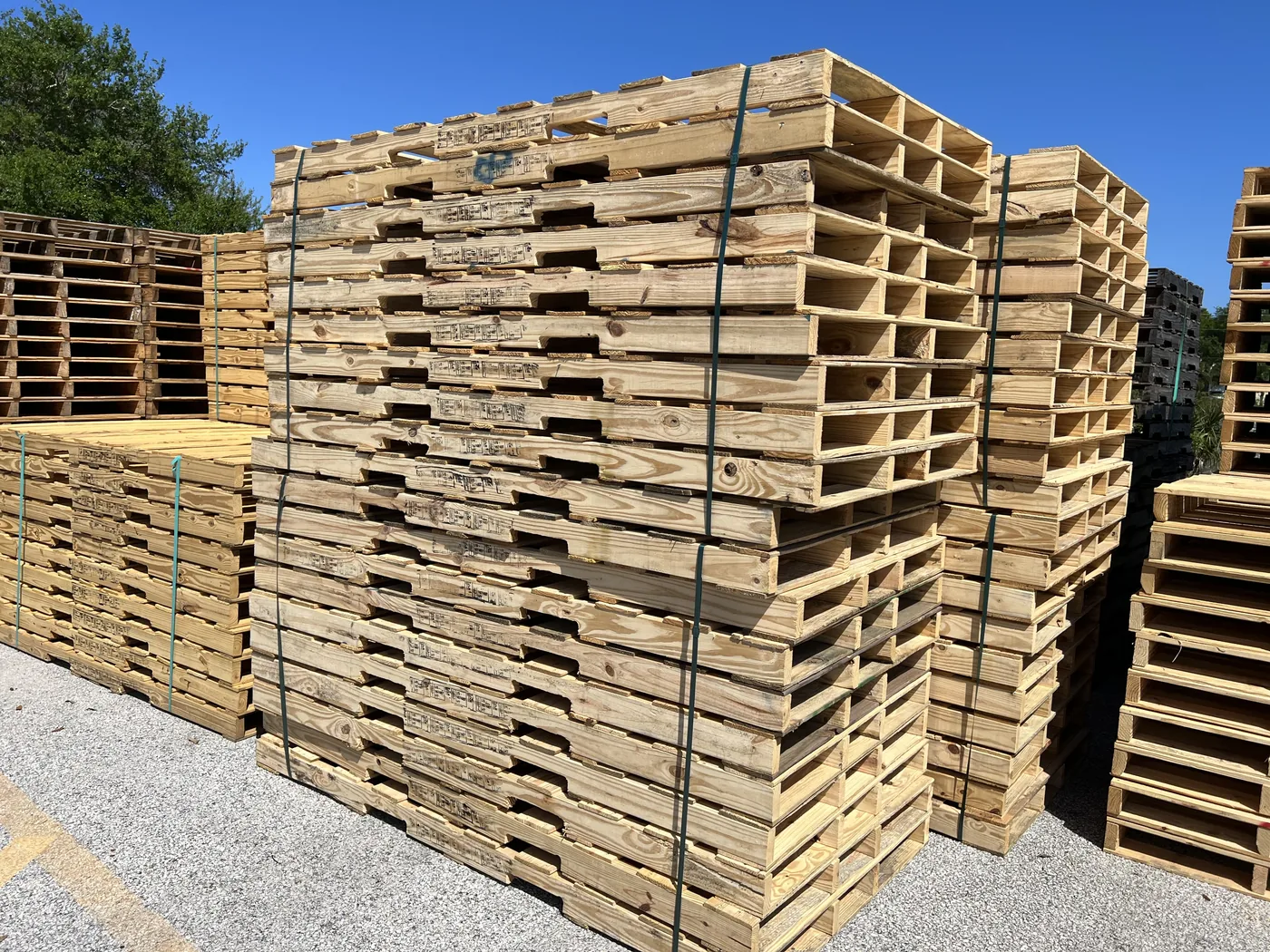
A new 48x40 GMA pallet completes 10-15 trips before requiring refurbishment; refurbished to Grade A it completes another 5-8 trips; refurbished to Grade B it completes 2-4 more trips before component lumber recovery. Full lifecycle: 17-27 productive trips per pallet, reducing lumber consumption 60-80% vs single-use production.
Author: Mark Gabrielli, Founder, WETYR Corporation (parent of United States Pallets + Florida Pallet Supply).
Last verified: 2026-08-05 by Mark Gabrielli. Direct: mark@unitedstatespallets.com.
The pallet lifecycle - stage by stage
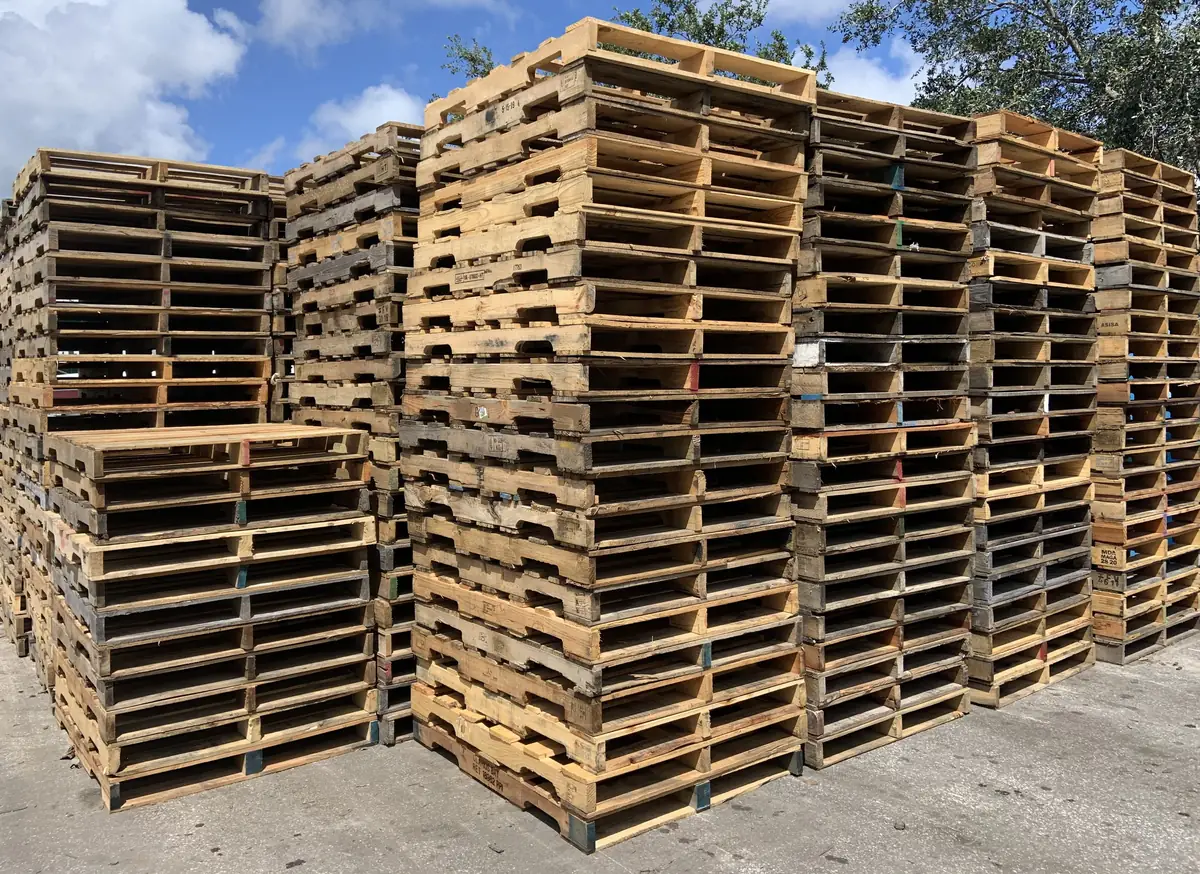
- Stage 1: New production (0-15 trips). Southern Yellow Pine (SYP) or Douglas Fir kiln-dried to <19% moisture. Ring-shank nails or helical-thread fasteners flush-driven. Grade A construction: clean-face, no protruding fasteners, board thickness consistent. Load-rated 3,000 lb static / 2,500 lb dynamic.
- Stage 2: Grade A refurbishment (16-23 trips). Damaged deck boards replaced, fasteners tightened, clean-face restored. Post-refurb spec matches new: 2,500 lb static rating (slightly below new due to accumulated fatigue). Priced 30-50% below new at $10-14 standing weekly vs $15-22 new.
- Stage 3: Grade B refurbishment (24-27 trips). More extensive board replacement, load rating drops to 1,800-2,200 lb static. Suitable for internal/non-export/non-retail use only. Priced $6-10 standing weekly.
- Stage 4: Component recovery. Salvageable deck boards + stringers pulled for reuse in refurbishment of other pallets. Non-salvageable lumber goes to certified biomass fuel or mulch.
CO2 reduction from pallet recycling
Every kiln-dried board-foot of new SYP pallet lumber represents approximately 6-8 lb of CO2 embedded in the lumber (harvest + transport + kiln-dry + fabrication). A recycled pallet reused for 15+ additional productive trips displaces the equivalent of 3-5 new pallets - a CO2 reduction of 200-500 lb per recycled unit over its extended lifecycle.
Enterprise ESG reporting: USP standing weekly customers receive quarterly sustainability reports covering: pallet lifecycle tracking, recycling rate, tons of lumber displaced, CO2 reduction vs new production, and buyback pickup summary. Reports available for corporate ESG disclosure filings.
USP buyback program economics
USP pays $1-4 per empty pallet returned depending on condition:
- Grade A (clean-face, load-ready): $3-4/pallet
- Grade B (repairable, minor damage): $2-3/pallet
- Damaged (salvageable lumber): $1-2/pallet
- Unusable (broken/waterlogged/contaminated): $0, removed at USP cost for standing weekly customers
Standing weekly customers get pickup on the same route as delivery - no additional freight cost. Non-standing customers with 100+ empty pallets schedule pickup separately. Payment issued within 7 business days via ACH or credit against next USP invoice.
Total-cost-of-ownership advantage of a recycled + buyback loop
| Buyer strategy | Cost per pallet-trip | Waste output | ESG impact |
|---|---|---|---|
| Buy new every trip (worst case) | $1.40-2.20 | Dispose after every trip | Worst - full lumber cost per trip |
| Buy new, dispose after 10 trips | $0.15-0.32 | Dispose after 10 trips | Baseline |
| Buy new + USP buyback at end-of-life | $0.10-0.24 (net of buyback) | Recovered by USP | Better - components recovered |
| Buy recycled Grade A + USP buyback | $0.06-0.18 (net of buyback) | Recovered by USP | Best - 60-80% lumber savings |
Get a pallet quote in under 2 business hours
50-pallet minimum. Same-day service in the East Coast + Southeast footprint.
Request QuoteCall (321) 917-5738Industry data sources
Pricing referenced against CME Group softwood lumber futures. ISPM-15 compliance verified through the ALSC accredited-facility registry. Industry framework: NWPCA + GS1 US + FDA FSMA 204 traceability rule.
Get a pallet quote in under 2 business hours
50-pallet minimum. Same-day service in the East Coast + Southeast footprint.
Request QuoteCall (321) 917-5738