ISPM-15 Export to Japan - Complete Guide
ISPM-15 requirements for export to Japan
Japan requires ISPM-15 heat-treated wood packaging material on all inbound container shipments. Japan requires ISPM-15 with strict enforcement. Non-compliant wood packaging is destroyed at Japanese ports at shipper expense. Major entry points include Tokyo, Yokohama, Kobe, Nagoya, Osaka.
The ISPM-15 standard, adopted by the International Plant Protection Convention (IPPC) in 2002 and revised most recently in 2018, specifies wood packaging material must be either heat-treated to 133 degrees Fahrenheit core temperature held for 30 minutes, or (rarely, and being phased out) fumigated with methyl bromide. Heat-treatment (HT) is the primary method used across US pallet supply and is what USP provides for Japan-bound shipments.
Japan enforcement authority and process
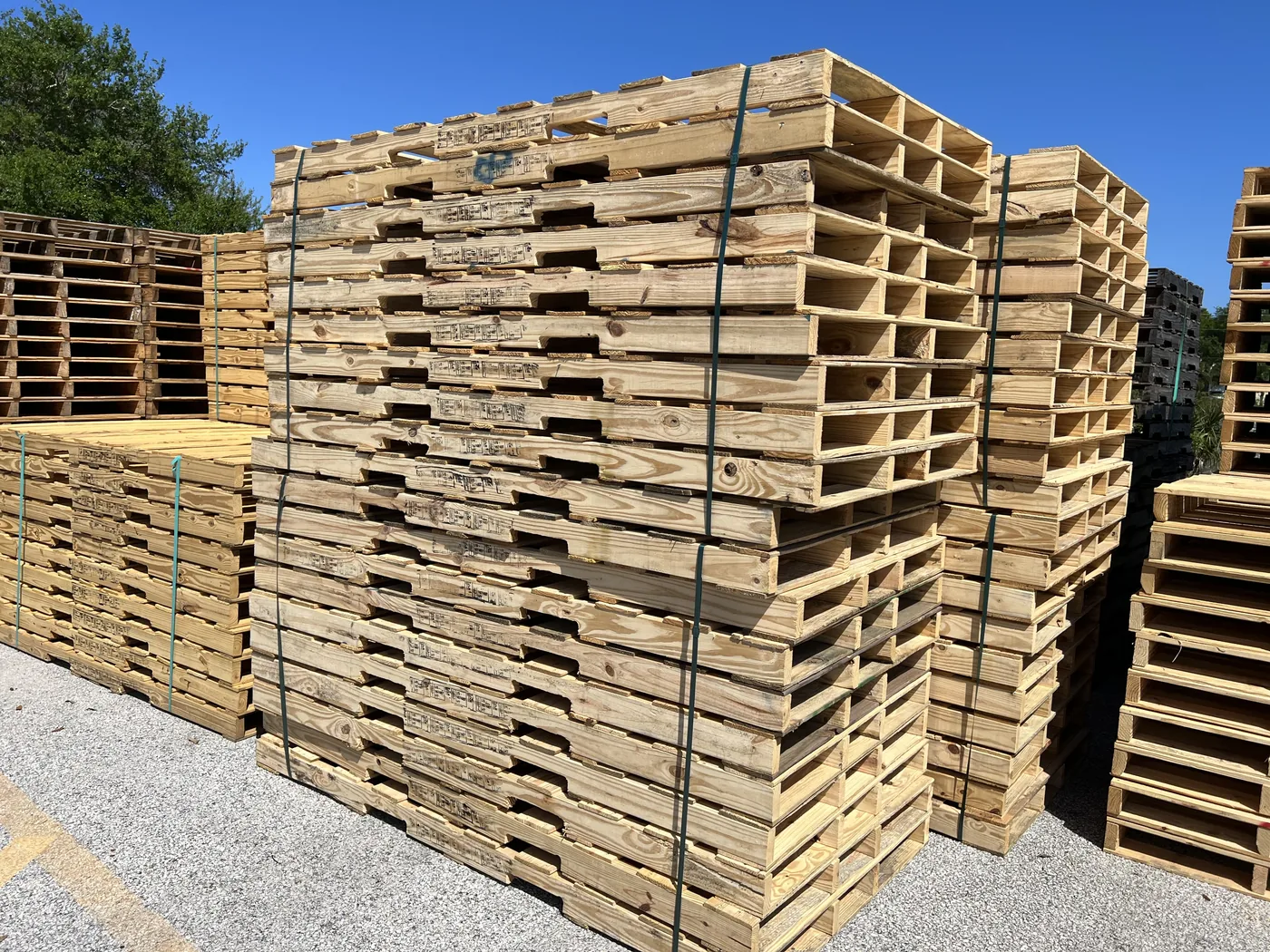
Ministry of Agriculture, Forestry and Fisheries (MAFF) enforces ISPM-15 compliance at Japan's ports of entry. Inspection typically occurs at container-opening at the destination port. Compliance is verified by checking for the IPPC-mandated stamp on the pallet, which identifies the treatment facility code, the country of treatment (US = US), and the treatment method (HT for heat treatment).
If a container arrives without visible ISPM-15 stamps or with damaged/illegible stamps, Japan customs typically holds the container for inspection. If inspection cannot verify compliance, options are destruction at the port (shipper pays), in-place fumigation (potentially damaging to cargo), or re-export to origin (shipper pays return freight). All three carry significant cost - often thousands of dollars per container plus delayed delivery.
Common cargo categories exported to Japan
- Consumer electronics
- Automotive parts
- Machinery
- Chemical products
- Aerospace components
- Precision instruments
How USP sources ISPM-15 for Japan shipments
USP routes ISPM-15 orders through IPPC-accredited kiln facilities in the national vendor pool. Each kiln is registered with the American Lumber Standards Committee (ALSC) which oversees IPPC-accredited heat treatment in the US. The IPPC facility code stamped on each pallet is verifiable against the ALSC directory - buyers can confirm any USP-supplied ISPM-15 pallet came from a legitimate certified facility.
The treatment cycle is documented at the kiln facility with time and temperature records. USP includes these records in the shipment documentation package for buyers whose Japan import operations require documented compliance evidence beyond the physical stamp.
Lead time and routing to Japan ports
Standard USP lead time for ISPM-15 heat-treated pallets is 1-3 business days from order to buyer's US shipping location. Kiln scheduling can add 1-3 additional days for large orders (500+ pallets) or specialty specifications (custom sizes, heavy-duty engineered pallets).
For Japan-bound container shipments, buyers typically order ISPM-15 pallets to their US container-loading facility, load the container with ISPM-15 pallets, and ship via ocean carrier. USP does not handle the ocean freight portion - that goes through the buyer's freight forwarder or the ocean carrier directly. USP's role is ensuring the pallets are certified-compliant when they arrive at the buyer's loading dock.
Pricing for Japan-bound ISPM-15 pallets
ISPM-15 heat-treated pallets carry a modest premium over untreated pallets - typically $4-8 per pallet depending on volume and spec. That premium covers the kiln-treatment cost and the certification/documentation overhead. USP's national pricing benchmarks for ISPM-15 heat-treated pallets run $28-40 per pallet in the Southeast/Mid-Atlantic corridor, $26-38 in the Midwest, and $30-44 on the West Coast for 2026.
Volume-tier discounts for standing Japan programs
USP offers volume-tier discounts for standing weekly ISPM-15 programs. Full-truckload quantities (500+ pallets) receive 25-32 percent discounts versus catalog pricing. Standing weekly programs (500+ per week for 12+ weeks) receive an additional 5-10 percent plus routing priority for consistent lead-time delivery.
Documentation package included with every Japan ISPM-15 order
USP ships every ISPM-15 order with a complete documentation package. Included: kiln facility certification with IPPC facility code, treatment cycle record (time and temperature), material specification sheet, moisture content certification, and any additional documentation the buyer's Japan import operation requires. This is standard - not an add-on service.
Common mistakes exporting to Japan and how to avoid them
Four mistakes come up regularly on Japan-bound shipments. First, ordering "ISPM-15 pallets" without verifying the facility code on the actual pallet matches an IPPC-accredited facility - some suppliers apply stamps that reference facilities that aren't actually IPPC-accredited. Second, using pallets that were treated years ago (some countries have implicit "recent treatment" expectations) - USP's rotation ensures treatments are recent. Third, mixing treated and untreated pallets in a single container - one untreated pallet can trigger the entire container's rejection. Fourth, damaged or illegible stamps that pass US-side inspection but fail Japan customs.
Prevention is USP's default: verified IPPC facility codes, recent treatment rotation, documented all-ISPM-15 loads, and quality-controlled stamp legibility on every shipment.
Ready to source ISPM-15 pallets for Japan export?
Send USP your spec, weekly volume, and US shipping location. Written quote in under 2 business hours. Full documentation package included, kiln facility certified, IPPC compliant.
Request a Quote →Related USP resources
- All ISPM-15 country guides
- ISPM-15 encyclopedia entry
- Buy ISPM-15 heat-treated pallets
- ISPM-15 pricing benchmarks
Frequently asked questions
Is ISPM-15 required for pallets shipping to Japan?
Yes. Japan requires ISPM-15 heat-treatment for all wood packaging material on inbound shipments. Enforcement is handled by Ministry of Agriculture, Forestry and Fisheries (MAFF).
What happens if a pallet arriving in Japan isn't ISPM-15 compliant?
Non-compliant wood packaging arriving in Japan is typically either destroyed at the port at shipper expense, fumigated in-place (which can damage cargo), or re-exported to origin. All three options are expensive. Prevention costs less than remediation.
How does USP handle ISPM-15 heat-treatment for Japan-bound shipments?
USP routes all ISPM-15 orders through IPPC-accredited kiln facilities in the national vendor pool. Every treated pallet has a valid IPPC facility code stamp visible on the pallet, plus documentation records available for Japan customs inspection.
What is the lead time for ISPM-15 pallets to Japan?
Standard USP lead time is 1-3 business days from order to delivery for ISPM-15 heat-treated pallets. Add 1-3 days for kiln scheduling on large or specialty orders.
Do I need any documentation beyond the ISPM-15 stamp for Japan?
The ISPM-15 stamp on the pallet is typically sufficient for customs. However some Japan customs officials request the treatment facility record documenting the specific heat-treatment cycle. USP includes this record with every shipment automatically.