Estimate pallet weight by dimensions, wood species (SYP, oak, SPF, hemlock), grade, moisture content, and treatment (KD, HT, untreated). Outputs lbs/pallet, board feet, density, and trailer pallet capacity.
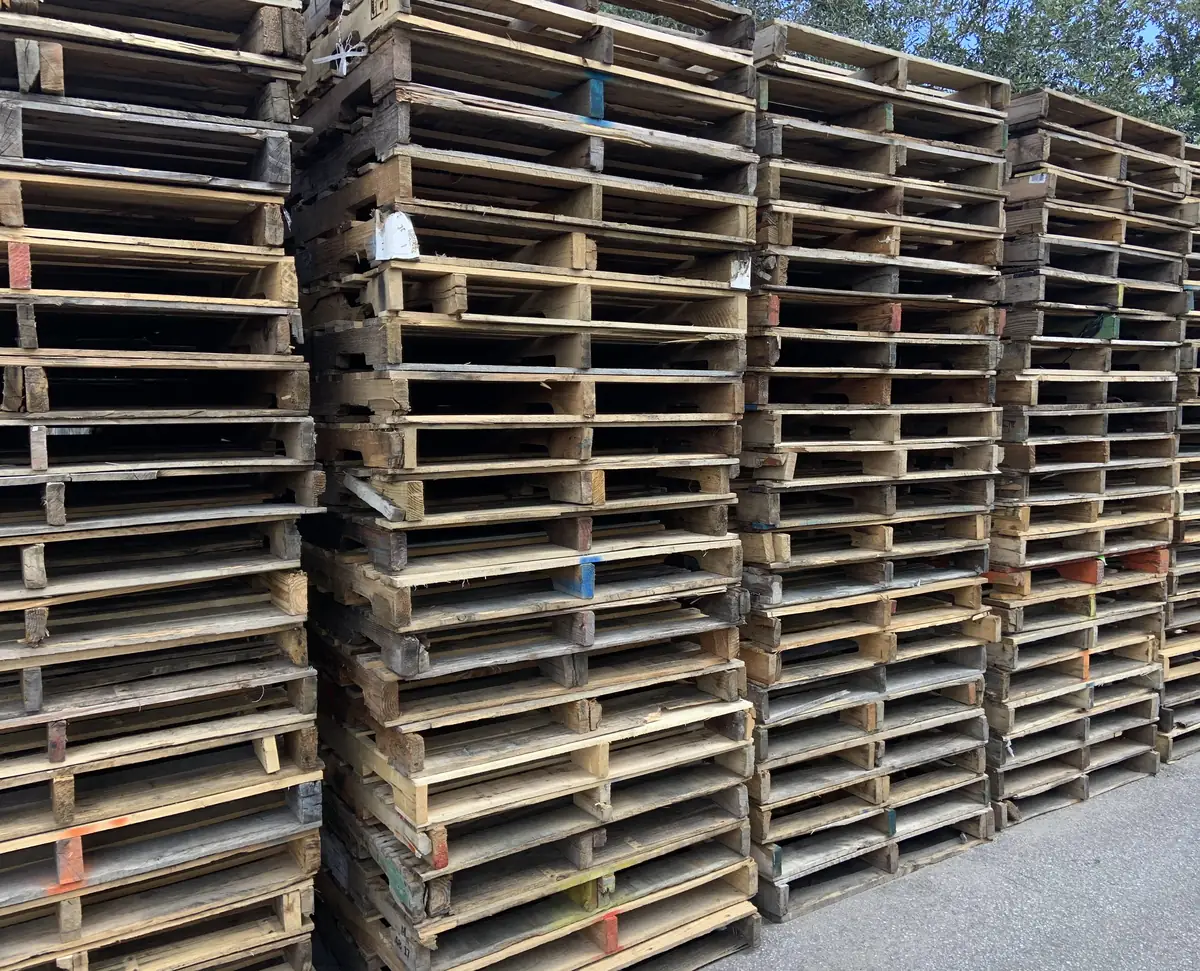
Pallet Weight Calculator
Estimates use specific gravity at 12% MC adjusted to actual MC. Real pallet weights vary +/- 8% based on lumber yield, fastener count, and stringer/deckboard cut. For audited weight per BOL, request a certified weight ticket via /contact.
How Pallet Weight Is Calculated
Pallet weight depends on four variables: lumber volume (board feet), wood species specific gravity, moisture content, and any treatment (KD, HT, pressure). A standard GMA 48x40 stringer pallet contains approximately 25 board feet of lumber. The calculator scales board feet linearly by deck area, then computes weight using species specific gravity adjusted for actual moisture content.
Southern Yellow Pine (SG 0.45) is the dominant US pallet species. Oak (SG 0.55) is heavier and more common in the Eastern US recycled stock. Hardwood pallets are 15-25% heavier than softwood pallets of identical dimensions. Heat-treated pallets weigh 2-4% less than untreated stock because the ISPM-15 56C heat treatment drives moisture out of the cell walls.
Common Pallet Weight References
- GMA 48x40 SYP stringer (19% MC): 33-37 lbs typical
- GMA 48x40 oak stringer (19% MC): 42-48 lbs typical
- CP9 chemical 1140x1140 4-way block: 70-85 lbs
- EUR/EPAL 1200x800mm: 50-55 lbs
- ISO 1200x1000mm: 55-65 lbs
- Heavy-duty 48x48 4-way block: 65-85 lbs
- Lightweight 48x40 (1/2-cut): 28-32 lbs
Why Pallet Weight Matters
Pallet weight directly affects DOT freight cost (paid per cwt - hundredweight). At 26 pallets per 53' trailer with 1,500 lb stack weight (1,460 lbs SKU + 35 lb pallet), you ship 38,610 lbs of cargo + 910 lbs of empty pallet. Switching from oak (45 lb) to SYP (35 lb) saves 260 lbs of dead weight per truck - either freeing 260 lbs for cargo or reducing fuel burn proportionally on weight-capped lanes.
Frequently Asked Questions
How much does a standard 48x40 GMA pallet weigh?
A standard GMA 48x40 Southern Yellow Pine stringer pallet at 19% moisture content weighs 33-37 pounds. Oak stringer pallets of identical dimensions weigh 42-48 lbs. Heat-treated (ISPM-15) versions weigh 2-4% less because the 56C kiln treatment drives moisture below 19%. Recycled Grade A pallets typically weigh 1-3 lbs less than new due to wear and weathering.
Why does my pallet weight differ from the calculator?
Three main factors: actual lumber yield can vary +/- 8% from the 25 BF estimate, deckboard count and stringer cut affect total volume, and moisture content varies by region and storage. Eastern US recycled pallets often run 20-22% MC; kiln-dried export stock runs 15-18%. Field-stored pallets in humid climates absorb moisture and gain 2-5 lbs over their lifecycle.
Are heat-treated pallets heavier or lighter than untreated?
Heat-treated (ISPM-15) pallets weigh 2-4% less than untreated stock because the 30-minute hold at 56C core temperature drives moisture content below the typical 19% threshold. The treatment removes water, not lumber. After ISPM-15 treatment, pallets hold their lower MC during transit if wrapped or sheltered.
What is the maximum pallet weight for shipping?
There is no specific pallet weight limit, but truck GVW and cargo weight caps apply. USDOT 80,000 lb GVW with 36,000 lb tractor + trailer + driver leaves 44,000 lb cargo cap. At 1,500 lb per stack (typical), 26 stacks fit a 53' trailer for 39,000 lb total cargo. Heavier SKUs (drums, machinery) may require fewer stacks per trailer or specialized heavy-haul carriers.
How does moisture content change pallet weight?
Wood density scales roughly linearly with moisture content above fiber saturation. A 35-lb SYP pallet at 19% MC weighs approximately 38 lbs at 25% MC and 33 lbs at 12% MC. Kiln-dried stock (12-15% MC) is preferred for export because it ships lighter and resists mold. Field-stored pallets that absorb rain can gain 5-10% weight before drying back.
Do hardwood and softwood pallets cost the same?
No. Softwood pallets (SYP, SPF, hem-fir) typically cost 10-20% less than hardwood (oak, maple, hickory) because softwood lumber yields more board feet per log and is faster to mill. Hardwood pallets carry higher load capacity ratings and last 1.5-2x more trip cycles in pool service. For single-trip export pallets, softwood KD heat-treated is the cost optimum.