This is an illustrative case study based on industry-typical scenarios. Specific results vary by company size, geography, and operational profile.
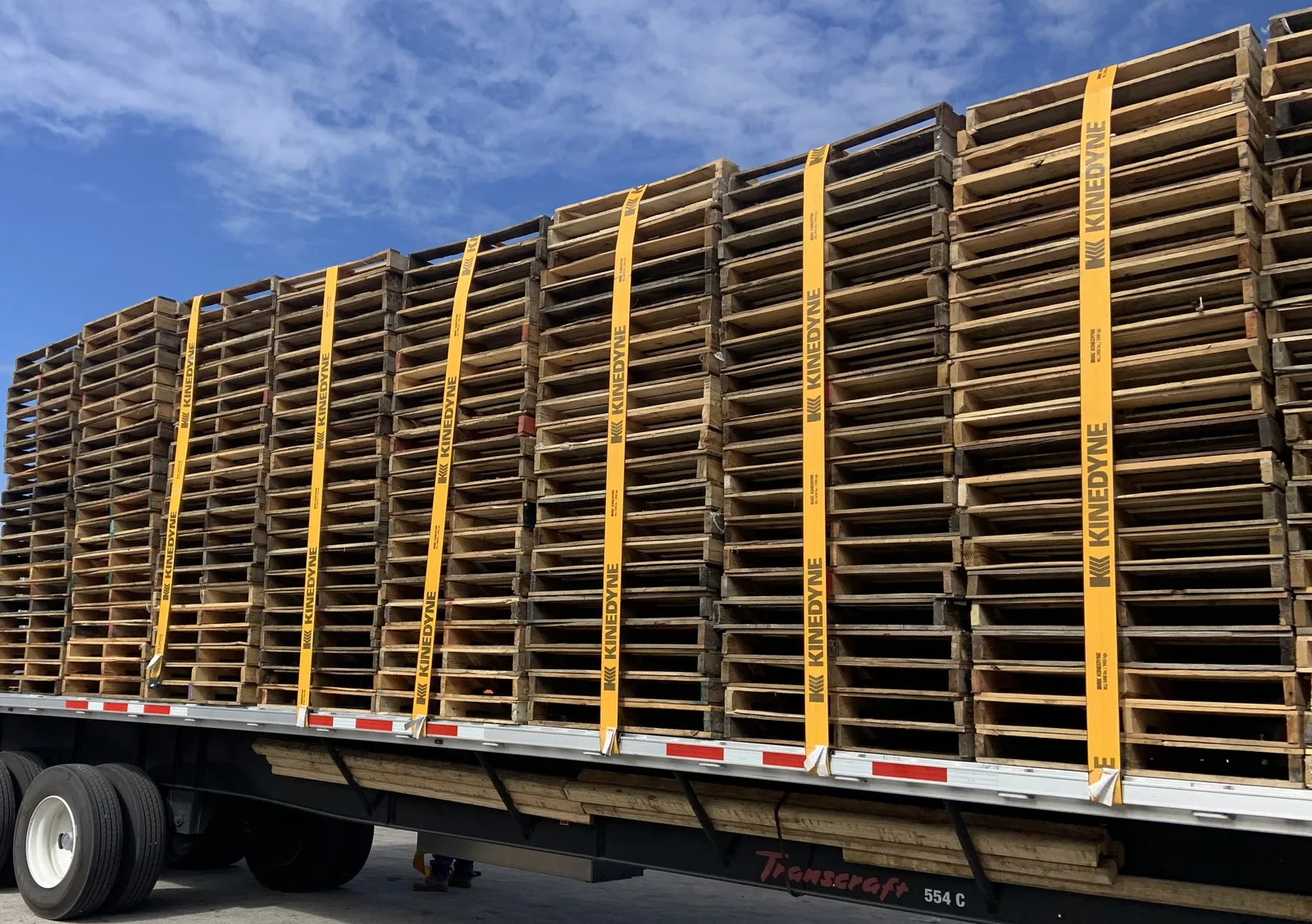
Industry Context: Soft Drinks & Bottling
Pallet demand in national, United States is shaped by the local economy and the regional supply chain - distribution, manufacturing, and food/beverage operations all consume pallets at predictable cadences. United States Pallets aligns our soft drinks & bottling pallet procurement delivery rhythm to those operations, with same-day rush options when production schedules tighten and standing-order programs for predictable weekly volume.
Industrial-scale soft drinks & bottling pallet procurement for national, United States customers requires more than just stock on hand - it requires consistent dimensional tolerances, batch-quality records, and documentation that satisfies SOX, FDA, USDA, ISO 9001, and similar audit frameworks. United States Pallets ships every soft drinks & bottling pallet procurement load with the documentation packet pre-attached electronically, no dock-side delays.
Soft Drinks & Bottling operations typically run pallet category spend at 0.4-1.2% of revenue. Companies running $100M-$1B in revenue typically have $400K-$12M in annual pallet spend. Cost-reduction programs target 8-22% category savings over 12-24 months.
Typical Starting State
Before consolidation: 5-8 regional pallet vendors, fragmented documentation, no volume tier optimization, high transaction friction. Annual spend: ~$2.5M for a 5-site $300M operation. Procurement time: ~120 hours per quarter on pallet category management.
Phase 1: Vendor Consolidation
Phase 1 (months 1-3): RFQ across 5-8 incumbent vendors plus USP. Standardize specs to NWPCA Uniform Standard. Consolidate to 1-2 strategic suppliers covering 100% of footprint. Result: 8-12% immediate cost reduction from volume consolidation.
Phase 2: Multi-Grade Optimization
Phase 2 (months 4-6): Audit pallet specs by application. Substitute new GMA with recycled Grade A for industrial transfers. Use Grade B for internal yard moves. Result: 4-7% additional cost reduction from grade optimization.
Phase 3: Standing Orders + Volume Tiers
Phase 3 (months 7-12): Lock in standing orders for predictable volume. Negotiate volume tier escalation. Move to net-30 terms after 1-3 prepaid loads. Result: 3-5% additional cost reduction from terms and standing-order pricing.
Cumulative Result
By month 12: total category cost reduction of 15-22% typical. Annual savings on $2.5M base: $375K-$550K. Procurement time reduced from ~120 hours/quarter to ~30 hours/quarter through automation and supplier consolidation.
Soft Drinks & Bottling Implementation Considerations
Soft Drinks & Bottling operations should additionally consider: industry-specific compliance documentation (FSMA for food, GDP for pharma, ISPM-15 for export), retailer receiving specs (RILA member requirements where applicable), and ESG documentation for ESG-aligned procurement.
USP Programs Aligned with This Pattern
United States Pallets supports soft drinks & bottling consolidation programs with: 50-pallet minimums, multi-grade inventory, standing-order programs, sub-2-hour quote response, and audit-ready documentation.
How does United States Pallets compare to United States-based local pallet suppliers?
Local United States suppliers offer geographic proximity. United States Pallets offers nationwide sourcing depth, multi-grade inventory always in stock, sub-2-business-hour quote response, audit-ready documentation, and standing-order automation that local yards typically don't match.
Does United States Pallets supply soft drinks & bottling pallet procurement for export from national?
Yes, with ISPM-15 heat-treated pallets carrying IPPC stamps and full ISPM-15 documentation. Required for international shipments to all WTO member countries. Common for national customers with port access via United States's major export gateways.
Does United States Pallets ship soft drinks & bottling pallet procurement to all of United States?
Yes. We deliver to every commercial address in United States, with same-day shipping standard in our Southeast/Mid-Atlantic core and scheduled weekly delivery elsewhere. national-area accounts are typical - submit a quote with your dock location and we route accordingly.
What documentation accompanies soft drinks & bottling pallet procurement loads?
BOL, packing list, grade certifications standard. Heat-treated loads add IPPC stamps and ISPM-15 documentation. Pharma-grade loads add batch records. Food-grade loads add FSMA Sanitary Transportation Rule certifications. All documentation ships electronically before delivery.
How fast does United States Pallets deliver to national, United States?
Same-day shipping in our Southeast/Mid-Atlantic core (FL, GA, AL, TN, MS, SC, NC, KY, VA) and scheduled weekly delivery elsewhere. Express options available for national rush orders. Quote response under 2 business hours, dispatch within hours of order confirmation.
Soft Drinks & Bottling Procurement Quote
Response under 2 business hours.