Custom-built one-way crates delivered to Washington operations.
Get a Price →One-Way Crates suppliers serving Washington businesses range from regional yards with limited inventory to national networks with deep multi-grade stock. United States Pallets sits in the second category, structured specifically for high-volume B2B operations - 50+ pallets per order minimum, scheduled programs for 500+/week accounts, and dimensional consistency tight enough for AGV-equipped warehouses.
Industrial-scale One-Way Crates for Washington, Washington customers requires more than just stock on hand - it requires consistent dimensional tolerances, batch-quality records, and documentation that satisfies SOX, FDA, USDA, ISO 9001, and similar audit frameworks. United States Pallets ships every One-Way Crates load with the documentation packet pre-attached electronically, no dock-side delays.
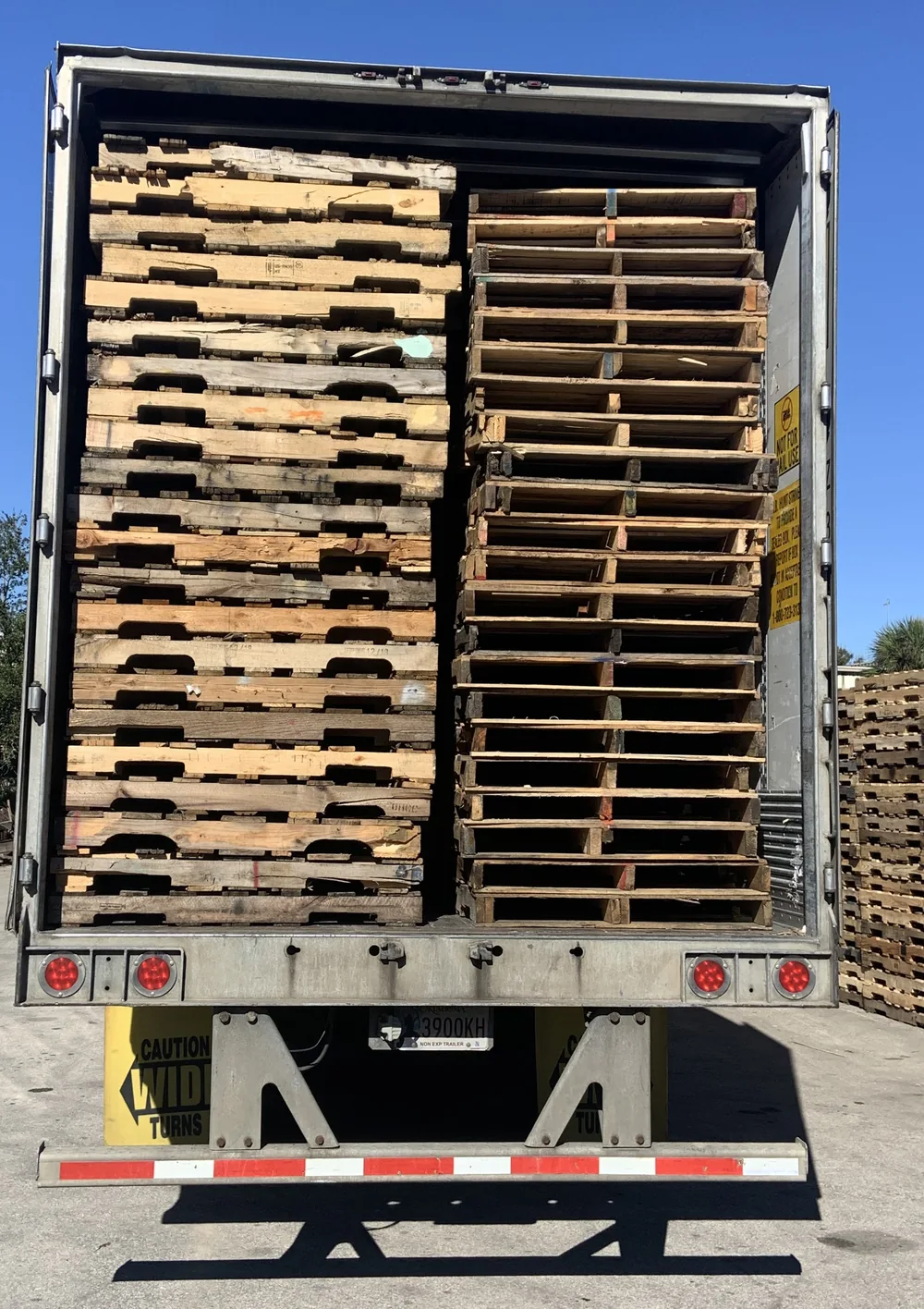
Single-use export crates optimized for cost.
Yes. Backhaul logistics are coordinated on outbound delivery routes - empty or non-spec pallets get picked up on the return leg of new pallet deliveries. Per-pallet freight cost on the backhaul approaches zero for accounts running both new-pallet purchase + buyback simultaneously.
BOL, packing list, grade certifications standard. Heat-treated loads add IPPC stamps and ISPM-15 documentation. Pharma-grade loads add batch records. Food-grade loads add FSMA Sanitary Transportation Rule certifications. All documentation ships electronically before delivery.
Local Washington suppliers offer geographic proximity. United States Pallets offers nationwide sourcing depth, multi-grade inventory always in stock, sub-2-business-hour quote response, audit-ready documentation, and standing-order automation that local yards typically don't match.
Net-30 credit terms standard after the first 1-3 prepaid or COD loads while credit is being established. Submit a credit application with three trade references; approval typically processes within 48 hours. Volume accounts can negotiate net-45 or net-60.
Same-day shipping in our Southeast/Mid-Atlantic core (FL, GA, AL, TN, MS, SC, NC, KY, VA) and scheduled weekly delivery elsewhere. Express options available for Washington rush orders. Quote response under 2 business hours, dispatch within hours of order confirmation.
Response under 2 business hours.
GMA 48x40 four-way stringer construction conforms to the National Wooden Pallet & Container Association (NWPCA) 2014 Uniform Standard; deck board configuration 7-board top, 5-board bottom.
Washington aerospace supply-chain logistics in Everett, Renton, and Auburn require ISPM-15 export pallets for Boeing 787, 777, and 737 component shipments; we provide certified stock for KLX, Mitsubishi Aircraft, and Spirit AeroSystems freight.
Washington State Department of Ecology regulates wood pallet recycling under WAC 173-350; our partner facilities in Seattle, Tacoma, and Spokane maintain Ecology registration for return-stream service.
Standard 48x40 GMA pallets feature 5/8 inch deck boards with a 4-board face pattern; bottom configuration is 3-board for four-way fork entry; nail pattern uses 2.5 inch screw-shank galvanized fasteners.
Block pallets (four-way entry) use nine 4-inch hardwood blocks with continuous-face top deck; ideal for ASRS (automated storage and retrieval) and AGV (automated guided vehicle) operations where stringer interruptions cause read-failures.
Dry-van loads handle weather-sensitive pallet stock and food-grade freight; sealed loads with bill-of-lading documentation; supports DOT-required commercial routing.
Bakery operations typically order weekly 48x40 GMA stock for flour and sugar inbound, plus 36x36 for retail-ready display loads; common customers in the Tampa Bay area include large wholesale and grocery-aligned bakeries.
Buyback pricing for returned pallets: $3-5 per Grade A unit; $1-2 per Grade B; minimum 50-pallet pickup; integrated with our recycling stream for sustainability accounting.
Sustainability reports provided quarterly to standing-order customers; documents pallets recycled, lumber diverted from landfill, and CO2-equivalent savings vs new-only sourcing.