Should you buy new or used pallets? Complete 2026 buyer guide with cost models, compliance, ESG, and decision framework.
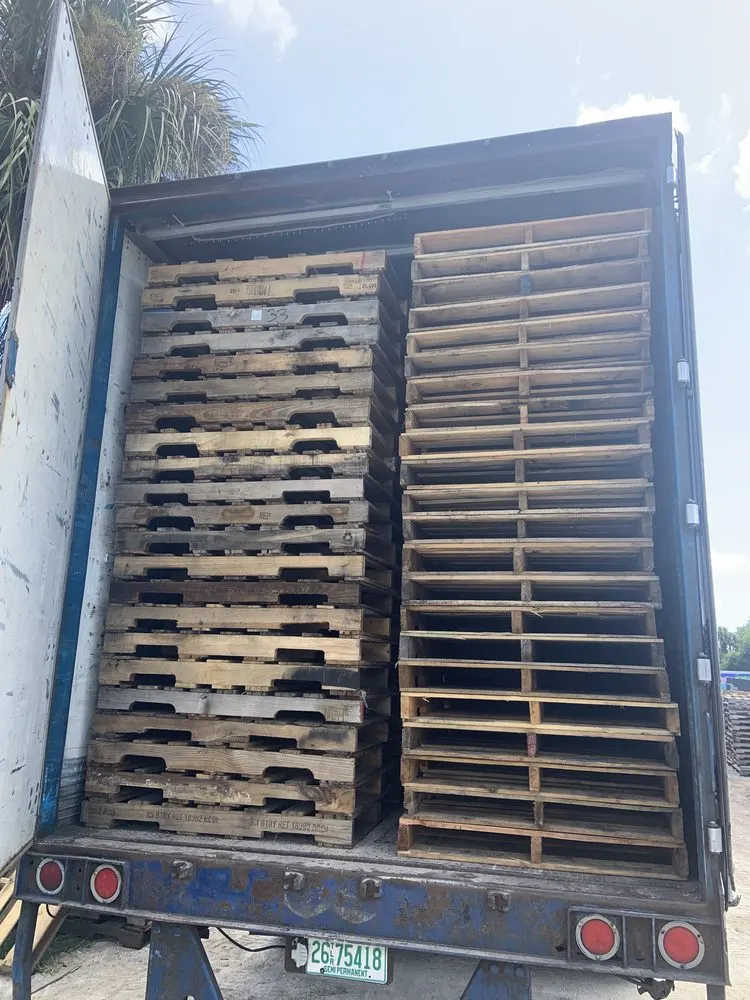
New vs Used Pallets: The Complete 2026 Buying Guide
Pallet Lumber & Sawmill Operations
Stamped kiln-dried pallet lumber, bulk warehouse stock, dimensional yard inventory, raw softwood logs, and sawmill operations - the supply chain behind every custom and standard pallet we ship.
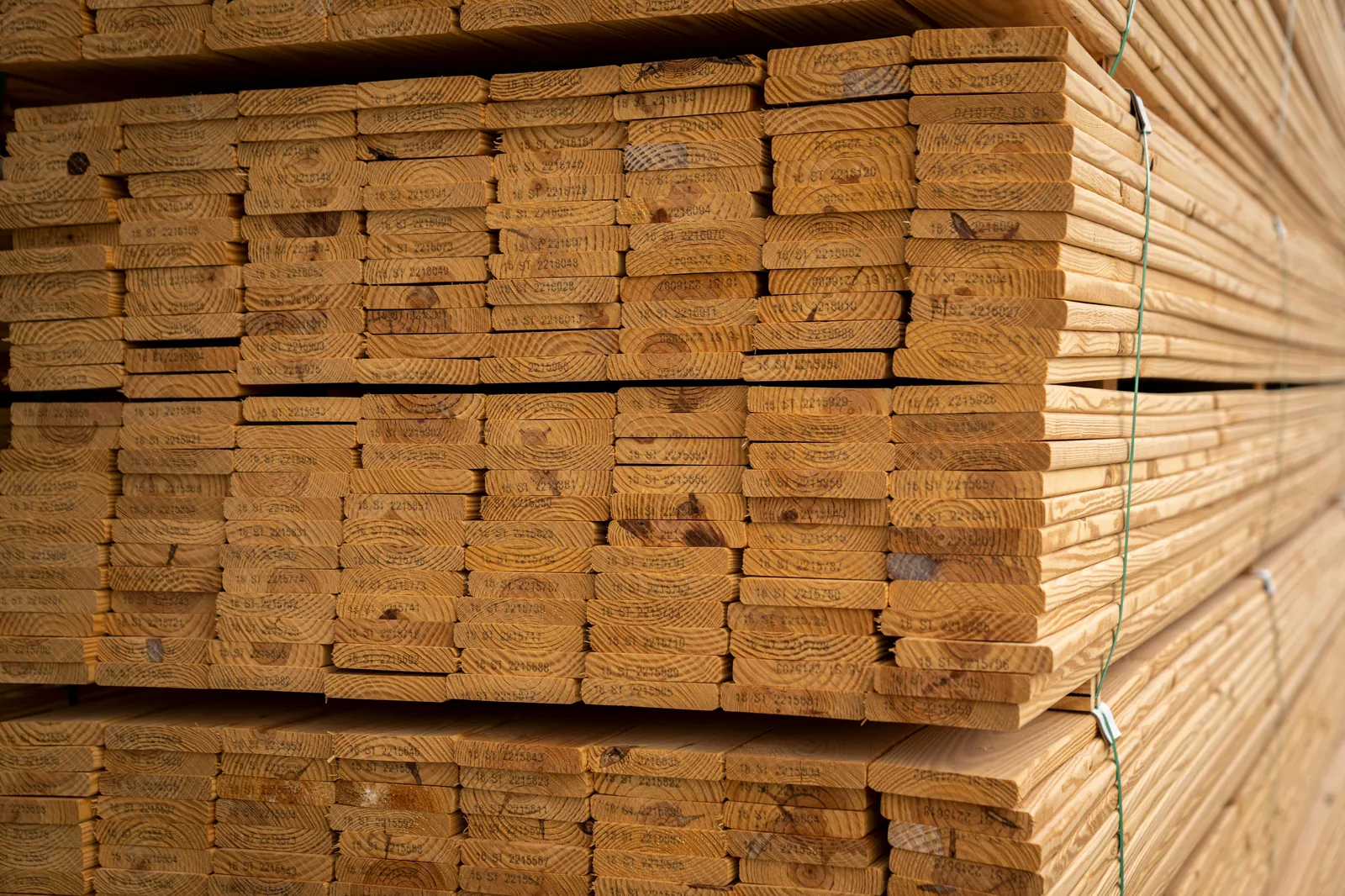

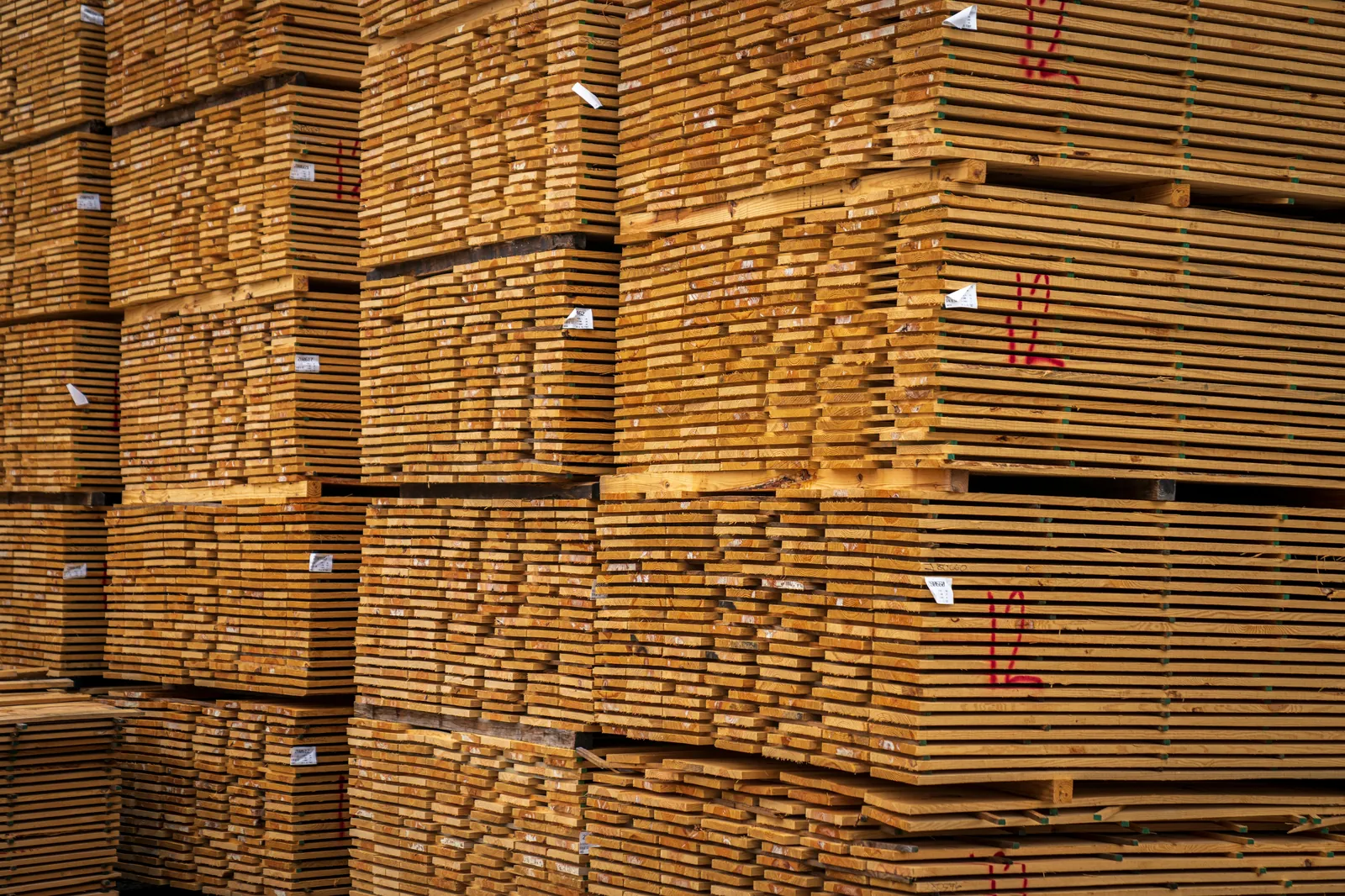


The single most common question pallet buyers ask: should we buy new or used? The answer depends on five factors: retailer-receiving requirements, regulated industry compliance (food/pharma), volume and cycle profile, sustainability goals, and total cost of ownership. This guide is the most comprehensive new-vs-used pallet comparison published online in 2026, with original pricing data, lifecycle analysis, compliance considerations, and decision frameworks for procurement teams.
Quick Decision Framework
Buy NEW pallets if: retailer mandates pristine condition (Walmart Vendor Compliance, Target Routing Guide), regulated industry requires traceability (pharma GDP, FSMA Section 204), DTC e-commerce visible loads need pristine appearance, captive closed-loop operations with high cycle count, FBA inbound shipments to Amazon, or pristine cosmetic appearance is a brand consideration.
Buy USED pallets if: general B2B distribution where structure matters but appearance does not, internal logistics and in-plant moves, scrap-bound one-way shipments, sustainability ESG goals favor recycled materials, cost is the primary driver, you have a dedicated recovery program with buy-back rates that offset the lower lifecycle, or you operate at low-volume seasonal patterns.
Cost Comparison (2026 Pricing)
| Pallet Type | 2026 Spot Range | Standing-Order (10K+/yr) | vs. New Baseline |
|---|---|---|---|
| NEW GMA 48x40 stringer | $11-18 | $9-15 | baseline |
| NEW GMA 48x40 block | $18-28 | $15-23 | +50-70% |
| USED Grade A | $7-11 | $5.75-9 | -30-50% |
| USED Grade B | $4-7 | $3.25-5.75 | -50-70% |
| USED Grade C | $2-4 | $1.50-3.25 | -75-85% |
| Custom engineered (NEW) | $20-200+ | volume-tier | +50-1000% |
| ISPM-15 stamping (add) | +$0.85-1.10 | +$0.70-0.95 | add to base |
Lifecycle Analysis
New pallets typically last 5-7 cycles in distribution before reaching scrap. Used pallets (when purchased at Grade A) typically last 3-5 cycles before reaching scrap. The cycle math:
- NEW stringer: $14 ÷ 6 cycles = $2.33 per cycle TCO
- NEW block: $23 ÷ 7 cycles = $3.29 per cycle TCO
- USED Grade A: $9 ÷ 4 cycles = $2.25 per cycle TCO
- USED Grade B: $5.50 ÷ 3 cycles = $1.83 per cycle TCO
- USED Grade C: $3 ÷ 2 cycles = $1.50 per cycle TCO
Per-cycle TCO can favor recycled at lower grades, but only if the pallet completes those cycles without retailer rejection. For retailer-facing operations, the rejection cost ($25-100 chargeback per rejected pallet) eliminates the TCO advantage.
Compliance Considerations
NEW pallets ship FSMA-clean by default with documented kiln-drying validation. USED pallets require inspection: contamination check (chemical residue, oil, grease, food spoilage), fastener integrity (no protruding nails or staples), structural verification (no broken stringers or split deckboards), grade verification per NWPCA Uniform Standard. Use FSMA-validated suppliers when sourcing used pallets for food applications. For pharmaceutical applications (GDP-compliance, ICH Q7-Q10), Grade A or NEW only - GDP-validated cold-chain requires kiln-dried, validated dimensional stability.
Sustainability and ESG
Recycled pallets have approximately 60-80% lower embodied carbon than new pallets per lifecycle assessments. The EPA Sustainable Materials Management hierarchy ranks reuse above recycling above disposal. Pallet recycling industry recovers 95%+ of pallets per NWPCA member surveys. For ESG-aligned operations, recycled pallets with FSC chain-of-custody are the EPA-preferred option. Carbon Disclosure Project (CDP) Scope 3 reporting includes pallet-related emissions; recycled pallets reduce reported Scope 3 by 60-80% per pallet.
Compliance Frameworks (Both NEW and USED)
FSMA Sanitary Transportation, FSMA Section 204 (GS1 SSCC barcoding for FDA Traceability List items effective Jan 20, 2026), ISPM-15 IPPC for export, OSHA 29 CFR 1910.176 stack stability, EPA SMM hierarchy, GDP-compliance for pharmaceutical, ISO 22000 / GFSI Benchmarked Schemes for food, EUDR for EU shipments (effective Dec 30, 2025).
Buy-Back Program Economics
For operations generating used pallet inventory (warehouses, DCs, manufacturing), a buy-back program with a recycler offsets the cost of new pallet purchases. Typical buy-back rates from recyclers like USP: Grade A $3-6 per pallet, Grade B $1-3, Grade C $0-1, scrap free pickup. A high-volume DC generating 5,000 pallets per month in mostly Grade A condition can recover $15,000-30,000 per month through buy-back, dramatically reducing net pallet TCO.
Decision Tree
- Are you shipping to Walmart, Target, Costco, Amazon FBA, Kroger, Publix, Whole Foods? → NEW or NWPCA Grade A only
- Are you in pharma (GDP) or FSMA Section 204 covered food? → NEW or NWPCA Grade A, kiln-dried validated, GS1 SSCC capable
- Is this a one-way scrap-bound shipment? → USED Grade C is fine ($2-4)
- Is this internal logistics with no retailer touch? → USED Grade B works ($4-7)
- Is this general B2B distribution with no specific compliance? → USED Grade A ($7-11) or NEW ($11-18) depending on cost sensitivity
- Do you have a buy-back program? → If yes, NEW becomes cost-competitive after buy-back recovery
- Do you need ISPM-15 export? → Either NEW or USED Grade A with ISPM-15 stamping (+$0.85-1.10)
Beyond the per-cycle math, the real decision usually comes down to retailer-receiving requirements. If you're shipping to Walmart, Target, Costco, Amazon FBA, or any major retailer, a single rejected pallet at receiving costs $25-100 in chargebacks plus the freight back. Three rejections per shipment of 26 pallets and your savings on used pallets evaporate. NEW or Grade A is the safer floor for retailer-facing operations.
Companion Resources
- New vs Recycled Comparison Detail
- Used Pallets For Sale (5,000+ ZIP-level pages)
- New Pallets For Sale (5,000+ ZIP-level pages)
- Pallet Buy-Back (5,000+ ZIP-level pages)
- Pallet ROI Calculator
Quote Request
Sub-2-hour response.