How pallet recycling works: pickup, NWPCA grading, repair vs. resale vs. scrap, buy-back rates, EPA SMM hierarchy, ESG reporting.
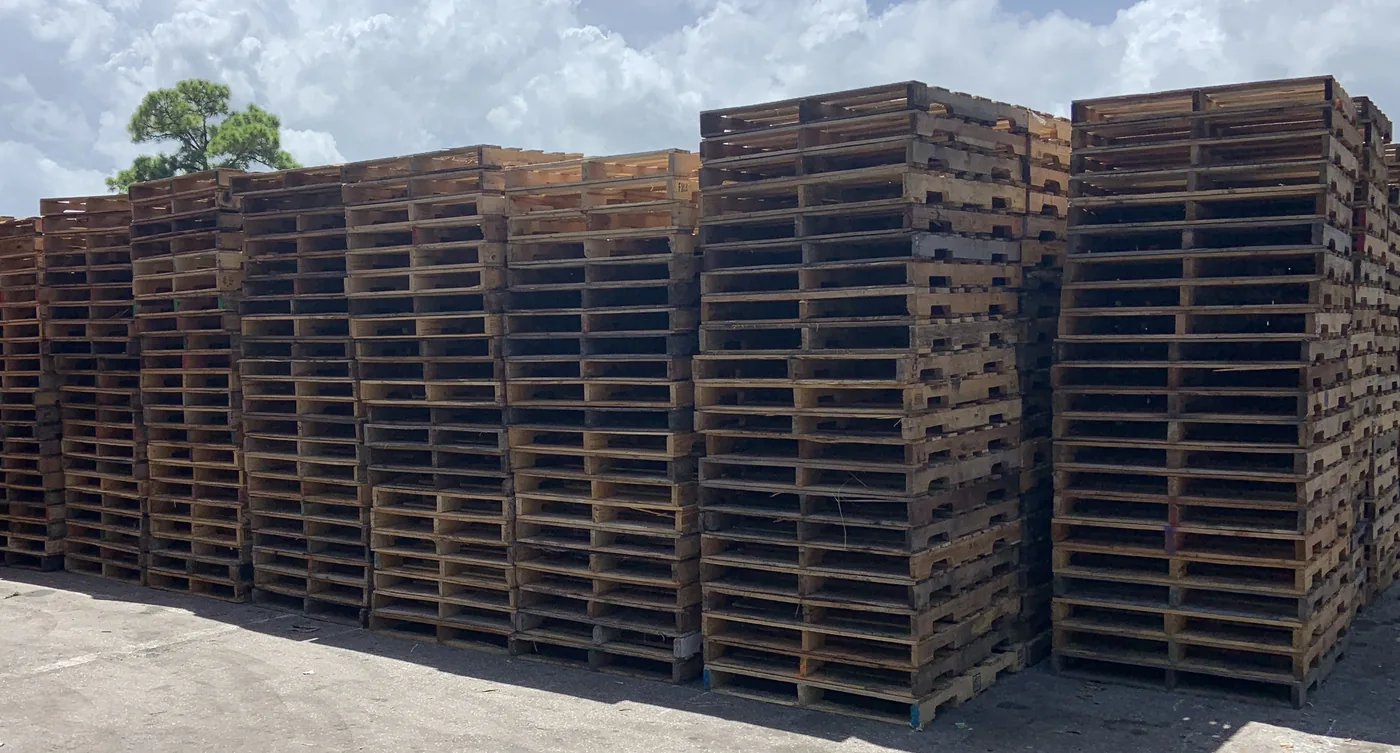
Quick Reference
- US wood pallet industry recovers 95%+ of pallets per NWPCA member surveys
- NWPCA Uniform Standard grading: A (no broken/missing), B (one repair), C (defects), scrap
- Buy-back rates: A $3-6, B $1-3, C $0-1, scrap free pickup
- EPA SMM hierarchy: source reduction → reuse → recycling → energy recovery → disposal
- End-of-life: mulch (45%), biomass cogeneration (35%), particleboard (15%), landfill (5%)
- ESG reporting: lifecycle GHG reduction 60-80% vs. new pallets
Buy-Back Rates by Grade
| Grade | Definition | Buy-Back Rate | Resale Rate |
|---|---|---|---|
| Grade A | No broken/missing components | $3-6/pallet | $7-11/pallet |
| Grade B | One repair, full integrity | $1-3/pallet | $4-7/pallet |
| Grade C | Visible defects, functional | $0-1/pallet | $2-4/pallet |
| Scrap | Below Grade C | Free pickup | Mulch/biomass/particleboard |
Recycling Workflow
Generator (manufacturer, retailer DC, 3PL warehouse) accumulates used pallets at the dock.
Recycler dispatch truck arrives same-week (USP: 24-72 hours for high-volume programs, longer for smaller).
NWPCA grade sortation on-site or at recycler facility per Uniform Standard.
Repair line: Grade B/C pallets get deckboard or stringer replacements as economic.
Resale to new buyers at 30-50% off new pricing.
Scrap processing: hammermill or grinder produces feedstock for mulch (largest end-use), biomass cogeneration energy, or particleboard manufacturing.
Documentation: pickup receipt with NWPCA grade verification per pallet, buy-back invoice, ESG reporting metrics.
EPA SMM Hierarchy Application
Source reduction: minimize pallet use through optimal sizing, lightweighting, alternative shipping configurations.
Reuse: extend pallet life through repair (95%+ of US pallets reach this stage). Industry standard 5-7 cycles per pallet, with repair extending to 10-14 cycles.
Recycling: process scrap pallets into mulch (45%, landscape and agricultural use), biomass cogeneration fuel (35%, energy generation), particleboard feedstock (15%, manufactured wood products).
Energy recovery: combustion of pallet wood for cogeneration energy at industrial boilers and biomass power plants.
Disposal: landfill (only ~5% of US pallets, primarily Grade C scrap that has no economic recycling path).
ESG Reporting
Recycled pallet programs deliver measurable ESG metrics: pallet recovery rate (95%+ NWPCA target), FSC chain-of-custody coverage, EPA SMM hierarchy alignment, embodied carbon reduction (60-80% vs. new), lifecycle GHG savings.
CDP (Carbon Disclosure Project) Scope 3 reporting: pallet-related emissions are typically a small but quantifiable component of distribution operations. Recycled pallet programs reduce reported Scope 3 emissions.
GRI (Global Reporting Initiative) standards: report pallet recycling rate, recycled content percentage, end-of-life destination breakdown.
SASB (Sustainability Accounting Standards Board): industry-specific metrics for food retail, industrial manufacturing, transportation.
TCFD (Task Force on Climate-related Financial Disclosures): pallet supply chain climate risk includes lumber index volatility, deforestation regulation (EUDR), supply disruption.
Companion Resources
Quote Request
Sub-2-hour response.