Everything pallet buyers need to evaluate suppliers in 2026: types, sizes, grades, compliance frameworks, TCO models, RFQ workflows, and vendor scorecards.
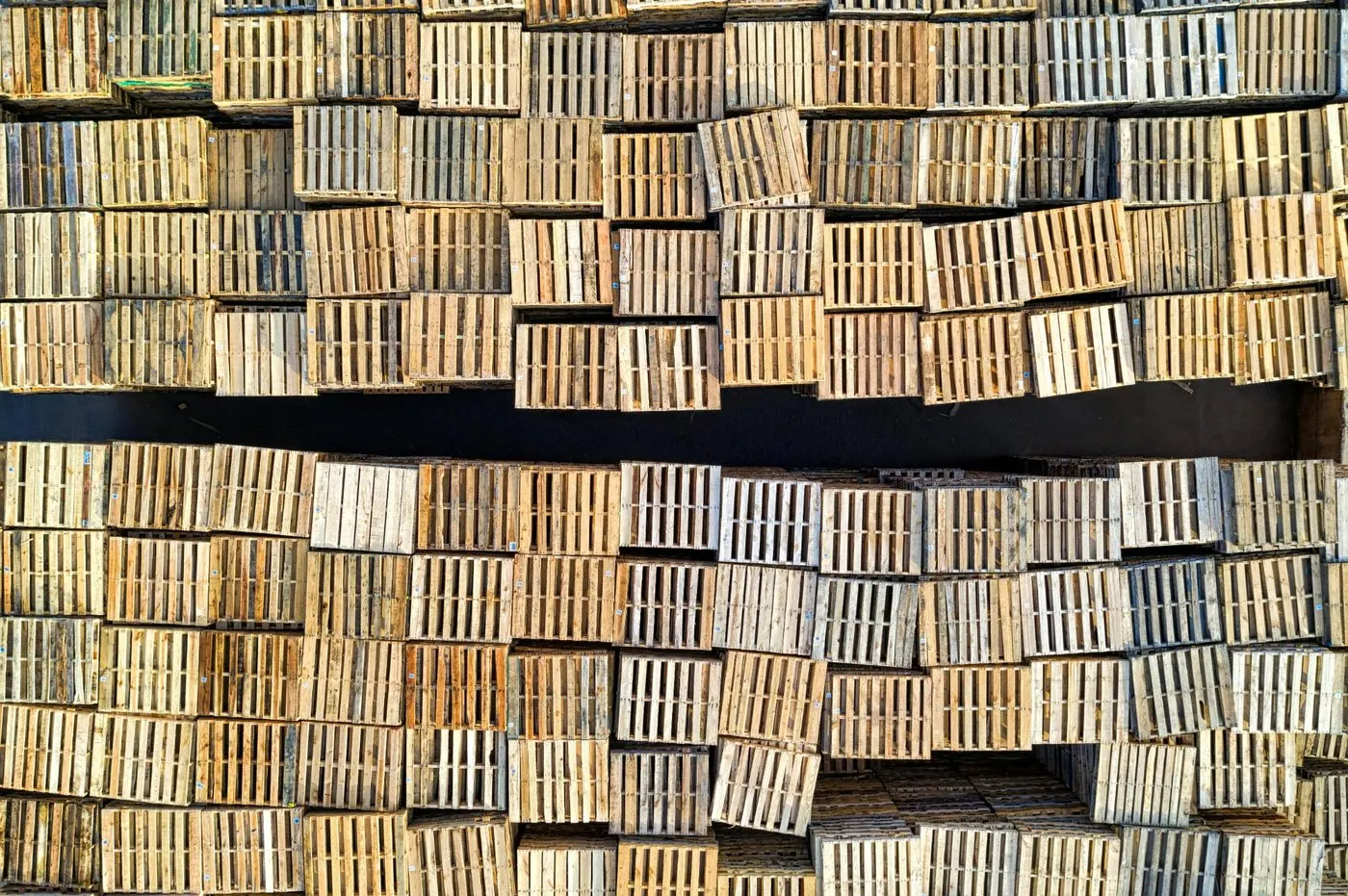
What Is a Pallet Supplier? (And Why Choosing the Right One Matters)
Pallet Lumber & Sawmill Operations
Stamped kiln-dried pallet lumber, bulk warehouse stock, dimensional yard inventory, raw softwood logs, and sawmill operations - the supply chain behind every custom and standard pallet we ship.
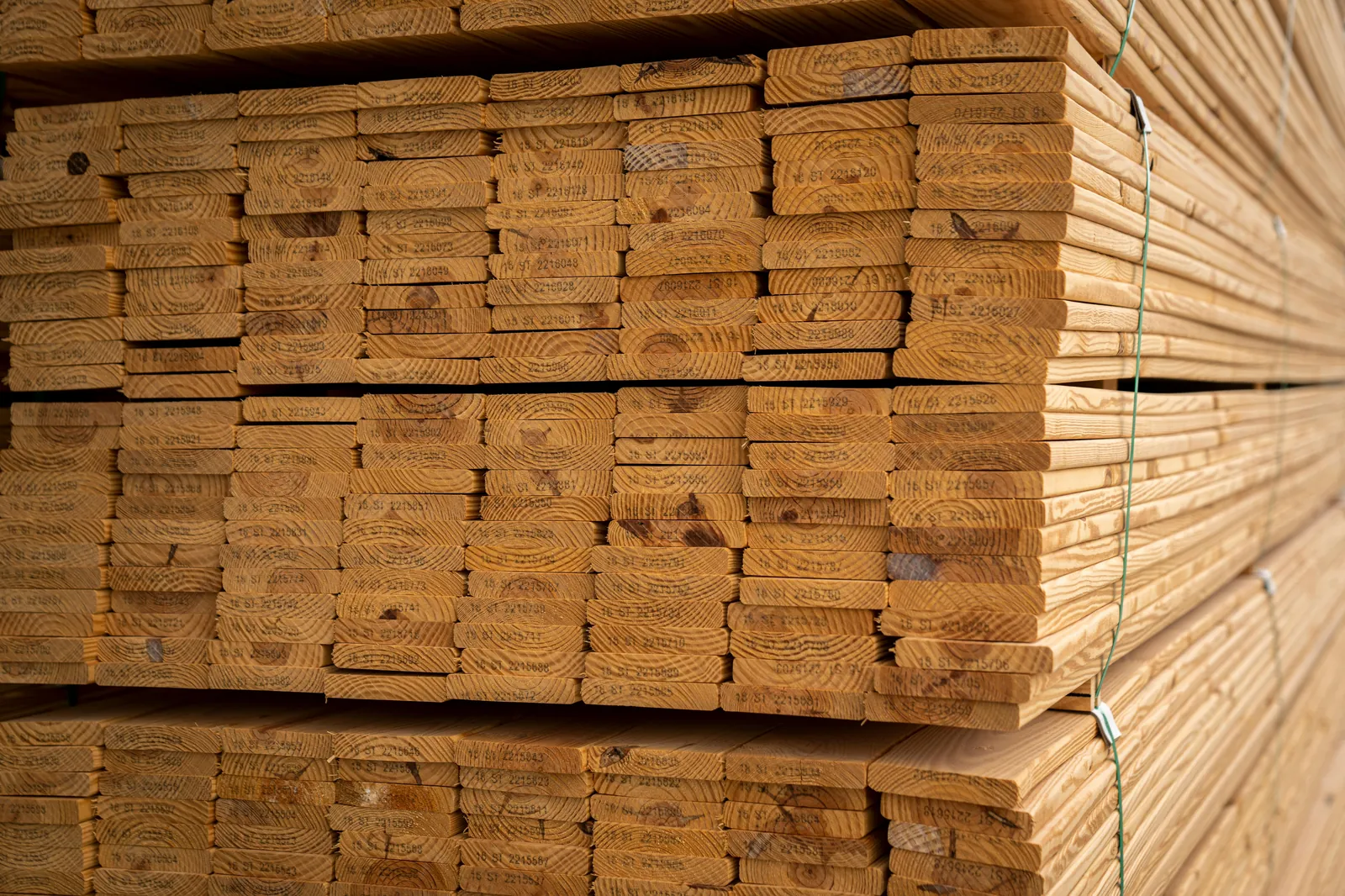

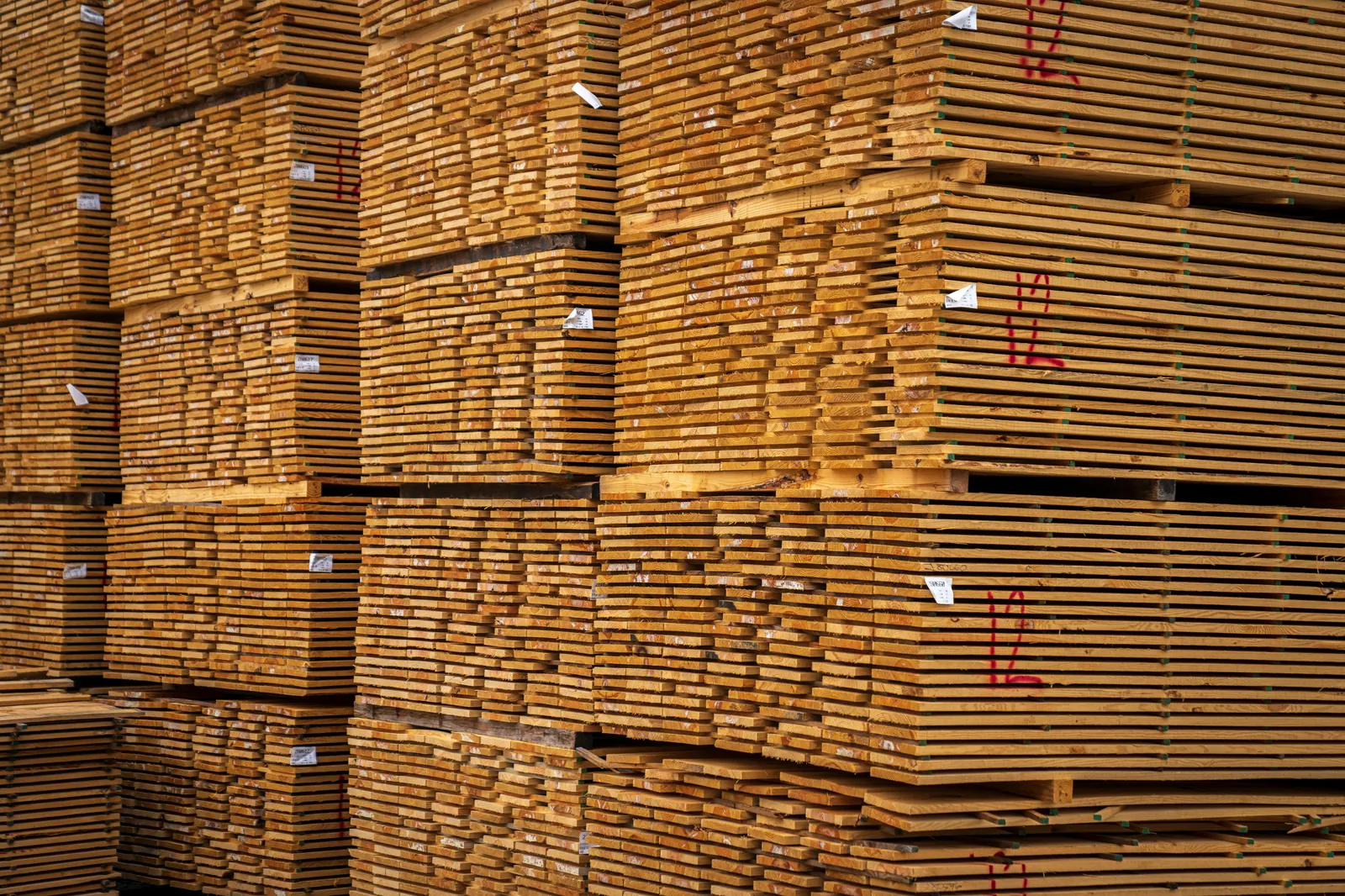


A pallet supplier is a B2B vendor that sources, manufactures, recycles, repairs, and distributes wooden pallets and related shipping materials (custom pallets, wooden crates, ISPM-15 export pallets, plastic pallets) to commercial buyers. The pallet industry in the United States is roughly $25 billion annually, with the National Wooden Pallet & Container Association (NWPCA) reporting that 1.9 billion pallets are in active circulation across US distribution networks at any given time. The right pallet supplier for your operation depends on five factors: industry vertical, volume, geographic coverage, compliance requirements, and total cost of ownership across the pallet lifecycle.
This guide is the most comprehensive pallet supplier resource published online in 2026. We cover pallet supplier types (manufacturer vs. recycler vs. broker vs. pool), how to evaluate vendors, NWPCA Uniform Standard grading, ASTM D1185 load ratings, FSMA Section 204 traceability requirements, ISPM-15 export compliance, GDP pharmaceutical alignment, OSHA stack stability, EPA SMM hierarchy, total cost of ownership analysis, volume tier pricing, standing-order programs, and the full procurement workflow from RFQ to onboarding. Use the table of contents below to jump to any section.
Table of Contents
- Types of Pallet Suppliers
- Pallet Sizes and Specifications
- NWPCA Grades and Pricing
- Compliance Frameworks
- Total Cost of Ownership
- RFQ and Procurement Workflow
- How to Evaluate Pallet Suppliers
- Industry-Specific Pallet Supplier Considerations
- Geographic Coverage
- 2026 Pricing Trends
Types of Pallet Suppliers
Not all pallet suppliers are the same. There are four primary models in the US market, and the right choice depends on your operation's volume profile, capital constraints, and recovery logistics.
1. Pallet Manufacturers
Pallet manufacturers operate sawmills, kiln-drying facilities, and assembly lines that produce new pallets from lumber inputs. They typically offer the lowest per-unit cost on new GMA 48x40 pallets ($11-18 stringer, $18-28 block) but require minimum order quantities (typically 500+ units) and may charge freight from the mill. New pallets from manufacturers are pristine NWPCA Grade NEW with no prior service cycles, kiln-dried 8-15% moisture content for FSMA Sanitary Transportation alignment, and ASTM D1185 load-rated for retailer-receiving compliance. Major US pallet manufacturers include PalletOne, John Rock, Dura-Pallet, and dozens of regional mills.
2. Pallet Recyclers
Pallet recyclers source used pallets from manufacturing operations, retailers, and 3PL facilities, then sort, repair, and resell them at NWPCA Grade A/B/C pricing tiers. Recycled pallet pricing runs 30-70% below new pallet pricing: Grade A $7-11 per pallet (no broken or missing components, retailer-receiving capable), Grade B $4-7 (one repair, full structural integrity), Grade C $2-4 (visible defects but functional). The US wood pallet industry recovers 95%+ of pallets entering the recycle stream per NWPCA member surveys, making recycled pallets the EPA-preferred sustainable option per the Sustainable Materials Management (SMM) hierarchy. Major US pallet recyclers include 48forty Solutions (largest with 80+ facilities), Kamps Pallets, and thousands of regional operators.
3. Pallet Brokers
Pallet brokers like United States Pallets aggregate inventory across regional manufacturers and recyclers, providing single-point-of-contact procurement for buyers who need consistent supply across multiple states or geographies. Brokers do not own production capacity but maintain supplier networks, volume agreements, and dispatch logistics. The advantage: one PO, one invoice, one account manager for all your pallet needs nationwide. The trade-off: slightly higher per-unit pricing than going direct to a single mill, offset by reduced procurement overhead and consistent quality across regions.
4. Pallet Pool Operators (CHEP, PECO, iGPS)
Pool operators rent pallets per trip rather than selling them. CHEP (blue pallets, owned by Brambles, ~350M pallets globally) and PECO (red pallets, ~25M North American pallets) dominate the US grocery distribution pool with block pallet construction (9-block, full 4-way entry, 2,800+ lbs dynamic load). iGPS operates a plastic pallet pool. Pool pricing runs $3-7 per trip with issue fees, transfer fees, recovery deposits, and leakage charges ($25-100+ for un-returned pallets). Pool models work best for shippers with confirmed retail-receiving routes (Walmart, Costco, Kroger accept pool pallets). For high-volume stable operations (5,000+ pallets per year), pool TCO typically loses to outright purchase at the 6-12 month crossover point.
Pallet Sizes and Specifications
The dominant US pallet specification is GMA 48x40 inches (1219x1016mm), which represents approximately 80% of US retail and grocery distribution per Grocery Manufacturers Association (now Consumer Brands Association) historical data. The 48x40 size optimizes a standard 53-foot dry van trailer at 26 floor positions in pinwheel pattern (4,034 cubic feet usable). Other common sizes:
| Size (inches) | Common Use | New Price Range |
|---|---|---|
| 48x40 (GMA standard) | US retail/grocery (80% of distribution) | $11-28 |
| 48x48 | Chemical drums (4 drums fit), military, specialty | $14-22 |
| 42x42 | Dairy, beverage, paint/coatings | $13-20 |
| 48x42 | Bottled water, paper, chemical | $13-20 |
| 36x36 | Beverage display, lawn/garden retail | $9-15 |
| 1200x1000mm (ISO 6780) | European/global export standard | $25-40 (US import) |
| 1140x1140mm | Australasian standard | $28-45 |
| 1100x1100mm | Asian standard | $25-40 |
| EUR 1200x800mm | European pool standard | $25-40 (US import) |
| Custom dimensions | Aerospace, automotive, marine, specialty | $20-200+ |
Stringer vs. Block Construction
Stringer pallets use 3-4 longitudinal stringers (typically 2x4 lumber) running the full length, with deckboards nailed across them. Standard GMA 48x40 stringer has 7 deckboards top and 5 bottom. Stringer pallets have notched cutouts that allow partial 4-way fork entry. Block pallets use 9 individual blocks at corners and intersections with stringers running both directions, allowing full 4-way fork entry from any angle. Block construction is heavier (45-55 lbs vs. 30-40 lbs stringer), more expensive (50-70% premium), and rated for higher loads (5,500 lbs static / 3,800 lbs racked vs. 4,600 lbs static / 2,800 lbs racked for stringer). Block pallets dominate global export and rack storage applications; stringer pallets dominate US retail distribution.
NWPCA Grades and 2026 Pricing
The NWPCA Uniform Standard defines the universal grading system used across the US pallet industry. Grading happens at sortation when pallets are inspected after pickup from generators (manufacturers, retailers, 3PLs).
| Grade | Definition | Buy Price (recycler→buyer) | Sell Price (generator→recycler buy-back) |
|---|---|---|---|
| NEW | Factory-fresh, never used | $11-28 (stringer to block) | N/A |
| Grade A | No broken or missing components, no visible repairs, retailer-receiving capable | $7-11 | $3-6 buy-back |
| Grade B | One repair (board or stringer replacement), full structural integrity | $4-7 | $1-3 buy-back |
| Grade C | Visible defects, multiple repairs, functional but cosmetically rough | $2-4 | $0-1 buy-back |
| Scrap | Below Grade C, processed into mulch (45%), biomass (35%), particleboard (15%) | N/A | Free pickup |
For Walmart Vendor Compliance, Target Routing Guide, Amazon FBA inbound, Costco Vendor Manual, and most major retailer-receiving operations, Grade A is the floor. Grade B and below get rejected at receiving with chargebacks of $25-100+ per non-compliant pallet. Pharmaceutical (GDP-compliant), food (FSMA Section 204), and DTC e-commerce (visible-load) operations typically require Grade NEW or Grade A.
Compliance Frameworks for Pallet Suppliers in 2026
FSMA Sanitary Transportation Rule (21 CFR 1.900)
The FDA Food Safety Modernization Act Sanitary Transportation of Human and Animal Food Rule applies to all pallets that contact food products in transit. Key requirements: kiln-dried wood (8-15% moisture content), no chemical residues, sanitation procedures documented, contamination prevention. Pallet suppliers must validate kiln-drying through documented thermal records and provide audit-ready certificates per shipment. Air-dried pallets fail FSMA validation in cold-chain and humid environments because dimensional shifts during drying create gaps that harbor bacteria.
FSMA Section 204 Food Traceability Rule (21 CFR 1.1300-1.1495)
Effective January 20, 2026, the FDA Traceability Rule requires lot-level traceability for items on the FDA Food Traceability List (FTL): leafy greens, melons (cantaloupe, honeydew), bell peppers, cucumbers, herbs (cilantro, parsley, basil), sprouts, tomatoes, tropical fruits (mango, papaya), nut butters, ready-to-eat deli salads, soft cheeses, certain shell eggs, finfish, crustaceans, mollusks. The mechanism: GS1 Serial Shipping Container Code (SSCC-18) barcoding at the pallet level. Each pallet gets an 18-digit unique identifier encoded in a GS1-128 barcode, linked to lot/batch records in the customer ERP. Critical Tracking Events (CTE) and Key Data Elements (KDE) per FDA rule. Records must be retained for 24 months minimum. Pallet suppliers like USP support FSMA Section 204 by providing GS1 SSCC barcoding capability, FSMA Sanitary Transportation alignment, and audit-ready documentation per shipment.
ISPM-15 IPPC International Wood Packaging Standard
The International Plant Protection Convention's International Standard for Phytosanitary Measures No. 15 governs wood packaging materials in international trade. ISPM-15 requires heat treatment to 56°C core temperature for 30+ minutes at an ALSC-accredited facility, with the IPPC mark applied to each pallet (country code US, facility code, HT designation). 180+ IPPC member countries enforce ISPM-15 at customs: EU (with EUDR alignment effective Dec 30, 2025), China, Japan, Korea, Mexico, Brazil, Canada, Australia, India, plus 170+ others. ISPM-15 stamping adds $0.85-1.10 per pallet over base GMA pricing. Heat treatment dominates 95%+ of ISPM-15 pallets globally; methyl bromide fumigation has been phased out by the Montreal Protocol in most jurisdictions. USDA-APHIS performs random inspections at US ports for ISPM-15 stamp integrity.
EU Deforestation Regulation (EUDR)
EU Regulation 2023/1115 took effect December 30, 2025 for large operators (June 30, 2026 for SMEs). Wood and wood packaging are in scope. EUDR requires geolocation of harvest plots, verification of deforestation-free status (post December 31, 2020), due diligence statements submitted to the EU Information System, and risk assessment with mitigation measures. EUDR-aligned wood typically commands a 10-20% premium. Pallet suppliers shipping to EU buyers must provide lumber origin geolocation data, FSC or PEFC chain-of-custody (preferred), and due diligence documentation.
OSHA 29 CFR 1910.176 Material Handling and Storage
OSHA standards govern warehouse pallet handling: stack stability requirements, damaged pallet removal procedures, forklift operator training, and near-miss documentation. Maximum stack heights vary by application: FBA inbound 50 inches, trailer loading 110 inches. Damaged pallets must be removed from service to prevent injury liability. Buyer best practice: pre-inspect every shipment, document defects with photos, reject substandard pallets per contract terms.
EPA Sustainable Materials Management (SMM) Hierarchy
The EPA's SMM hierarchy guides pallet end-of-life processing: source reduction (minimize pallet use through optimal sizing), reuse (extend pallet life through repair, 95%+ of US pallets), recycling (process scrap into mulch 45%, biomass 35%, particleboard 15%), energy recovery (burn for biomass cogeneration), disposal (landfill, only ~5% of US pallets). Pallet suppliers operating buy-back and pickup programs align operations with SMM and provide ESG reporting documentation.
Total Cost of Ownership Analysis
Pallet TCO requires modeling beyond the spot purchase price. Factors: lifecycle cycles, repair costs, leakage rate, freight per cycle, capital cost, opportunity cost. Comparison across procurement models for a 10,000 pallet/year operation:
New Pallet Purchase (5-year TCO)
- Year 0 capital: 10,000 × $14 (mid-range stringer) = $140,000
- Cycles per pallet: 5-7 (industry standard)
- Per-cycle freight: $0.50-1
- Per-cycle repair: $0-0.50 (later cycles)
- Leakage: $0-0.10 per cycle
- EOL recovery: $1-3 (sold back to recycler at scrap)
- 5-year TCO per pallet: $11-18 net (depending on cycle count and recovery)
Recycled Pallet Purchase (5-year TCO)
- Year 0 capital: 10,000 × $9 (mid-range Grade A) = $90,000 (36% capital savings)
- Cycles per pallet: 4-5 (shorter than new)
- 5-year TCO per pallet: $9-13 net
- Best for: cost-sensitive operations, B2B distribution, internal logistics
Pool Pallet Rental (CHEP/PECO, 5-year TCO)
- Year 0 capital: $0 (rental)
- Per-trip cost: $3-7 × 5 trips/year × 5 years × 10,000 pallets = $750,000-1,750,000
- Leakage exposure: $25-100 per un-returned pallet × ~5% leakage rate = $12,500-50,000/year
- Crossover: pool loses TCO vs. purchase at 6-12 months for high-volume stable operations
- Best for: low-volume seasonal operations, shippers with confirmed retail-receiving routes
Standing-Order Programs
USP and other major suppliers offer standing-order programs that lock 90+ days of regional capacity at fixed pricing for buyers committing 5,000+ units annually. Benefits: 15-25% discount over spot pricing, hedge against Random Lengths Composite Lumber Index volatility (typical 10-30% annual range, occasional 50%+ spikes), priority allocation during supply disruptions, dedicated account manager, quarterly business reviews, KPI dashboard (on-time delivery 98%+, order accuracy 99%+, damage rate less than 0.5%).
RFQ and Procurement Workflow
90-Day RFP Timeline
- Days 1-7: Scope. Document use case, volume forecast, dimensions required, treatment (kiln-dried, ISPM-15), compliance requirements (FSMA, GDP, OSHA). Identify internal stakeholders.
- Days 8-14: Specifications. Detail pallet specs per NWPCA Uniform Standard, ASTM D1185 load ratings, FSMA/GDP/ISPM-15 compliance requirements.
- Days 15-30: RFQ Issuance. Issue to 3-5 qualified vendors. USP responds within 2 hours; other vendors typically 5-15 business days.
- Days 31-45: Evaluation. Score on weighted matrix: 30 points price, 20 lead time, 20 compliance, 15 service, 10 sustainability, 5 financial.
- Days 46-60: Negotiation. Final terms with top 1-2 vendors: pricing, payment terms, SLA, KPIs, exit clauses.
- Days 61-75: Award. Issue first PO, establish KPI dashboard, schedule quarterly business reviews.
- Days 76-90: Onboarding. Dedicated account manager assigned, first delivery executed, documentation verified.
How to Evaluate Pallet Suppliers
Use this 50-point checklist when evaluating pallet suppliers:
Pricing (10 criteria)
Volume tier transparency (50/500/1000/5000/10000+ thresholds), lumber index hedging, multi-year contract option, standing-order discount structure, ISPM-15 stamping itemized cost, volume-tier discount progression (3-25%), payment terms (Net 30/45/60), forward pricing for budget planning, force majeure pricing protection, exit clause pricing.
Quality (10 criteria)
NWPCA member directory verification, ASTM D1185 load testing on file, kiln-drying validation per FSMA, sealed deck options, NWPCA Grade A/B/C definitions matched to your needs, sortation facility audit availability, ISO 9001 certification preferred, customer reference availability, defect rate tracking, returns/replacement procedures.
Compliance (10 criteria)
FSMA Sanitary Transportation alignment, FSMA Section 204 GS1 SSCC capability (effective Jan 2026), ISPM-15 ALSC-accredited facility, IPPC mark verification, GDP-compliance for pharma, ISO 22000 alignment for food, GFSI Benchmarked Schemes (SQF/BRC/FSSC/IFS), FSC chain-of-custody for ESG, EUDR compliance for EU shipments, OSHA 29 CFR 1910.176 alignment.
Service (10 criteria)
Sub-2-hour quote response, same/next-day delivery in core markets, dedicated account manager, KPI dashboard, quarterly business reviews, sub-24-hour issue resolution SLA, multiple regional dispatch facilities, weather contingency planning, emergency procurement support, technology stack (EDI, ERP integration).
Financial Stability (10 criteria)
D&B/Equifax/Experian Business reports (Paydex 80+), 3-year audited financial statements, banking references, customer references (3-5), insurance certificates ($2M+ GL, product liability, workers comp, $1M+ auto), bonding if required, primary carrier reputation (A.M. Best A or better), no material defaults, growth trend, capital structure.
Industry-Specific Pallet Supplier Considerations
Food and Beverage
FSMA Sanitary Transportation alignment mandatory. Kiln-dried pallets (8-15% MC). FSMA Section 204 GS1 SSCC barcoding for FDA Traceability List items effective January 2026. Sealed deck construction for liquid-prone products. ASTM D1185 dynamic 2,800+ lbs racked load. Walmart Vendor Compliance, Target Routing Guide, Costco Vendor Manual, Kroger, Publix, Albertsons, Whole Foods receiving compliance.
Pharmaceutical
GDP-compliant pallet specifications per ICH Q7-Q10 alignment. Validated cold-chain (2-8°C refrigerated, -20°C frozen, -70°C ultra-low for vaccines). Batch traceability with GS1 SSCC. Continuous temperature monitoring. Major buyers: Pfizer, Merck, J&J, Bayer, Roche, Novartis, AstraZeneca, AbbVie, Eli Lilly, Bristol-Myers Squibb, GSK, Sanofi, Takeda, Amgen, Gilead.
Aerospace and Defense
Engineered custom pallets per RFQ with ASTM D1185 ratings. ITAR-compliance support for ITAR-controlled cargo. ESD-aware for sensitive electronics. ALSC-accredited ISPM-15 stamping for international export. Major buyers: Boeing, Lockheed Martin, Northrop Grumman, Raytheon, General Dynamics, L3Harris, BAE Systems.
Automotive Tier 1
Engineered custom pallets per OEM RFQ. ASTM D1185 high-static-load (4,000+ lbs). Captive metal pallets common for in-plant material handling. ISPM-15 stamped for OEM export. IATF 16949 quality system alignment. Major OEMs: Toyota (TPS), Ford (Q1), GM (Bronze/Silver/Gold), Stellantis (WCM).
3PL Manufacturing
Mixed-grade volume programs. Standing-order capacity locks. Audit-ready documentation per client SLA. Pickup and recycling integrated with supply. Major 3PLs: Lineage Logistics (largest US cold storage), Americold, US Cold Storage, FedEx Supply Chain, UPS Supply Chain, XPO, RXO.
Geographic Coverage and Regional Lumber Sourcing
US pallet manufacturing is concentrated in three regions: Pacific Northwest (Washington, Oregon - softwood Douglas fir, hemlock), Southeast (Georgia, North Carolina, Alabama, Mississippi - Southern Yellow Pine and mixed hardwood), Northeast (Pennsylvania, New York, Maine - mixed hardwood). The Random Lengths Composite Lumber Index tracks US lumber pricing weekly; pallet pricing follows the index with a 30-90 day lag. Canadian softwood imports supplement Pacific Northwest and Northeast demand (subject to US-Canada softwood lumber tariffs). Mexican imports supplement border-state demand (TX, AZ, NM, CA).
USP operates regional dispatch facilities serving all 50 US states with sub-2-hour quote response and same/next-day delivery in core markets. ZIP-level coverage across the entire country with FSMA-compliant kiln-dried inventory, ISPM-15 export pallets at ALSC-accredited facilities, and standing-order capacity locks for major DC clusters (Inland Empire CA, Alliance Texas, Memphis Distribution, Chicago Rail Hub, Kansas City Logistics Park, Lehigh Valley PA, Atlanta DCs, Rickenbacker OH).
2026 Pricing Trends
Lumber index volatility, FSMA Section 204 enforcement (effective Jan 20, 2026), EUDR enforcement (Dec 30, 2025 for large operators), and ongoing US-Canada softwood tariff disputes will drive 2026 pallet pricing. Forecasted 2026 ranges: New GMA stringer $11-18 (stable), New GMA block $18-28 (stable), Recycled Grade A $7-11 (potentially +5-10% from base), Custom engineered $20-200+ (highly variable), ISPM-15 stamping +$0.85-1.10. EUDR-aligned wood will command a 10-20% premium for EU-bound shipments. FSMA Section 204 GS1 SSCC barcoding will become standard pricing line item rather than optional add-on.
Get a Quote from USP
USP serves as a national pallet supplier across all 50 states with sub-2-hour quote response, same/next-day delivery in core markets, and audit-ready documentation per FSMA, ISPM-15, GDP, OSHA, and EPA SMM frameworks. Standing-order programs lock 90+ days of regional capacity at fixed pricing for 5,000+ unit annual commitments. Volume tier discounts progress from 3-25% based on annual volume. Whether you need new GMA 48x40 pallets, recycled Grade A/B/C inventory, custom-engineered units per RFQ, or ISPM-15 export pallets, USP delivers from regional dispatch facilities with full compliance documentation included.
Companion Resources
- Find a Pallet Supplier in Your State or City
- Pallets by Location (4 product types × all US states/cities/ZIPs)
- USP Pallet Encyclopedia (288+ entries)
- Best Pallet For Your Application (101 buyer guides)
- Procurement Playbooks (RFQ templates, vendor evaluation, audit prep)
- Retailer Compliance Guides (Walmart, Costco, Amazon FBA, etc.)
- State Pallet Market Pulse (50 state pricing intelligence)
- Metro Pallet Market Analysis (50 top US metros)
- Authority Compliance (NWPCA, ISPM-15, FSMA, ASTM, GS1, OSHA, EPA, USDA-APHIS)
- Pallet ROI Calculator
- Pallet Design Wizard
- Pallet Buy-Back Estimator
Does United States Pallets buy back used pallets in United States?
Yes. We buy back used pallets from United States collectors, recyclers, and warehouses - 250-pallet minimum per load, single-size only (no mixed-size loads). Fast ACH payment, typically same-day or net-7 depending on volume. Pickup arranged on standard outbound delivery routes.
How does United States Pallets compare to United States-based local pallet suppliers?
Local United States suppliers offer geographic proximity. United States Pallets offers nationwide sourcing depth, multi-grade inventory always in stock, sub-2-business-hour quote response, audit-ready documentation, and standing-order automation that local yards typically don't match.
Can United States Pallets handle pallet supplier: the complete 2026 buying guide for high-volume United States operations?
Yes. Standing-order programs for United States operations running 500+ pallets/week lock in tiered pricing, reserve delivery slots, and run on autopilot in the background. Custom contract terms available for accounts running 2,000+/week.
Does United States Pallets ship pallet supplier: the complete 2026 buying guide to all of United States?
Yes. We deliver to every commercial address in United States, with same-day shipping standard in our Southeast/Mid-Atlantic core and scheduled weekly delivery elsewhere. United States-area accounts are typical - submit a quote with your dock location and we route accordingly.
Does United States Pallets supply pallet supplier: the complete 2026 buying guide for export from United States?
Yes, with ISPM-15 heat-treated pallets carrying IPPC stamps and full ISPM-15 documentation. Required for international shipments to all WTO member countries. Common for United States customers with port access via United States's major export gateways.
Quote Request
Sub-2-hour response.