Heat-treated ISPM-15 pallets in Saint Paul, Minnesota ZIP 55108. ALSC-accredited 56C core 30+ min, IPPC mark, +$0.85-1.10. Export ready.
Get a Price →Heat-treated ISPM-15 pallets in Saint Paul, Minnesota ZIP 55108. ALSC-accredited 56C core 30+ min, IPPC mark, +$0.85-1.10. Export ready.
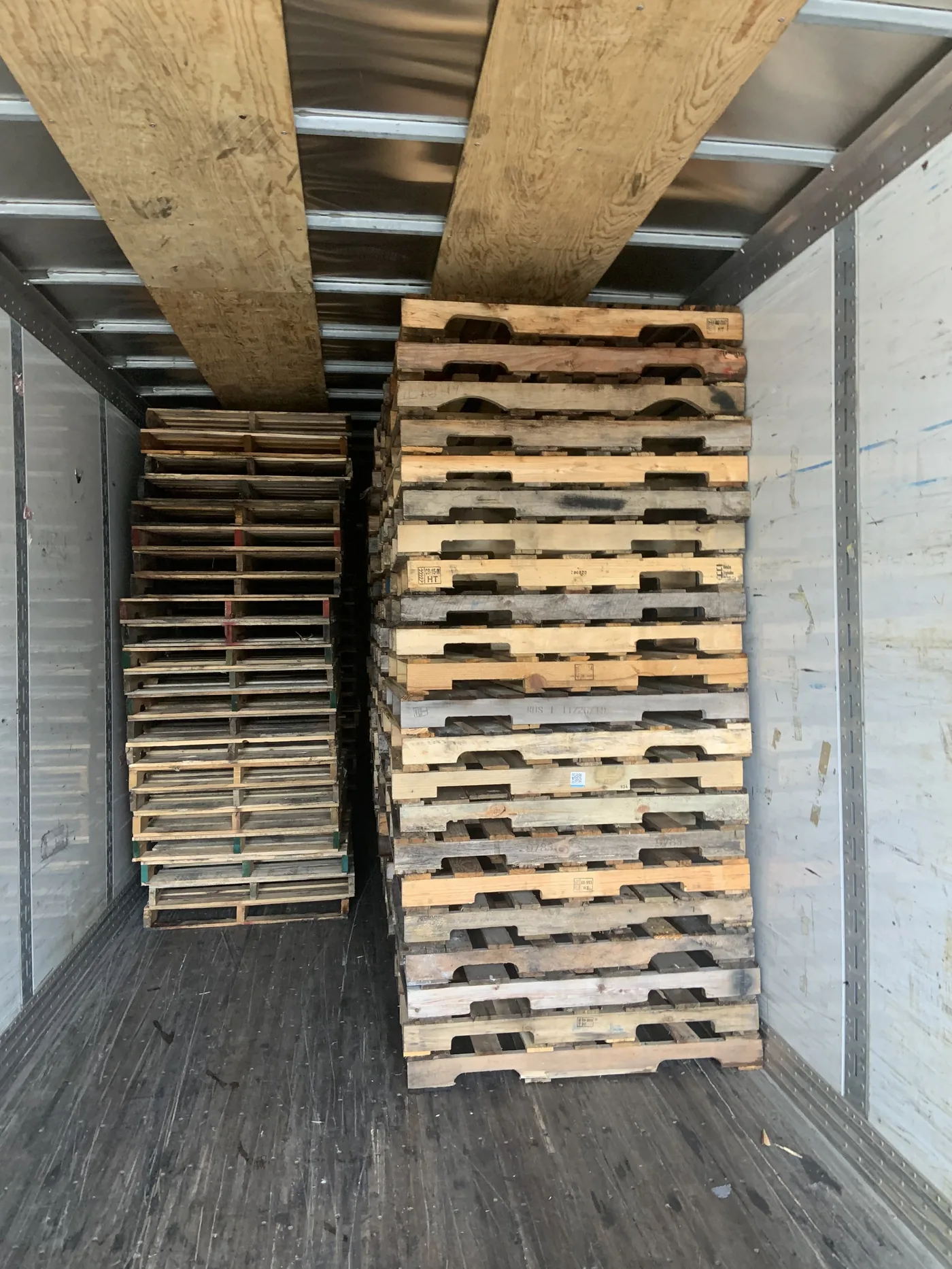
USP supplies heat-treated ISPM-15 IPPC stamped pallets to Saint Paul, Minnesota (55108, Ramsey County) buyers for international export to 180+ IPPC member countries. Heat treatment 56C core temperature for 30+ minutes at ALSC-accredited facility. IPPC mark with country code (US), facility code, and HT designation on every pallet. USDA-APHIS phytosanitary documentation included. Stamping cost +$0.85-1.10 per pallet over base. Required for export to EU (with EUDR alignment effective Dec 30, 2025), China, Japan, Korea, Mexico, Brazil, Canada, Australia, India.
| Pallet Type | Saint Paul Spot Range |
|---|---|
| New GMA 48x40 stringer | $11-18 |
| New GMA 48x40 block | $18-28 |
| Recycled Grade A | $7-11 |
| Custom engineered | $20-200+ |
| Wooden crates | $50-3,000+ |
| ISPM-15 stamping (add) | +$0.85-1.10 |
50 pallets per order minimum on buy-side. Sell-side (buyback) minimum is 250 pallets per single-size load. Volume tiers kick in automatically as cumulative monthly volume increases - 500+/week accounts qualify for standing-order programs with reserved delivery slots.
Yes, with ISPM-15 heat-treated pallets carrying IPPC stamps and full ISPM-15 documentation. Required for international shipments to all WTO member countries. Common for Saint Paul customers with port access via Minnesota's major export gateways.
Yes. We buy back used pallets from Saint Paul collectors, recyclers, and warehouses - 250-pallet minimum per load, single-size only (no mixed-size loads). Fast ACH payment, typically same-day or net-7 depending on volume. Pickup arranged on standard outbound delivery routes.
Yes. Backhaul logistics are coordinated on outbound delivery routes - empty or non-spec pallets get picked up on the return leg of new pallet deliveries. Per-pallet freight cost on the backhaul approaches zero for accounts running both new-pallet purchase + buyback simultaneously.
Net-30 credit terms standard after the first 1-3 prepaid or COD loads while credit is being established. Submit a credit application with three trade references; approval typically processes within 48 hours. Volume accounts can negotiate net-45 or net-60.
Sub-2-hour response.
Heat-treatment chamber maintained at 56C core for 30 minutes per ISPM-15 Annex 1; each load shipped with a treatment certificate signed by a USDA-registered inspector.
Buyback programs pay current market rate for returned pallets in Grade A condition; minimum 50 pallets per pickup; integrated with our recycling stream for sustainability reporting.
Standing-order programs schedule a recurring weekly truckload (or partial) for the same delivery window; price-locked for 12 months; preferred for 3PL warehouse refill cycles.
Custom 42x42 pallet builds use 7/8 inch deck boards for telecommunications-equipment loads; nail-pattern density doubled to handle 5,000 lb static load; runner spacing optimized for 4,000 lb-capacity narrow-aisle reach trucks.
ISPM-15 export pallets receive heat treatment to 56C core temperature for 30 minutes; stamping shows IPPC logo, country code 'US', registered facility number, and treatment code 'HT'.
Drop-trailer programs maintain a customer-dedicated 53-foot trailer on-site; we swap full-for-empty on a scheduled 24/48/72-hour rotation; preferred for high-throughput dock operations.
Manufacturing customers running JIT (just-in-time) lines require pallets delivered to specific dock doors on 2-hour windows; we offer GPS-tracked delivery with 15-minute arrival ETAs.
Custom pallet pricing depends on lumber spec, build complexity, and quantity: small runs (50-200 units) typically $35-55 per unit; large runs (500+ units) drop to $22-32 per unit; quotes returned in <2 hours.
Sustainability reports provided quarterly to standing-order customers; documents pallets recycled, lumber diverted from landfill, and CO2-equivalent savings vs new-only sourcing.