Heat-treated ISPM-15 pallets in Heath, Ohio ZIP 43056. ALSC-accredited 56C core 30+ min, IPPC mark, +$0.85-1.10. Export ready.
Get a Price →Heat-treated ISPM-15 pallets in Heath, Ohio ZIP 43056. ALSC-accredited 56C core 30+ min, IPPC mark, +$0.85-1.10. Export ready.
USP supplies heat-treated ISPM-15 IPPC stamped pallets to Heath, Ohio (43056, Licking County) buyers for international export to 180+ IPPC member countries. Heat treatment 56C core temperature for 30+ minutes at ALSC-accredited facility. IPPC mark with country code (US), facility code, and HT designation on every pallet. USDA-APHIS phytosanitary documentation included. Stamping cost +$0.85-1.10 per pallet over base. Required for export to EU (with EUDR alignment effective Dec 30, 2025), China, Japan, Korea, Mexico, Brazil, Canada, Australia, India.
| Pallet Type | Heath Spot Range |
|---|---|
| New GMA 48x40 stringer | $11-18 |
| New GMA 48x40 block | $18-28 |
| Recycled Grade A | $7-11 |
| Custom engineered | $20-200+ |
| Wooden crates | $50-3,000+ |
| ISPM-15 stamping (add) | +$0.85-1.10 |
Yes, with ISPM-15 heat-treated pallets carrying IPPC stamps and full ISPM-15 documentation. Required for international shipments to all WTO member countries. Common for Heath customers with port access via Ohio's major export gateways.
Yes. Backhaul logistics are coordinated on outbound delivery routes - empty or non-spec pallets get picked up on the return leg of new pallet deliveries. Per-pallet freight cost on the backhaul approaches zero for accounts running both new-pallet purchase + buyback simultaneously.
Yes. We buy back used pallets from Heath collectors, recyclers, and warehouses - 250-pallet minimum per load, single-size only (no mixed-size loads). Fast ACH payment, typically same-day or net-7 depending on volume. Pickup arranged on standard outbound delivery routes.
Net-30 credit terms standard after the first 1-3 prepaid or COD loads while credit is being established. Submit a credit application with three trade references; approval typically processes within 48 hours. Volume accounts can negotiate net-45 or net-60.
50 pallets per order minimum on buy-side. Sell-side (buyback) minimum is 250 pallets per single-size load. Volume tiers kick in automatically as cumulative monthly volume increases - 500+/week accounts qualify for standing-order programs with reserved delivery slots.
Sub-2-hour response.
FSMA Section 204 traceability supported on every food-grade load; pallet ID linked to the lumber lot, kiln batch, and dispatch ticket in our chain-of-custody database.
Ohio Department of Agriculture pesticide regulations require ISPM-15 documentation on pallets carrying treated produce; our heat-treated stock with phytosanitary certification serves Marietta, Wooster, and Lima packers.
Cuyahoga River industrial corridor manufacturers in Cleveland require heavy-duty pallets for steel-coil and bar-stock loads; we supply reinforced 4x4 hardwood stringers rated for 6,000 lb static loads.
Block pallets (four-way entry) use nine 4-inch hardwood blocks with continuous-face top deck; ideal for ASRS (automated storage and retrieval) and AGV (automated guided vehicle) operations where stringer interruptions cause read-failures.
Lumber spec for new GMA stock: mixed hardwood (oak, maple, ash, hickory) with minimum 600 SG (specific gravity); kiln dried to <19% moisture; visible defects limited to wane on outer 1/3 of deck board only.
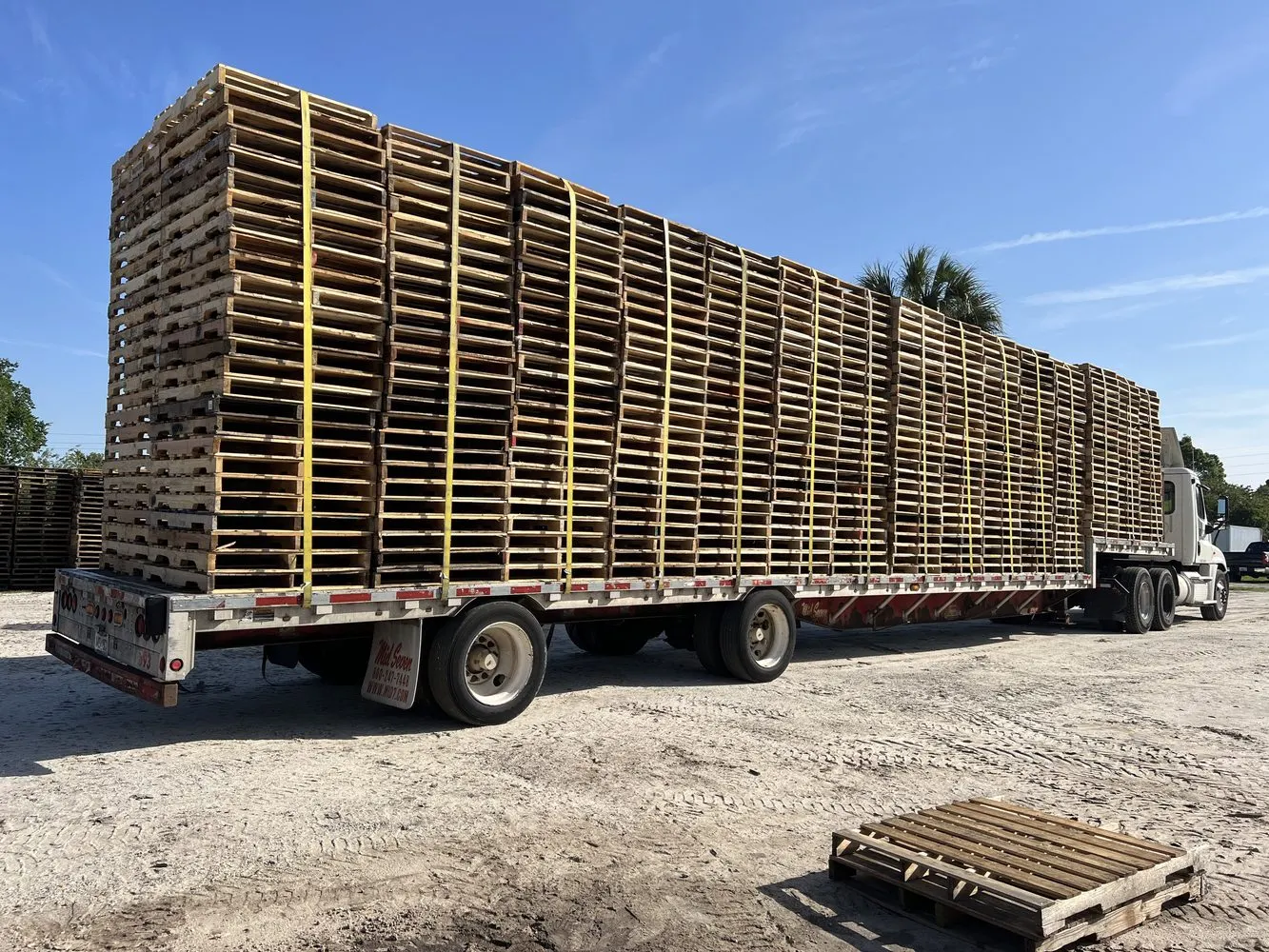
Flatbed delivery handles oversized loads or pallets with overhanging product; tarping included; preferred for export crates and bulk lumber shipments.
Manufacturing customers running JIT (just-in-time) lines require pallets delivered to specific dock doors on 2-hour windows; we offer GPS-tracked delivery with 15-minute arrival ETAs.
Lumber index pricing: we benchmark against the Random Lengths southern yellow pine #2 index for hardwood-blend spec; updates monthly; standing-order pricing protects against +/-15% market swings.
Sustainability reports provided quarterly to standing-order customers; documents pallets recycled, lumber diverted from landfill, and CO2-equivalent savings vs new-only sourcing.