Comprehensive guide to pallet materials science covering wood species, lumber grades, fasteners, treatments, alternative materials (plastic, metal, cardboard), and the manufacturing process from tree to truck. Sourced from US Forest Service, NWPCA, ASTM, and 15+ other authorities.
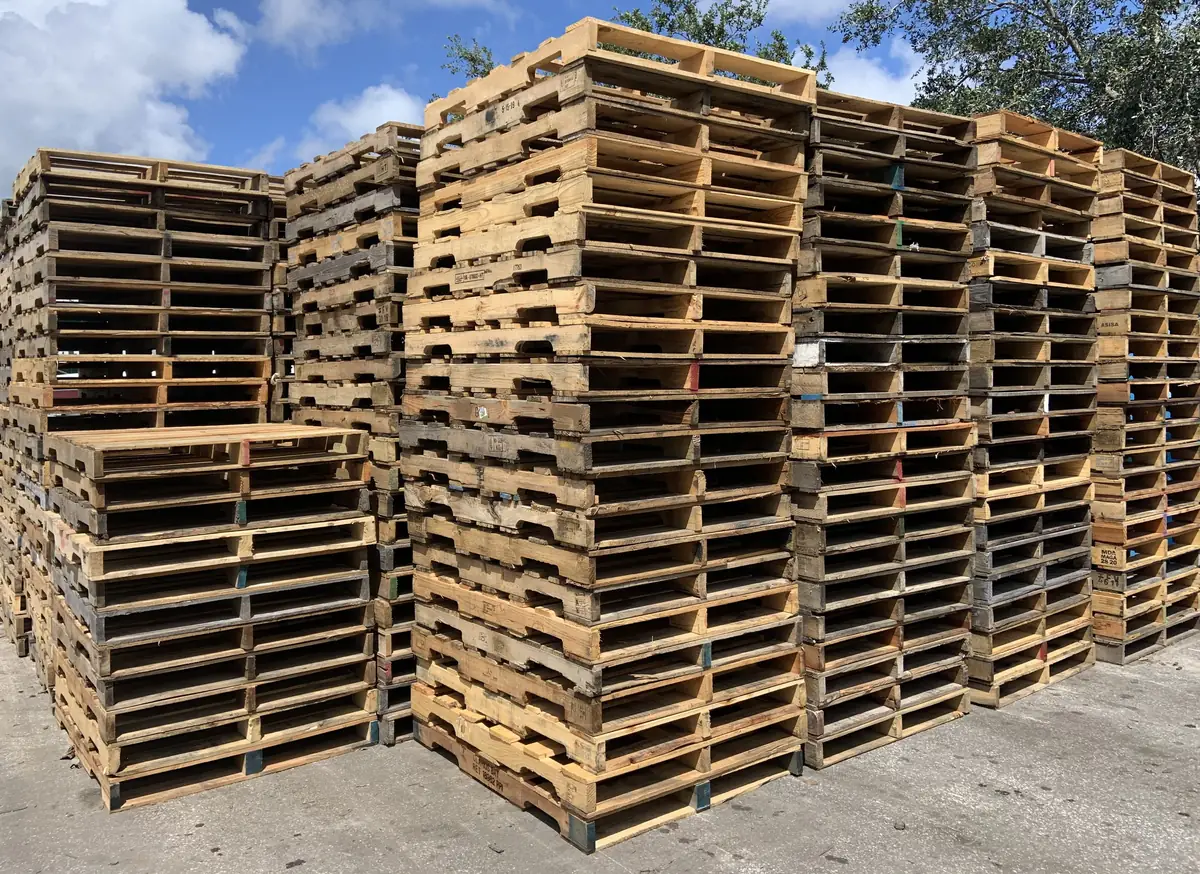
Introduction
Pallet demand in national, United States is shaped by the local economy and the regional supply chain - distribution, manufacturing, and food/beverage operations all consume pallets at predictable cadences. United States Pallets aligns our The Complete Guide to Pallet Materials and Manufacturing delivery rhythm to those operations, with same-day rush options when production schedules tighten and standing-order programs for predictable weekly volume.
When national, United States operations need The Complete Guide to Pallet Materials and Manufacturing at scale, the supplier shortlist comes down to three things: inventory depth, delivery reliability, and documentation. United States Pallets engineers our The Complete Guide to Pallet Materials and Manufacturing program to win on all three - new GMA stock plus recycled Grade A and B always available, scheduled weekly delivery, and BOL/IPPC/grade certifications electronic before each load arrives.
Wood Species for Pallet Construction
US pallet manufacturing primarily uses Mixed Hardwood (oak, maple, hickory, elm), Southern Yellow Pine, Douglas Fir, and various softwoods. Per US Forest Service Forest Resources of the United States 2022 report, US softwood and hardwood inventories have grown over the past 50 years despite increased commercial harvest. Species choice affects: load capacity, weight, lifecycle, decay resistance, and cost.
Lumber Grading
Lumber grading is performed by accredited agencies under the ALSC umbrella. PLIB grades Pacific softwoods. SPIB grades Southern Yellow Pine. HPVA covers hardwood materials. Grade rules define defect tolerances (knots, splits, decay) for No. 1, No. 2, No. 3, and below grades.
Pallet Construction
Standard 48x40 GMA pallet construction includes: 7 top deck boards (5/8 inch thick), 5 bottom deck boards, 3 stringers (1-1/2 inch with 9-inch fork notches), and approximately 84 nails. The NWPCA Uniform Standard documents construction tolerances and grade definitions.
Block vs Stringer Pallets
Stringer pallets (US dominant) use 3 long boards as the structural base. Block pallets (European/heavy-duty) use 9 wood blocks at corners and midpoints. Block pallets enable four-way fork entry and higher load capacity but cost 30-50% more.
Fasteners and Joinery
Pallet fasteners include nails (most common), staples, and screws. Galvanized nails resist corrosion in wet/cold applications. Per ASTM D1185 test data, fastener pattern significantly affects pallet load capacity.
Heat Treatment and Kiln Drying
Heat treatment per ISPM-15 requires 56°C core for 30+ minutes for export ISPM-15 compliance. Kiln drying reduces moisture content to 8-15% for cold-chain and food applications. Both processes use wood-fired or natural gas kilns at accredited facilities.
Alternative Materials
Plastic pallets offer hygiene advantages and longer lifecycle (10-20 years vs 5-7 for wood) but cost 5-10x more upfront. Metal pallets (steel, aluminum) serve heavy-duty industrial applications. Cardboard pallets work for single-use export. Presswood (compressed wood) offers ISPM-15-exempt export option.
Pallet Manufacturing Process
Pallet manufacturing flows from lumber receiving through cutting, assembly, fastening, optional heat treatment or kiln drying, quality inspection, and shipping. Modern facilities produce 1,500-3,000 pallets per shift with automated nailing equipment.
Quality Assurance
QA programs incorporate ASTM D1185 testing (static compression, dynamic compression, racking, fork-tine handling), NWPCA Uniform Standard grade verification, and statistical acceptance sampling per ANSI/ASQ Z1.4.
Sustainability and End-of-Life
Per NWPCA, the US wood pallet industry recovers and recycles approximately 95% of pallets. Repair and reuse extends typical lifecycle to 5-7 use cycles. End-of-life pallets become mulch, biomass fuel, or particle board feedstock. USFS reports support sustainable supply.
In-Depth Resources Across This Topic
- Wood Species for Pallets
- Pallet Fasteners
- Deck Board Thickness
- Stringer Spacing
- Plastic Pallets
- Metal Pallets
- Cardboard Pallets
- Presswood Pallets
- Oak Pallet Specs
- Southern Yellow Pine Pallets
- Douglas Fir Pallets
- Mixed Hardwood Pallets
- Kiln-Dried Pallets
- Heat Treated vs Kiln Dried
- Moisture Content
- Lumber Grading
- PLIB Grading Rules
- SPIB Grading Rules
- Hardwood Grading
- ASTM D1185 Testing
Authoritative Sources Cited Throughout This Guide
- US Forest Service (USFS): the federal agency that manages the National Forest System and reports on US lumber supply used in pallet production.
- National Wooden Pallet & Container Association (NWPCA): the US trade association representing wood pallet manufacturers, recyclers, and component producers, founded in 1947.
- ASTM International (ASTM): the global standards body that publishes ASTM D1185 (Standard Test Methods for Pallets and Related Structures Employed in Materials Handling and Shipping).
- American Lumber Standard Committee (ALSC): the committee that accredits lumber grading agencies under the US Department of Commerce voluntary product standard PS 20.
- Pacific Lumber Inspection Bureau (PLIB): the lumber grading agency accredited by the American Lumber Standard Committee for Pacific softwoods used in pallet production.
- Southern Pine Inspection Bureau (SPIB): the lumber grading authority for Southern Yellow Pine, the most common pallet stock in the US Southeast.
- Hardwood Plywood & Veneer Association (HPVA): the trade association for hardwood materials used in heavy-duty pallet construction.
- FAO ISPM-15 Standard (ISPM-15): the international phytosanitary standard for wood packaging used in international trade, published by the FAO.
- Forest Stewardship Council US (FSC): the global non-profit setting forest stewardship standards and chain-of-custody certification for pallet wood.
- Sustainable Forestry Initiative (SFI): the forest certification program with chain-of-custody standards for sustainably sourced pallet lumber.