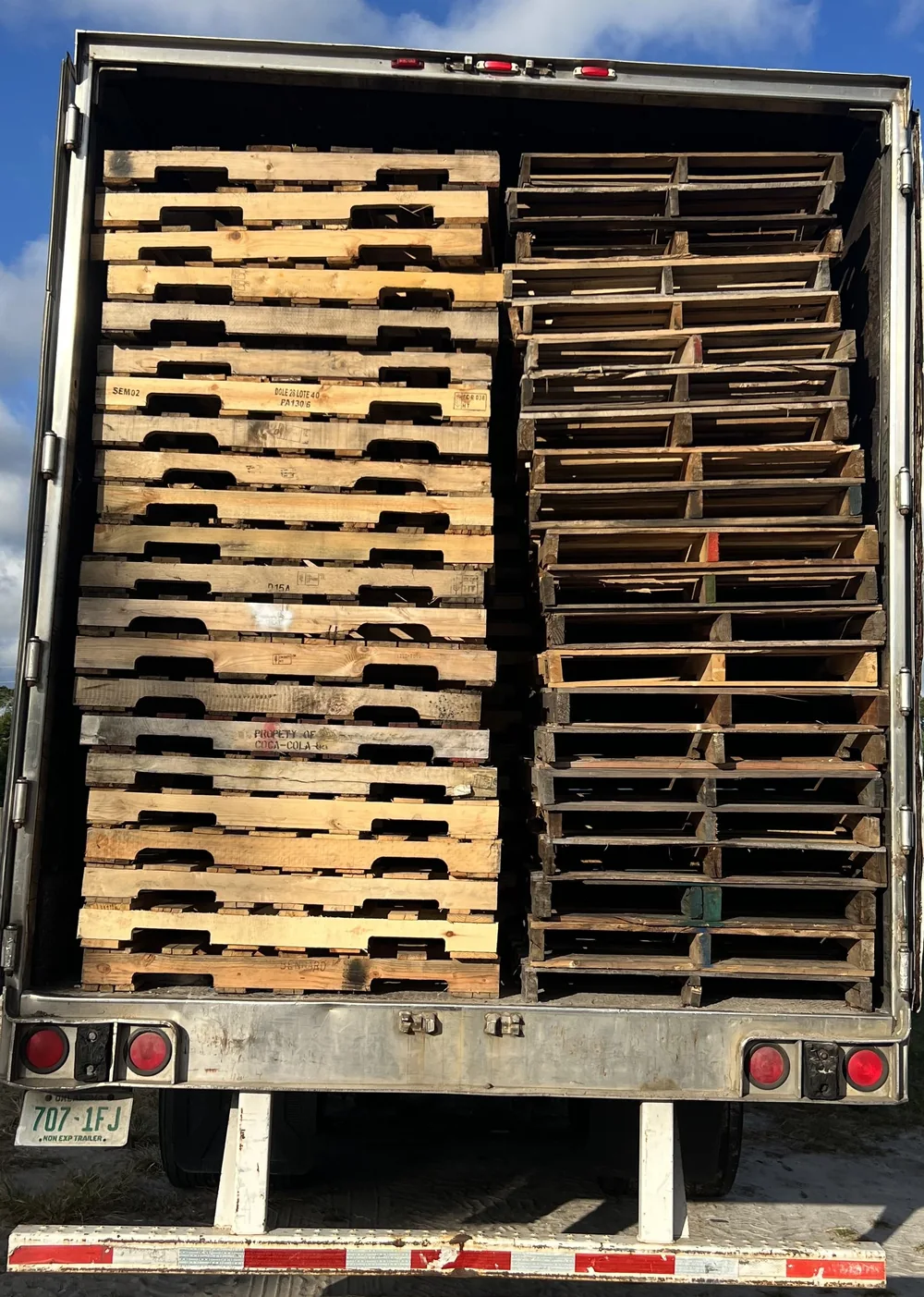
A pallet that can be entered by forklift or pallet jack from only two opposite sides, common in stringer-only construction.
Detailed Definition
A two-way entry pallet is built so forks can enter from only two opposite sides. Most are stringer pallets with solid, unnotched stringers, with the entry openings at the stringer ends. Because the stringers are not cut, they keep their full depth along their whole length, which some buyers prefer for heavy or racked loads. The trade-off is handling flexibility: the pallet must always face the fork truck with an entry side.
Construction details to specify
When ordering a two-way entry pallet, specify the footprint, which dimension is the stringer length, the number and size of stringers, and the top and bottom deck board layout. State clearly that stringers are to be unnotched, because many suppliers notch 48x40 stringers by default. Also give the opening height between decks so it fits the forks and pallet jacks used at both the shipping and receiving sites.
When a two-way pallet is the right choice
Two-way entry pallets are common for in-plant and captive use, skids and crate bases where side entry is not needed, and heavy loads where the buyer wants uncut stringers. They are also common in odd sizes built around a product rather than a retail standard. For shipments into retail or grocery networks, compare the design with the receiver's specification first, because those networks often expect partial four-way or four-way entry.
Inspection and repair
Inspect stringers for cracks and splits, especially near the ends where forks strike. Damaged stringers are often repaired with a companion stringer or metal plate fastened alongside. Keep repairs within any written standard the buyer uses, and confirm that repaired export pallets still meet ISPM 15 rules.
Related Glossary Terms
Frequently Asked Questions
Is a two-way entry pallet stronger than a partial four-way pallet?
With the same lumber and design, unnotched stringers are generally stiffer and stronger than notched ones, because notching removes wood from the stringer. Whether the difference matters depends on the load, how the pallet is supported and the stringer size. Use pallet design software or testing to compare rated capacities rather than assuming that two-way entry alone makes a pallet suitable for a load.
Can a two-way entry pallet be converted to partial four-way?
Notches can be cut into existing stringers, but doing so reduces stringer strength and should only be done with a design that accounts for it. Most suppliers instead build partial four-way pallets with notched stringers from the start. If you need side entry, specify notched stringers or a block pallet when ordering rather than modifying pallets in the field.