MB fumigation as ISPM-15 alternative.
When nationwide, United States operations need pallet supply at scale, the supplier shortlist comes down to three things: inventory depth, delivery reliability, and documentation. United States Pallets engineers our pallet supply program to win on all three - new GMA stock plus recycled Grade A and B always available, scheduled weekly delivery, and BOL/IPPC/grade certifications electronic before each load arrives.
Whether you're operating a single nationwide warehouse or a multi-site network across United States, the pallet supply requirements are the same: consistent grade, on-time delivery, accurate count, and clean paperwork. United States Pallets built our pallet supply program around exactly that profile of customer.
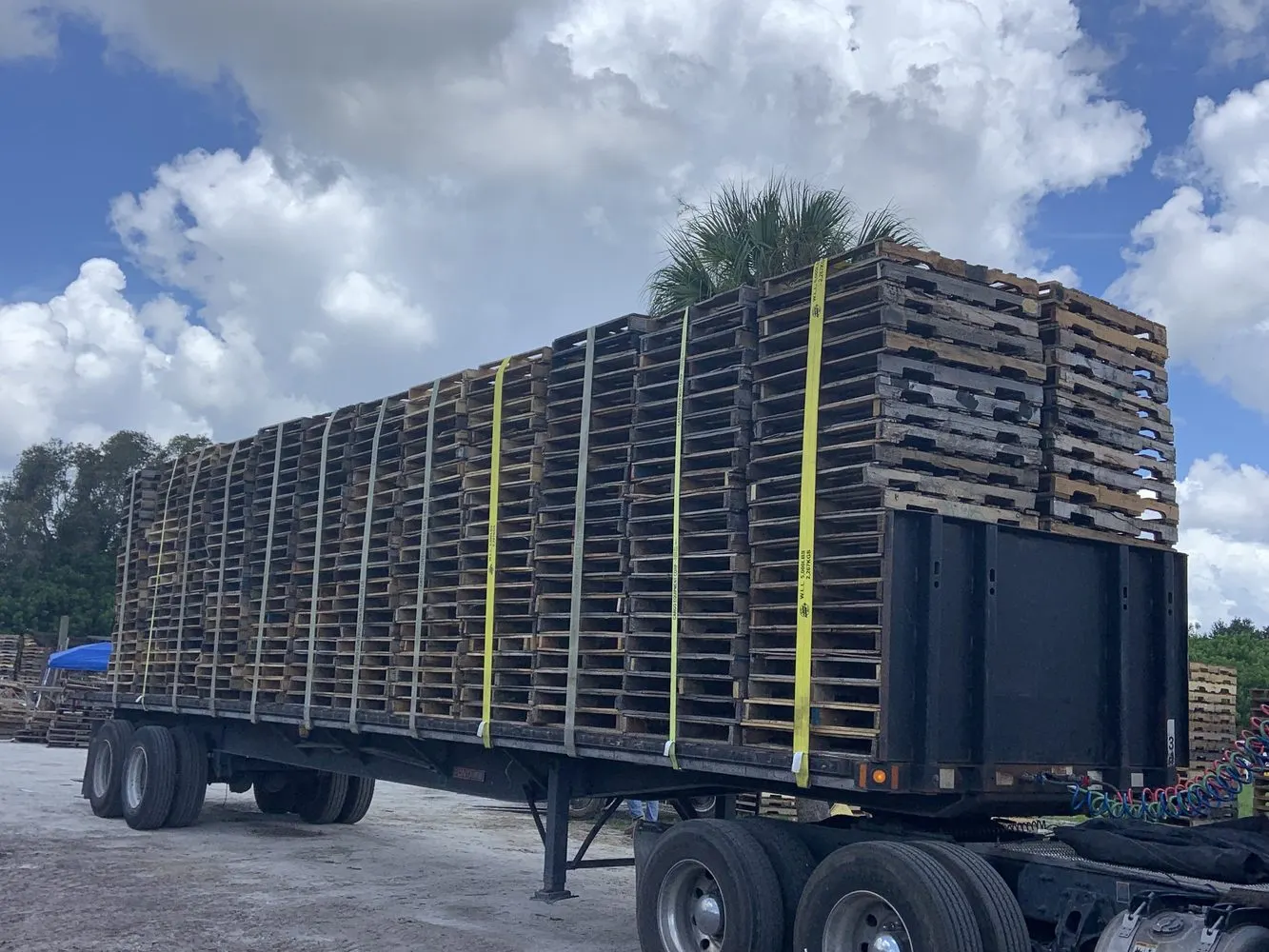
Communication discipline: most pallet vendors run phone-only ordering with opaque ETAs. United States Pallets operates a digital pipeline - web quotes, electronic order confirmations, real-time load tracking after dispatch, and a single dispatch coordinator assigned to each nationwide account for the first three loads to smooth the sales-to-ops handoff.
Yes, with ISPM-15 heat-treated pallets carrying IPPC stamps and full ISPM-15 documentation. Required for international shipments to all WTO member countries. Common for nationwide customers with port access via United States\'s major export gateways.
Same-day shipping in our Southeast/Mid-Atlantic core (FL, GA, AL, TN, MS, SC, NC, KY, VA) and scheduled weekly delivery elsewhere. Express options available for nationwide rush orders. Quote response under 2 business hours, dispatch within hours of order confirmation.
Yes. Backhaul logistics are coordinated on outbound delivery routes - empty or non-spec pallets get picked up on the return leg of new pallet deliveries. Per-pallet freight cost on the backhaul approaches zero for accounts running both new-pallet purchase + buyback simultaneously.
Yes. We deliver to every commercial address in United States, with same-day shipping standard in our Southeast/Mid-Atlantic core and scheduled weekly delivery elsewhere. nationwide-area accounts are typical - submit a quote with your dock location and we route accordingly.
50 pallets per order minimum on buy-side. Sell-side (buyback) minimum is 250 pallets per single-size load. Volume tiers kick in automatically as cumulative monthly volume increases - 500+/week accounts qualify for standing-order programs with reserved delivery slots.
Response under 2 business hours.
FSMA Section 204 traceability supported on every food-grade load; pallet ID linked to the lumber lot, kiln batch, and dispatch ticket in our chain-of-custody database.
FL DEP solid-waste rules classify wood pallets as recyclable; our recycled pallet stream qualifies for the FL Recycling Business Assistance Center small-business grant program.
FAA Part 121 air-cargo operations at MIA, MCO, and TPA require flame-retardant treated pallets for in-cabin loads; we maintain Class A flame-rated stock for forwarder accounts.
Pallet weight: new GMA averages 38-42 lb per unit; recycled Grade A averages 35-39 lb; lighter chemical-industry 40x40 pallets weigh 28-32 lb; freight estimation should use 40 lb/pallet for inbound planning.
Block pallets (four-way entry) use nine 4-inch hardwood blocks with continuous-face top deck; ideal for ASRS (automated storage and retrieval) and AGV (automated guided vehicle) operations where stringer interruptions cause read-failures.
Same-day delivery available within 75 miles of our Tampa, Orlando, Jacksonville, Miami, and Lakeland yards; minimum 24 pallets; small-order pricing applies on freight.
Cold storage facilities (Plant City corridor) use HDPE plastic pallets that wash down at 180F; suitable for USDA Grade A dairy plants and frozen-protein operations; we lease as well as sell.
ISPM-15 export documentation included on every applicable load at no additional cost; some competitors charge $50-150 per load for the certificate; we don't.
Our Lakeland and Jacksonville recycling streams process 200,000+ pallets per year; broken stock is repaired or chipped for mulch (sold separately); zero-landfill goal targeted for 2027.