REACH-compliant pallet specs for chemical industry.
United States Pallets is the national-network alternative to local United States pallet suppliers for nationwide-area B2B buyers. Where regional vendors offer geographic proximity, USP offers nationwide sourcing depth, multi-grade always-in-stock inventory, sub-2-hour quote response, and the documentation discipline pallet supply customers need at scale.
Whether you're operating a single nationwide warehouse or a multi-site network across United States, the pallet supply requirements are the same: consistent grade, on-time delivery, accurate count, and clean paperwork. United States Pallets built our pallet supply program around exactly that profile of customer.
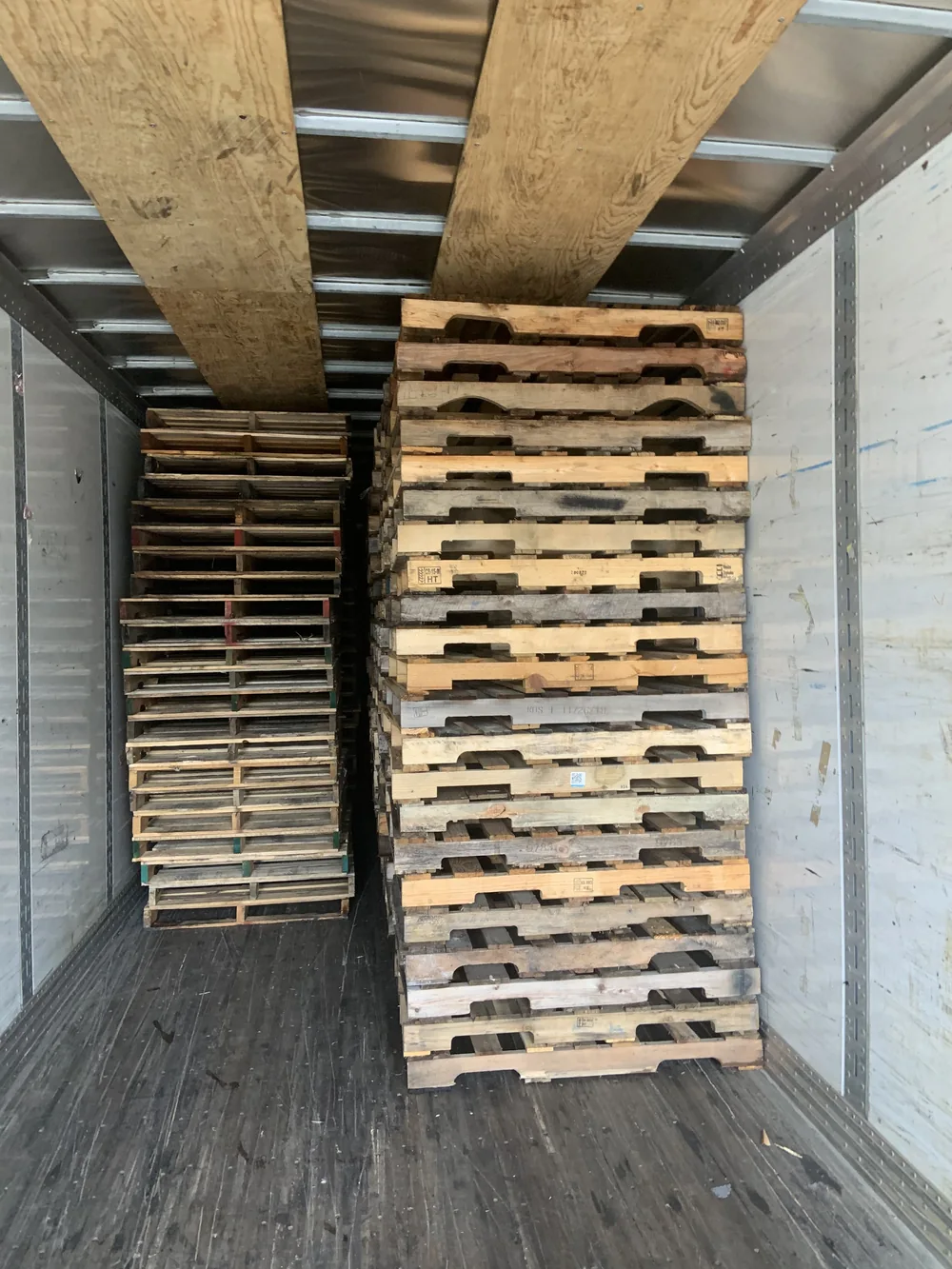
Pricing transparency: United States Pallets publishes pallet supply pricing structures (not specific dollar amounts since lumber markets move). Volume tiers kick in automatically as cumulative monthly volume crosses thresholds. New nationwide accounts ship prepaid for 1-3 loads while credit is being established, then move to net-30 standard.
Yes. Backhaul logistics are coordinated on outbound delivery routes - empty or non-spec pallets get picked up on the return leg of new pallet deliveries. Per-pallet freight cost on the backhaul approaches zero for accounts running both new-pallet purchase + buyback simultaneously.
Yes, with ISPM-15 heat-treated pallets carrying IPPC stamps and full ISPM-15 documentation. Required for international shipments to all WTO member countries. Common for nationwide customers with port access via United States\'s major export gateways.
Same-day shipping in our Southeast/Mid-Atlantic core (FL, GA, AL, TN, MS, SC, NC, KY, VA) and scheduled weekly delivery elsewhere. Express options available for nationwide rush orders. Quote response under 2 business hours, dispatch within hours of order confirmation.
Yes. We buy back used pallets from nationwide collectors, recyclers, and warehouses - 250-pallet minimum per load, single-size only (no mixed-size loads). Fast ACH payment, typically same-day or net-7 depending on volume. Pickup arranged on standard outbound delivery routes.
Yes. We deliver to every commercial address in United States, with same-day shipping standard in our Southeast/Mid-Atlantic core and scheduled weekly delivery elsewhere. nationwide-area accounts are typical - submit a quote with your dock location and we route accordingly.
Response under 2 business hours.
FSMA Section 204 traceability supported on every food-grade load; pallet ID linked to the lumber lot, kiln batch, and dispatch ticket in our chain-of-custody database.
Florida Sales Tax Exemption Form DR-46NT applies to pallets purchased for resale or for use in manufacturing of tangible personal property; we provide the form with every commercial invoice.
FDA registered facilities in Lakeland and Jacksonville require pallets that meet FDA 21 CFR 178.3520 indirect food additive specification; our food-grade stock is tested for compliance every 90 days.
ISPM-15 export pallets receive heat treatment to 56C core temperature for 30 minutes; stamping shows IPPC logo, country code 'US', registered facility number, and treatment code 'HT'.
Pallet weight: new GMA averages 38-42 lb per unit; recycled Grade A averages 35-39 lb; lighter chemical-industry 40x40 pallets weigh 28-32 lb; freight estimation should use 40 lb/pallet for inbound planning.
Drop-trailer programs maintain a customer-dedicated 53-foot trailer on-site; we swap full-for-empty on a scheduled 24/48/72-hour rotation; preferred for high-throughput dock operations.
Cold storage facilities (Plant City corridor) use HDPE plastic pallets that wash down at 180F; suitable for USDA Grade A dairy plants and frozen-protein operations; we lease as well as sell.
Buyback pricing for returned pallets: $3-5 per Grade A unit; $1-2 per Grade B; minimum 50-pallet pickup; integrated with our recycling stream for sustainability accounting.
Sustainability reports provided quarterly to standing-order customers; documents pallets recycled, lumber diverted from landfill, and CO2-equivalent savings vs new-only sourcing.