Crating Services for New York operations with same-day quote response.
Get a Price →Industrial-scale Crating Services for New York, New York customers requires more than just stock on hand - it requires consistent dimensional tolerances, batch-quality records, and documentation that satisfies SOX, FDA, USDA, ISO 9001, and similar audit frameworks. United States Pallets ships every Crating Services load with the documentation packet pre-attached electronically, no dock-side delays.
Crating Services suppliers serving New York businesses range from regional yards with limited inventory to national networks with deep multi-grade stock. United States Pallets sits in the second category, structured specifically for high-volume B2B operations - 50+ pallets per order minimum, scheduled programs for 500+/week accounts, and dimensional consistency tight enough for AGV-equipped warehouses.
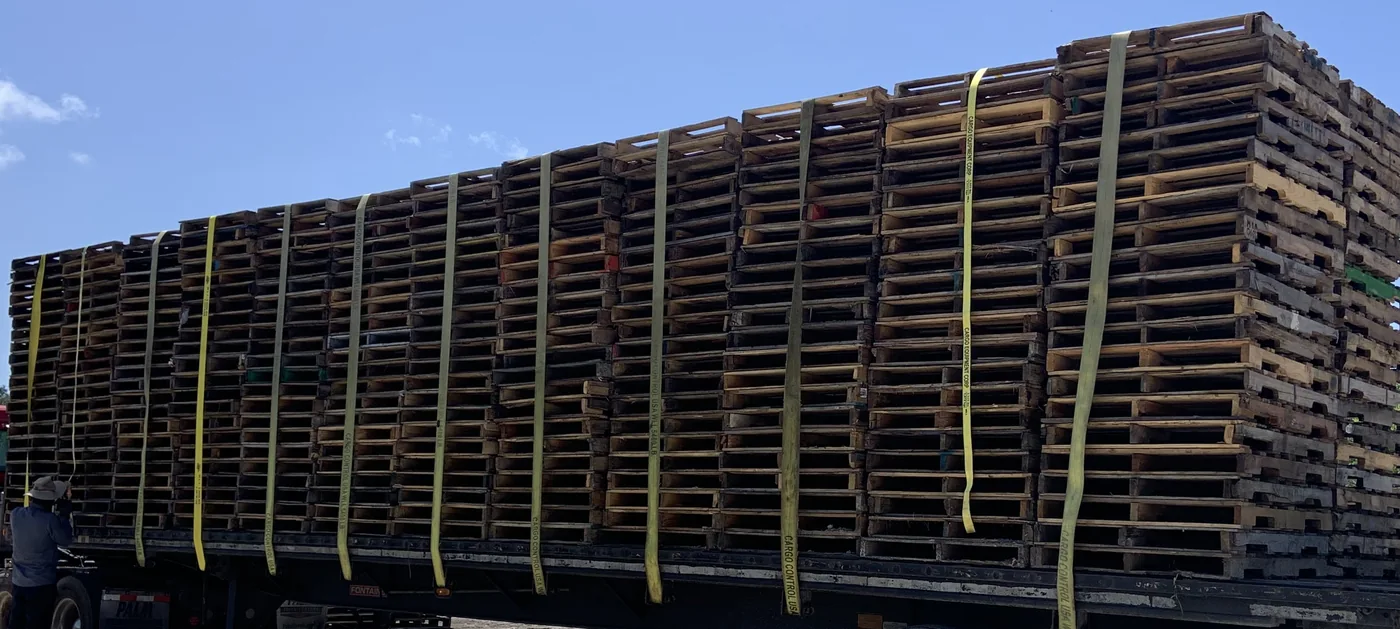
On-site and in-shop crating services - measure, build, pack, and ship custom crates for any product.
Yes. We buy back used pallets from New York collectors, recyclers, and warehouses - 250-pallet minimum per load, single-size only (no mixed-size loads). Fast ACH payment, typically same-day or net-7 depending on volume. Pickup arranged on standard outbound delivery routes.
Yes. Backhaul logistics are coordinated on outbound delivery routes - empty or non-spec pallets get picked up on the return leg of new pallet deliveries. Per-pallet freight cost on the backhaul approaches zero for accounts running both new-pallet purchase + buyback simultaneously.
Net-30 credit terms standard after the first 1-3 prepaid or COD loads while credit is being established. Submit a credit application with three trade references; approval typically processes within 48 hours. Volume accounts can negotiate net-45 or net-60.
Yes, with ISPM-15 heat-treated pallets carrying IPPC stamps and full ISPM-15 documentation. Required for international shipments to all WTO member countries. Common for New York customers with port access via New York's major export gateways.
Local New York suppliers offer geographic proximity. United States Pallets offers nationwide sourcing depth, multi-grade inventory always in stock, sub-2-business-hour quote response, audit-ready documentation, and standing-order automation that local yards typically don't match.
Response under 2 business hours.
FSMA Section 204 traceability supported on every food-grade load; pallet ID linked to the lumber lot, kiln batch, and dispatch ticket in our chain-of-custody database.
New York State Department of Transportation oversize-load permits restrict pallet shipments via I-87 Thruway and I-95; our DOT-permitted carriers handle JFK-area, Albany-corridor, and Buffalo-Niagara routing.
New York State Liquor Authority regulations require returnable-pallet documentation for wholesale alcohol distribution; our beverage-grade stock with NYSLA-compliant identification serves Brooklyn, Yonkers, and Hudson Valley distributors.
Pallet weight: new GMA averages 38-42 lb per unit; recycled Grade A averages 35-39 lb; lighter chemical-industry 40x40 pallets weigh 28-32 lb; freight estimation should use 40 lb/pallet for inbound planning.
ISPM-15 export pallets receive heat treatment to 56C core temperature for 30 minutes; stamping shows IPPC logo, country code 'US', registered facility number, and treatment code 'HT'.
Live-load operations bring the trailer to your dock for a 90-minute window; loader/unloader provided; suited to customers without dedicated dock space or with intermittent volume.
Pharmaceutical distribution centers in Hillsborough and Orange counties require GDP-validated cold-chain pallets; we supply plastic-construction reusable pallets that wash down for sterile transfer applications.
Lumber index pricing: we benchmark against the Random Lengths southern yellow pine #2 index for hardwood-blend spec; updates monthly; standing-order pricing protects against +/-15% market swings.
Sustainability reports provided quarterly to standing-order customers; documents pallets recycled, lumber diverted from landfill, and CO2-equivalent savings vs new-only sourcing.