Industry-tuned block pallets - four-way entry for biotech & life sciences buyers across Michigan.
Get a Price →When Michigan, Michigan operations need Block Pallets - Four-Way Entry for Biotech & Life Sciences at scale, the supplier shortlist comes down to three things: inventory depth, delivery reliability, and documentation. United States Pallets engineers our Block Pallets - Four-Way Entry for Biotech & Life Sciences program to win on all three - new GMA stock plus recycled Grade A and B always available, scheduled weekly delivery, and BOL/IPPC/grade certifications electronic before each load arrives.
Block Pallets - Four-Way Entry for Biotech & Life Sciences in Michigan, Michigan is foundational infrastructure for any commercial operation moving goods through Michigan's industrial supply chain. United States Pallets (Michigan customers reach us at our national dispatch line) provides Block Pallets - Four-Way Entry for Biotech & Life Sciences on a 50-pallet minimum with same-day shipping in our Southeast/Mid-Atlantic core and scheduled weekly delivery to Michigan elsewhere.
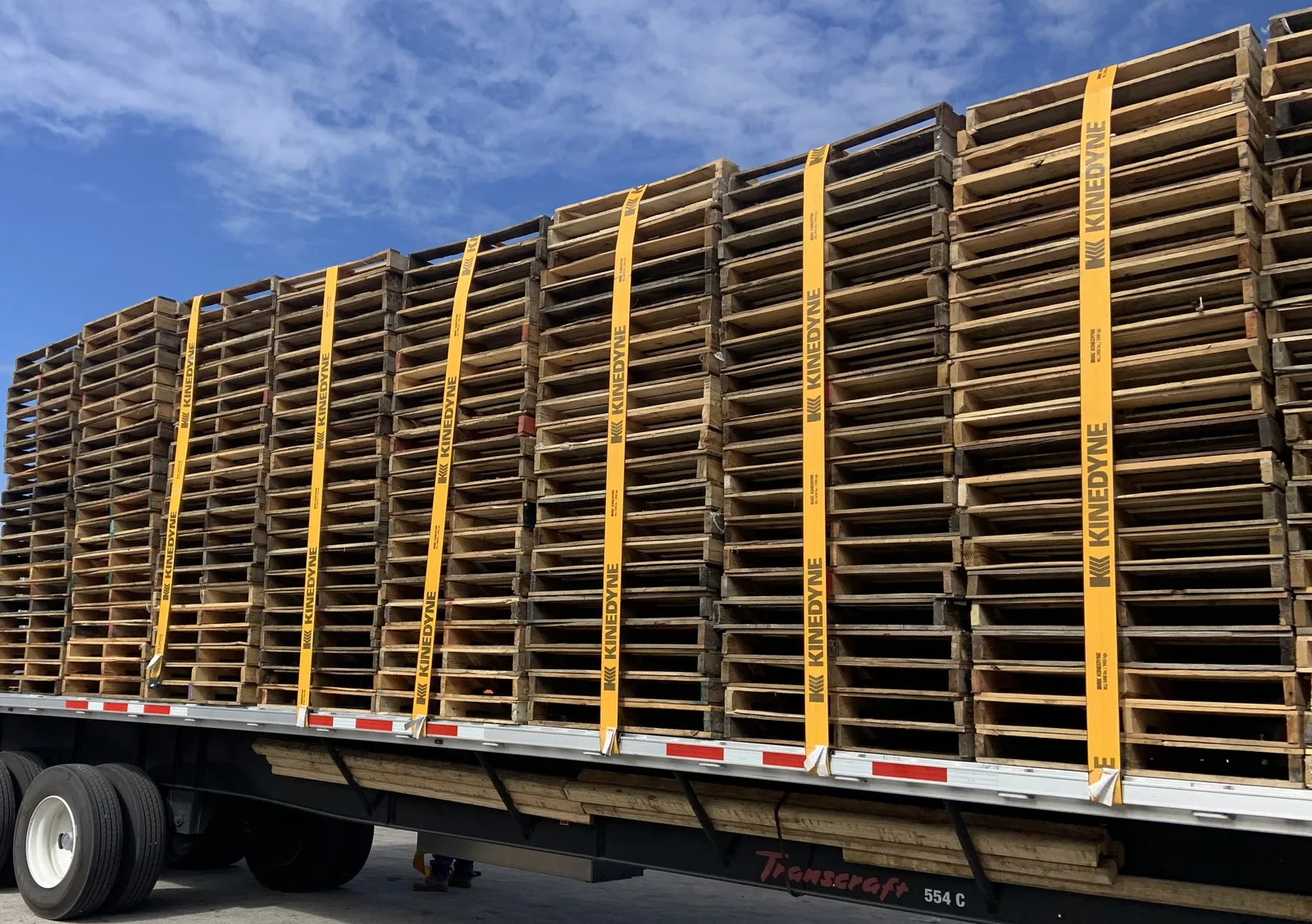
Yes. Backhaul logistics are coordinated on outbound delivery routes - empty or non-spec pallets get picked up on the return leg of new pallet deliveries. Per-pallet freight cost on the backhaul approaches zero for accounts running both new-pallet purchase + buyback simultaneously.
Net-30 credit terms standard after the first 1-3 prepaid or COD loads while credit is being established. Submit a credit application with three trade references; approval typically processes within 48 hours. Volume accounts can negotiate net-45 or net-60.
50 pallets per order minimum on buy-side. Sell-side (buyback) minimum is 250 pallets per single-size load. Volume tiers kick in automatically as cumulative monthly volume increases - 500+/week accounts qualify for standing-order programs with reserved delivery slots.
BOL, packing list, grade certifications standard. Heat-treated loads add IPPC stamps and ISPM-15 documentation. Pharma-grade loads add batch records. Food-grade loads add FSMA Sanitary Transportation Rule certifications. All documentation ships electronically before delivery.
Yes. Standing-order programs for Michigan operations running 500+ pallets/week lock in tiered pricing, reserve delivery slots, and run on autopilot in the background. Custom contract terms available for accounts running 2,000+/week.
Response under 2 business hours.
All pallets stamped IPPC HT for ISPM-15 export compliance to 180+ countries; documentation includes treatment temperature logs and the registered facility number.
Michigan Department of Environment, Great Lakes, and Energy (EGLE) regulates wood pallet recycling under Part 115; our partner facilities in Detroit, Grand Rapids, and Lansing maintain EGLE permits for return-stream service.
Michigan automotive supply-chain logistics require JIT pallet delivery to assembly plants; we provide GPS-tracked delivery with 15-minute arrival ETAs to GM Warren, Ford Dearborn, and Stellantis Auburn Hills facilities.
Recycled-Grade B pallets meet structural spec but may have up to 2 replaced deck boards; suitable for industrial loads outside food/pharma; price point 30-40% below new GMA.
Standard 48x40 GMA pallets feature 5/8 inch deck boards with a 4-board face pattern; bottom configuration is 3-board for four-way fork entry; nail pattern uses 2.5 inch screw-shank galvanized fasteners.
Standard delivery scheduling: orders confirmed by 2 PM EST ship same day from the nearest yard; orders after 2 PM ship next-business-day; weekend dispatch available with 24-hour notice for premium accounts.
Citrus packhouses operate seasonal volume peaks November-April; we maintain dedicated Polk County and Indian River inventory to support 6-12 truckload weekly delivery during peak; standing-order pricing locks rates Oct 1.
Delivery freight runs $250-450 per truckload (53-foot) within 75 miles of a yard; longer hauls priced at $2.50-3.50 per loaded mile; flatbed loads premium 10-15%.
Lumber sourcing prioritizes regional Southeast US hardwood mills (FL, AL, GA, MS); reduces transport carbon vs Pacific Northwest stock; supports regional logging economies.