Industry-tuned block pallets - four-way entry for cleaning & janitorial chemicals buyers across Illinois.
Get a Price →Illinois businesses handling commercial pallet supply for Illinois-area operations need a supplier that delivers consistent grade quality, dimensional tolerances tighter than industry standard, and audit-ready documentation. United States Pallets Block Pallets - Four-Way Entry for Cleaning & Janitorial Chemicals for Illinois meets each of those bars, with quote response under 2 business hours and net-30 credit terms after the first 1-3 prepaid loads.
Whether you're operating a single Illinois warehouse or a multi-site network across Illinois, the Block Pallets - Four-Way Entry for Cleaning & Janitorial Chemicals requirements are the same: consistent grade, on-time delivery, accurate count, and clean paperwork. United States Pallets built our Block Pallets - Four-Way Entry for Cleaning & Janitorial Chemicals program around exactly that profile of customer.
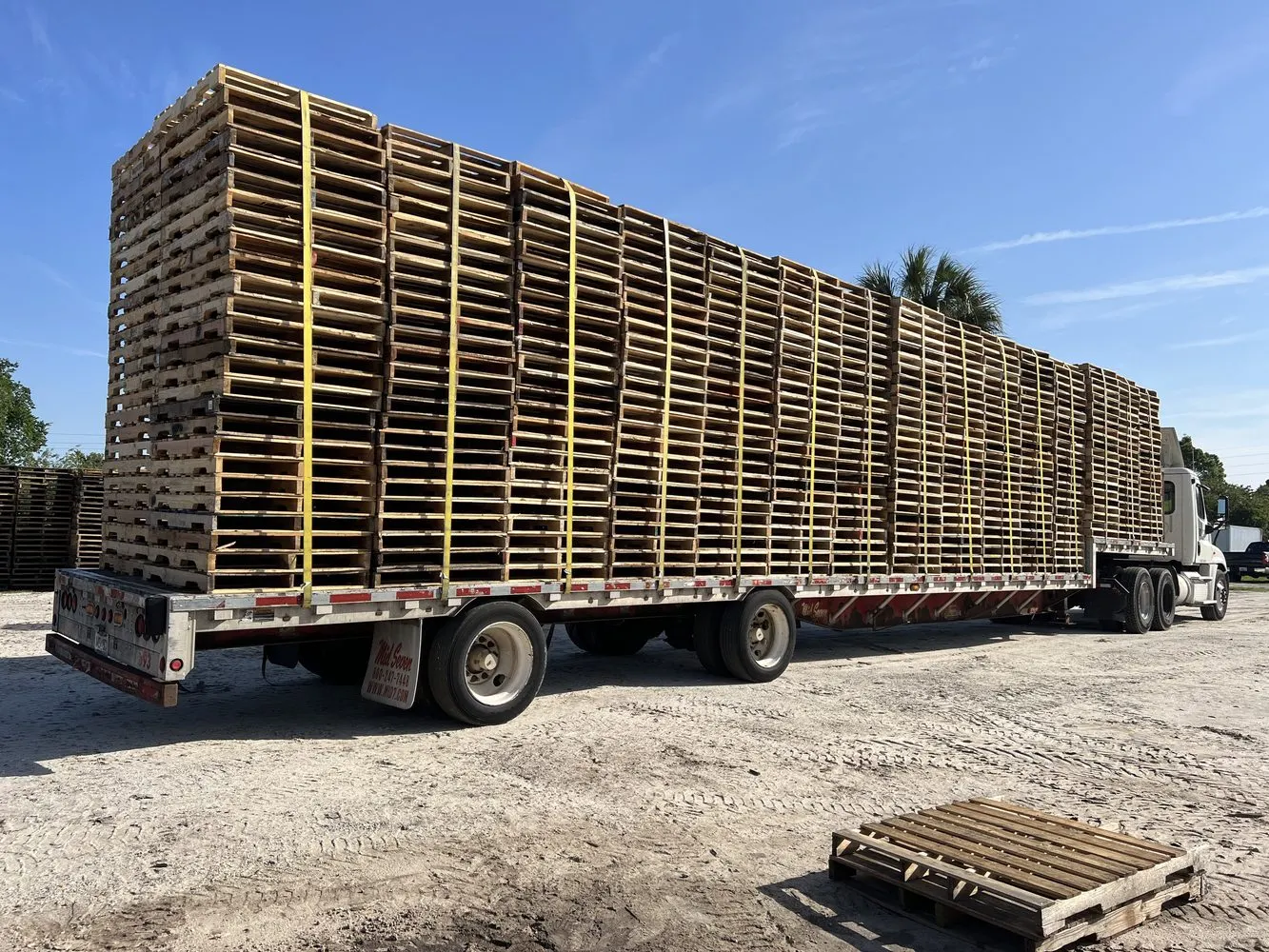
50 pallets per order minimum on buy-side. Sell-side (buyback) minimum is 250 pallets per single-size load. Volume tiers kick in automatically as cumulative monthly volume increases - 500+/week accounts qualify for standing-order programs with reserved delivery slots.
Local Illinois suppliers offer geographic proximity. United States Pallets offers nationwide sourcing depth, multi-grade inventory always in stock, sub-2-business-hour quote response, audit-ready documentation, and standing-order automation that local yards typically don\'t match.
Yes. We deliver to every commercial address in Illinois, with same-day shipping standard in our Southeast/Mid-Atlantic core and scheduled weekly delivery elsewhere. Illinois-area accounts are typical - submit a quote with your dock location and we route accordingly.
Net-30 credit terms standard after the first 1-3 prepaid or COD loads while credit is being established. Submit a credit application with three trade references; approval typically processes within 48 hours. Volume accounts can negotiate net-45 or net-60.
Yes, with ISPM-15 heat-treated pallets carrying IPPC stamps and full ISPM-15 documentation. Required for international shipments to all WTO member countries. Common for Illinois customers with port access via Illinois\'s major export gateways.
Response under 2 business hours.
FSMA Section 204 traceability supported on every food-grade load; pallet ID linked to the lumber lot, kiln batch, and dispatch ticket in our chain-of-custody database.
Chicago Tribune-published wholesale grocery cooperatives use returnable-pallet programs; our buyback pricing for Grade A returns supports cost-control for SUPERVALU, Kehe, and UNFI distribution networks.
Illinois EPA Section 22.6 of the Environmental Protection Act regulates wood pallet recycling; our partner facilities in Chicago, Rockford, and Peoria maintain Illinois EPA registration for return-stream service.
Custom 42x42 pallet builds use 7/8 inch deck boards for telecommunications-equipment loads; nail-pattern density doubled to handle 5,000 lb static load; runner spacing optimized for 4,000 lb-capacity narrow-aisle reach trucks.
Standard 48x40 GMA pallets feature 5/8 inch deck boards with a 4-board face pattern; bottom configuration is 3-board for four-way fork entry; nail pattern uses 2.5 inch screw-shank galvanized fasteners.
Live-load operations bring the trailer to your dock for a 90-minute window; loader/unloader provided; suited to customers without dedicated dock space or with intermittent volume.
Bakery operations typically order weekly 48x40 GMA stock for flour and sugar inbound, plus 36x36 for retail-ready display loads; common customers in the Tampa Bay area include large wholesale and grocery-aligned bakeries.
Pricing structure: new 48x40 GMA stock ranges $14-18 per pallet in 500+ lot pricing; recycled Grade A runs $7-10 per pallet; recycled Grade B at $5-7; custom builds priced per spec on a quote basis.
Lumber sourcing prioritizes regional Southeast US hardwood mills (FL, AL, GA, MS); reduces transport carbon vs Pacific Northwest stock; supports regional logging economies.