Industry-tuned block pallets - four-way entry for electronics & semiconductors buyers across Georgia.
Get a Price →Whether you're operating a single Georgia warehouse or a multi-site network across Georgia, the Block Pallets - Four-Way Entry for Electronics & Semiconductors requirements are the same: consistent grade, on-time delivery, accurate count, and clean paperwork. United States Pallets built our Block Pallets - Four-Way Entry for Electronics & Semiconductors program around exactly that profile of customer.
Block Pallets - Four-Way Entry for Electronics & Semiconductors in Georgia, Georgia is foundational infrastructure for any commercial operation moving goods through Georgia's industrial supply chain. United States Pallets (Georgia customers reach us at our national dispatch line) provides Block Pallets - Four-Way Entry for Electronics & Semiconductors on a 50-pallet minimum with same-day shipping in our Southeast/Mid-Atlantic core and scheduled weekly delivery to Georgia elsewhere.
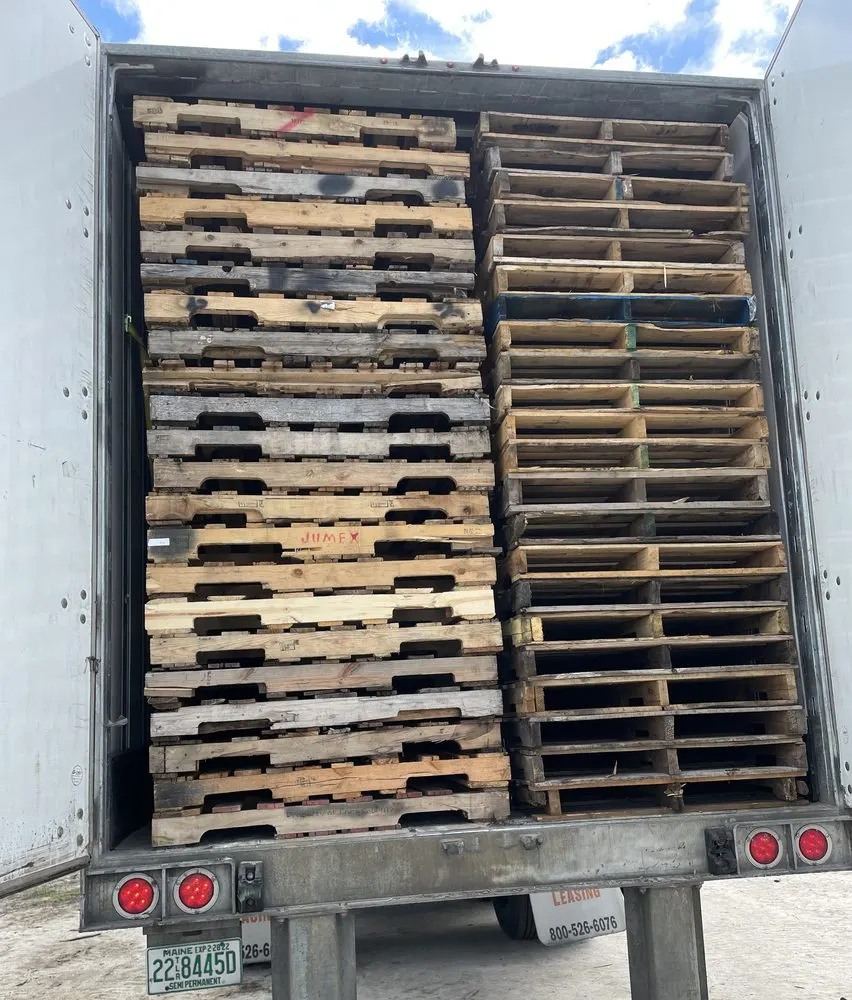
BOL, packing list, grade certifications standard. Heat-treated loads add IPPC stamps and ISPM-15 documentation. Pharma-grade loads add batch records. Food-grade loads add FSMA Sanitary Transportation Rule certifications. All documentation ships electronically before delivery.
Same-day shipping in our Southeast/Mid-Atlantic core (FL, GA, AL, TN, MS, SC, NC, KY, VA) and scheduled weekly delivery elsewhere. Express options available for Georgia rush orders. Quote response under 2 business hours, dispatch within hours of order confirmation.
Yes. Backhaul logistics are coordinated on outbound delivery routes - empty or non-spec pallets get picked up on the return leg of new pallet deliveries. Per-pallet freight cost on the backhaul approaches zero for accounts running both new-pallet purchase + buyback simultaneously.
Local Georgia suppliers offer geographic proximity. United States Pallets offers nationwide sourcing depth, multi-grade inventory always in stock, sub-2-business-hour quote response, audit-ready documentation, and standing-order automation that local yards typically don\'t match.
50 pallets per order minimum on buy-side. Sell-side (buyback) minimum is 250 pallets per single-size load. Volume tiers kick in automatically as cumulative monthly volume increases - 500+/week accounts qualify for standing-order programs with reserved delivery slots.
Response under 2 business hours.
FSMA Section 204 traceability supported on every food-grade load; pallet ID linked to the lumber lot, kiln batch, and dispatch ticket in our chain-of-custody database.
Georgia Department of Agriculture phytosanitary rules require ISPM-15 documentation on every export load from Savannah and Brunswick ports; we coordinate with Georgia Ports Authority inspectors for certified loads through pier gate.
Georgia Department of Transportation oversize-load permits restrict pallet shipments above 80,000 lb GVW; our DOT-permitted carriers handle Atlanta-area, Macon-corridor, and coastal Savannah-Brunswick routing.
Block pallets (four-way entry) use nine 4-inch hardwood blocks with continuous-face top deck; ideal for ASRS (automated storage and retrieval) and AGV (automated guided vehicle) operations where stringer interruptions cause read-failures.
Pallet weight: new GMA averages 38-42 lb per unit; recycled Grade A averages 35-39 lb; lighter chemical-industry 40x40 pallets weigh 28-32 lb; freight estimation should use 40 lb/pallet for inbound planning.
Same-day delivery available within 75 miles of our Tampa, Orlando, Jacksonville, Miami, and Lakeland yards; minimum 24 pallets; small-order pricing applies on freight.
Manufacturing customers running JIT (just-in-time) lines require pallets delivered to specific dock doors on 2-hour windows; we offer GPS-tracked delivery with 15-minute arrival ETAs.
Lumber index pricing: we benchmark against the Random Lengths southern yellow pine #2 index for hardwood-blend spec; updates monthly; standing-order pricing protects against +/-15% market swings.
Our Lakeland and Jacksonville recycling streams process 200,000+ pallets per year; broken stock is repaired or chipped for mulch (sold separately); zero-landfill goal targeted for 2027.