Block Pallets - Four-Way Entry for Food & Beverage Distribution
Industrial-scale Block Pallets - Four-Way Entry for Food & Beverage Distribution for nationwide, United States customers requires more than just stock on hand - it requires consistent dimensional tolerances, batch-quality records, and documentation that satisfies SOX, FDA, USDA, ISO 9001, and similar audit frameworks. United States Pallets ships every Block Pallets - Four-Way Entry for Food & Beverage Distribution load with the documentation packet pre-attached electronically, no dock-side delays.
Industrial-scale Block Pallets - Four-Way Entry for Food & Beverage Distribution for nationwide, United States customers requires more than just stock on hand - it requires consistent dimensional tolerances, batch-quality records, and documentation that satisfies SOX, FDA, USDA, ISO 9001, and similar audit frameworks. United States Pallets ships every Block Pallets - Four-Way Entry for Food & Beverage Distribution load with the documentation packet pre-attached electronically, no dock-side delays.
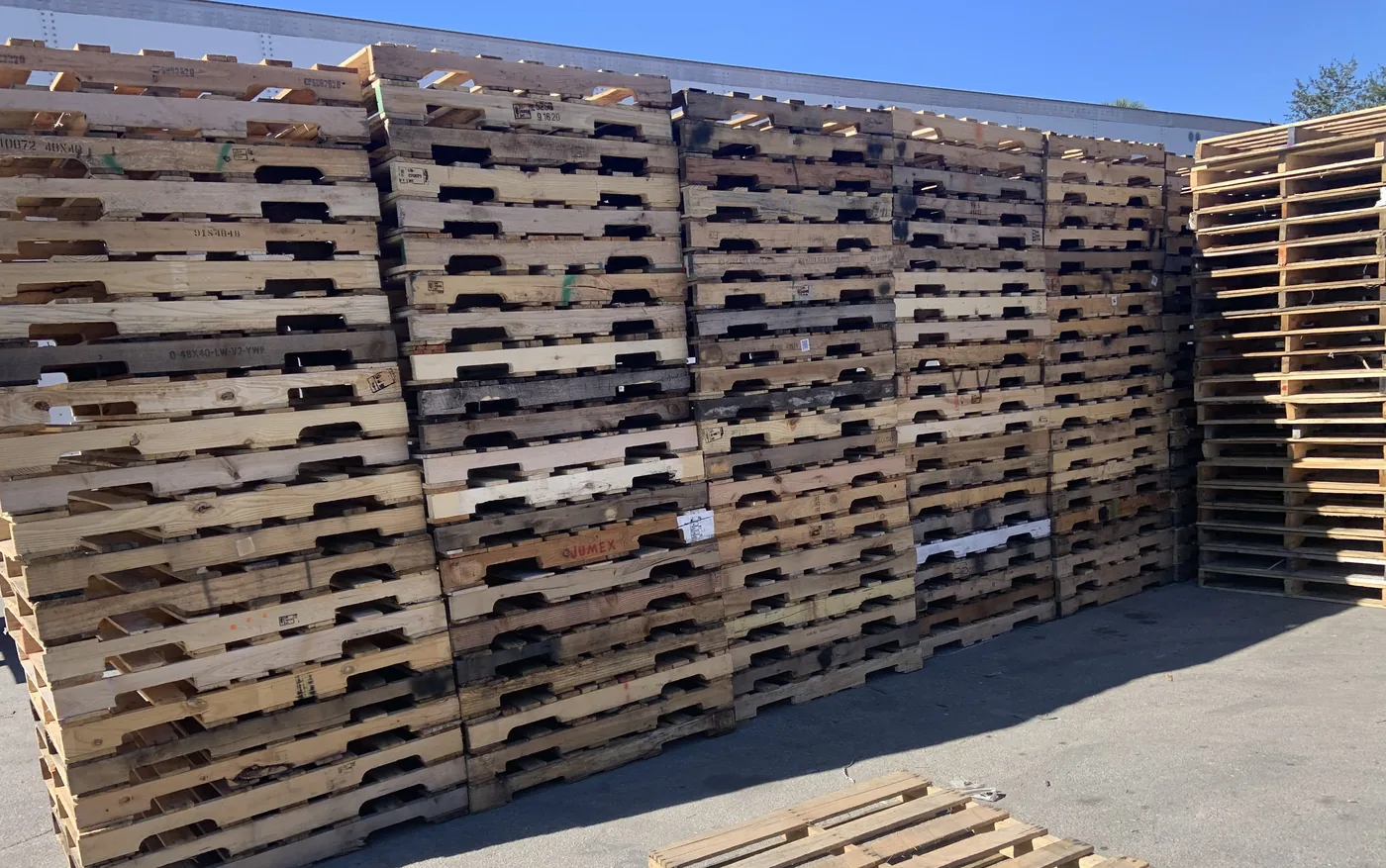
Food & Beverage Distribution Block Pallets - Four-Way Entry Specs
- Nine-block construction wood pallets with true four-way forklift entry preferred for AGV-automated warehouses, high-rack handling, and JIT manufacturing operations.
- Industry-specific load ratings and certifications
- FSMA, GDP, ISPM-15 documentation as required
- 50-pallet minimum, sub-2-hour quote response
What documentation accompanies Block Pallets - Four-Way Entry for Food & Beverage Distribution loads?
BOL, packing list, grade certifications standard. Heat-treated loads add IPPC stamps and ISPM-15 documentation. Pharma-grade loads add batch records. Food-grade loads add FSMA Sanitary Transportation Rule certifications. All documentation ships electronically before delivery. Heat-treated pallets carry the IPPC mark applied under a USDA APHIS registered heat-treatment program, and new 48x40 GMA stock is built to the NWPCA Uniform Standard, so receiving teams can match each load to its paperwork.
What's the minimum order quantity for Block Pallets - Four-Way Entry for Food & Beverage Distribution?
50 pallets per order minimum on buy-side. Sell-side (buyback) minimum is 250 pallets per single-size load. Volume tiers kick in automatically as cumulative monthly volume increases - 500+/week accounts qualify for standing-order programs with reserved delivery slots. Single-pallet orders are not available, so buyers who need fewer pallets usually start with recycled Grade B stock, the lowest-priced published tier. Quotes are requested through the intake form.
Can nationwide customers run a buyback program alongside their pallet purchases?
Yes. Backhaul logistics are coordinated on outbound delivery routes - empty or non-spec pallets get picked up on the return leg of new pallet deliveries. Per-pallet freight cost on the backhaul approaches zero for accounts running both new-pallet purchase + buyback simultaneously.
Does United States Pallets supply Block Pallets - Four-Way Entry for Food & Beverage Distribution for export from nationwide?
Yes, with ISPM-15 heat-treated pallets carrying IPPC stamps and full ISPM-15 documentation. Generally required for any solid wood pallet crossing an international border. Common for nationwide customers with port access via United States's major export gateways. Heat treatment brings the wood core to at least 56C (132.8F) for 30 continuous minutes, and the IPPC mark must appear on two opposite sides of each pallet.
What credit terms does United States Pallets offer nationwide customers?
Net-30 credit terms standard after the first 1-3 prepaid or COD loads while credit is being established. Submit a credit application with three trade references; approval typically processes within 48 hours. Volume accounts can negotiate net-45 or net-60. ACH transfer is the preferred way to pay invoices, wire transfer is accepted for large orders, and pallet buy-back proceeds can be paid by ACH or applied as credit against new pallet purchases.
Food & Beverage Distribution Block Pallets - Four-Way Entry Quote
Response under 2 business hours.