Industry-tuned block pallets - four-way entry for renewable energy & solar buyers across Ohio.
Get a Price →Industrial-scale Block Pallets - Four-Way Entry for Renewable Energy & Solar for Ohio, Ohio customers requires more than just stock on hand - it requires consistent dimensional tolerances, batch-quality records, and documentation that satisfies SOX, FDA, USDA, ISO 9001, and similar audit frameworks. United States Pallets ships every Block Pallets - Four-Way Entry for Renewable Energy & Solar load with the documentation packet pre-attached electronically, no dock-side delays.
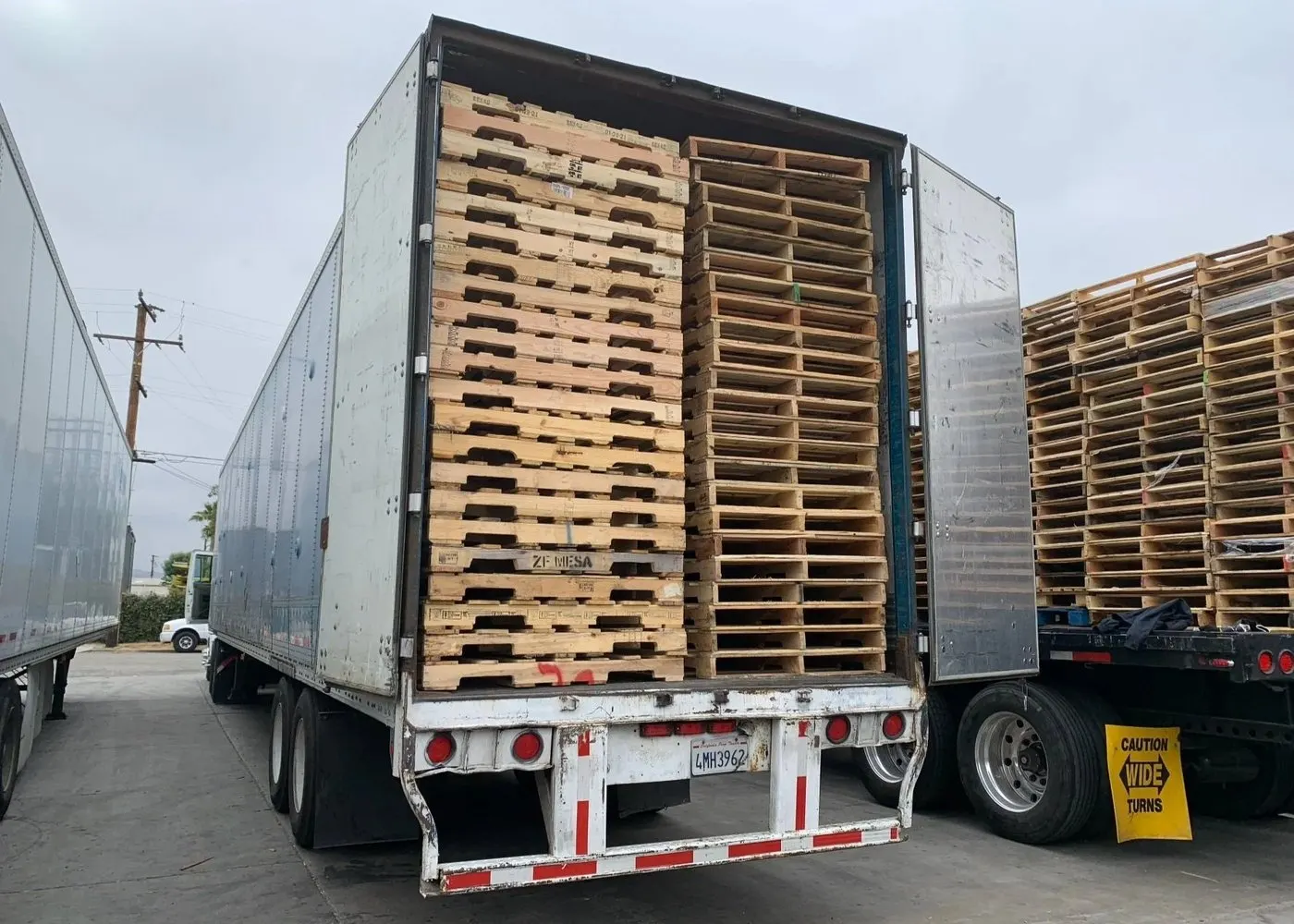
Industrial-scale Block Pallets - Four-Way Entry for Renewable Energy & Solar for Ohio, Ohio customers requires more than just stock on hand - it requires consistent dimensional tolerances, batch-quality records, and documentation that satisfies SOX, FDA, USDA, ISO 9001, and similar audit frameworks. United States Pallets ships every Block Pallets - Four-Way Entry for Renewable Energy & Solar load with the documentation packet pre-attached electronically, no dock-side delays.
Yes. Backhaul logistics are coordinated on outbound delivery routes - empty or non-spec pallets get picked up on the return leg of new pallet deliveries. Per-pallet freight cost on the backhaul approaches zero for accounts running both new-pallet purchase + buyback simultaneously.
50 pallets per order minimum on buy-side. Sell-side (buyback) minimum is 250 pallets per single-size load. Volume tiers kick in automatically as cumulative monthly volume increases - 500+/week accounts qualify for standing-order programs with reserved delivery slots.
BOL, packing list, grade certifications standard. Heat-treated loads add IPPC stamps and ISPM-15 documentation. Pharma-grade loads add batch records. Food-grade loads add FSMA Sanitary Transportation Rule certifications. All documentation ships electronically before delivery.
Yes, with ISPM-15 heat-treated pallets carrying IPPC stamps and full ISPM-15 documentation. Required for international shipments to all WTO member countries. Common for Ohio customers with port access via Ohio\'s major export gateways.
Local Ohio suppliers offer geographic proximity. United States Pallets offers nationwide sourcing depth, multi-grade inventory always in stock, sub-2-business-hour quote response, audit-ready documentation, and standing-order automation that local yards typically don\'t match.
Response under 2 business hours.
Kiln-dried hardwood meets NWPCA Uniform Standard for Wood Pallets; moisture content verified <19% at dispatch, blade-cut deck boards, no visible bark.
Ohio EPA Division of Materials and Waste Management regulates wood pallet recycling under OAC 3745-27; our partner facilities in Cleveland, Columbus, and Cincinnati maintain OEPA registration for return-stream service.
Cuyahoga River industrial corridor manufacturers in Cleveland require heavy-duty pallets for steel-coil and bar-stock loads; we supply reinforced 4x4 hardwood stringers rated for 6,000 lb static loads.
Pallet weight: new GMA averages 38-42 lb per unit; recycled Grade A averages 35-39 lb; lighter chemical-industry 40x40 pallets weigh 28-32 lb; freight estimation should use 40 lb/pallet for inbound planning.
Recycled-Grade A pallets meet 48x40 GMA spec with cosmetic wear only; no broken boards, no replaced stringers, all original GMA stamp visible; suitable for primary food-grade and pharmaceutical loads.
Live-load operations bring the trailer to your dock for a 90-minute window; loader/unloader provided; suited to customers without dedicated dock space or with intermittent volume.
Marine industry suppliers (Fort Lauderdale, Stuart, Miami) use exterior-rated pallets that resist saltwater corrosion; treated lumber stock available; preferred for boat-component freight to Bahamas and Caribbean.
Lumber index pricing: we benchmark against the Random Lengths southern yellow pine #2 index for hardwood-blend spec; updates monthly; standing-order pricing protects against +/-15% market swings.
Lumber sourcing prioritizes regional Southeast US hardwood mills (FL, AL, GA, MS); reduces transport carbon vs Pacific Northwest stock; supports regional logging economies.