Industry-tuned cold-chain kiln-dried pallets for e-commerce fulfillment buyers across North Carolina.
Get a Price →Cold-Chain Kiln-Dried Pallets for E-Commerce Fulfillment suppliers serving North Carolina businesses range from regional yards with limited inventory to national networks with deep multi-grade stock. United States Pallets sits in the second category, structured specifically for high-volume B2B operations - 50+ pallets per order minimum, scheduled programs for 500+/week accounts, and dimensional consistency tight enough for AGV-equipped warehouses.
Whether you're operating a single North Carolina warehouse or a multi-site network across North Carolina, the Cold-Chain Kiln-Dried Pallets for E-Commerce Fulfillment requirements are the same: consistent grade, on-time delivery, accurate count, and clean paperwork. United States Pallets built our Cold-Chain Kiln-Dried Pallets for E-Commerce Fulfillment program around exactly that profile of customer.
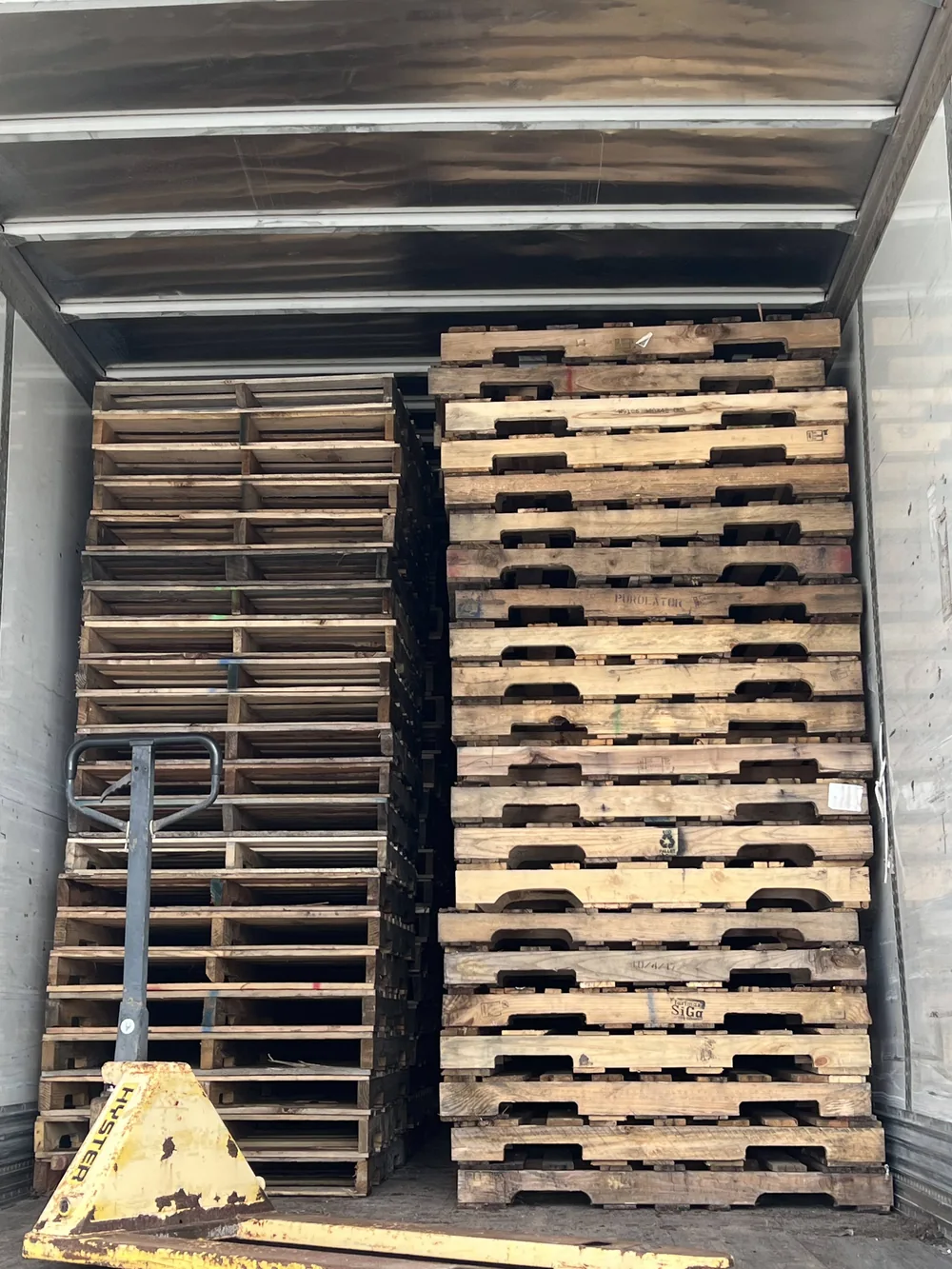
Local North Carolina suppliers offer geographic proximity. United States Pallets offers nationwide sourcing depth, multi-grade inventory always in stock, sub-2-business-hour quote response, audit-ready documentation, and standing-order automation that local yards typically don\'t match.
Yes. Standing-order programs for North Carolina operations running 500+ pallets/week lock in tiered pricing, reserve delivery slots, and run on autopilot in the background. Custom contract terms available for accounts running 2,000+/week.
Net-30 credit terms standard after the first 1-3 prepaid or COD loads while credit is being established. Submit a credit application with three trade references; approval typically processes within 48 hours. Volume accounts can negotiate net-45 or net-60.
Yes, with ISPM-15 heat-treated pallets carrying IPPC stamps and full ISPM-15 documentation. Required for international shipments to all WTO member countries. Common for North Carolina customers with port access via North Carolina\'s major export gateways.
BOL, packing list, grade certifications standard. Heat-treated loads add IPPC stamps and ISPM-15 documentation. Pharma-grade loads add batch records. Food-grade loads add FSMA Sanitary Transportation Rule certifications. All documentation ships electronically before delivery.
Response under 2 business hours.
FSMA Section 204 traceability supported on every food-grade load; pallet ID linked to the lumber lot, kiln batch, and dispatch ticket in our chain-of-custody database.
North Carolina Department of Transportation oversize-load permits restrict pallet shipments via I-40, I-77, and I-95; our DOT-permitted carriers handle Charlotte-area, Triangle-corridor, and coastal Wilmington routing.
North Carolina Department of Environmental Quality regulates wood pallet recycling under 15A NCAC 13B; our partner facilities in Charlotte, Raleigh, and Greensboro maintain NCDEQ registration for return-stream service.
Recycled-Grade A pallets meet 48x40 GMA spec with cosmetic wear only; no broken boards, no replaced stringers, all original GMA stamp visible; suitable for primary food-grade and pharmaceutical loads.
Pallet weight: new GMA averages 38-42 lb per unit; recycled Grade A averages 35-39 lb; lighter chemical-industry 40x40 pallets weigh 28-32 lb; freight estimation should use 40 lb/pallet for inbound planning.
Standard delivery scheduling: orders confirmed by 2 PM EST ship same day from the nearest yard; orders after 2 PM ship next-business-day; weekend dispatch available with 24-hour notice for premium accounts.
Citrus packhouses operate seasonal volume peaks November-April; we maintain dedicated Polk County and Indian River inventory to support 6-12 truckload weekly delivery during peak; standing-order pricing locks rates Oct 1.
Volume pricing kicks in at 100 pallets, 500 pallets, and 2,000 pallets per month; sustained standing orders lock pricing for 12 months; spot orders subject to current lumber market pricing.
Sustainability reports provided quarterly to standing-order customers; documents pallets recycled, lumber diverted from landfill, and CO2-equivalent savings vs new-only sourcing.