Industry-tuned custom-size pallets for beer, wine & spirits buyers across New York.
Get a Price →Industrial-scale Custom-Size Pallets for Beer, Wine & Spirits for New York, New York customers requires more than just stock on hand - it requires consistent dimensional tolerances, batch-quality records, and documentation that satisfies SOX, FDA, USDA, ISO 9001, and similar audit frameworks. United States Pallets ships every Custom-Size Pallets for Beer, Wine & Spirits load with the documentation packet pre-attached electronically, no dock-side delays.
Custom-Size Pallets for Beer, Wine & Spirits in New York, New York is foundational infrastructure for any commercial operation moving goods through New York's industrial supply chain. United States Pallets (New York customers reach us at our national dispatch line) provides Custom-Size Pallets for Beer, Wine & Spirits on a 50-pallet minimum with same-day shipping in our Southeast/Mid-Atlantic core and scheduled weekly delivery to New York elsewhere.
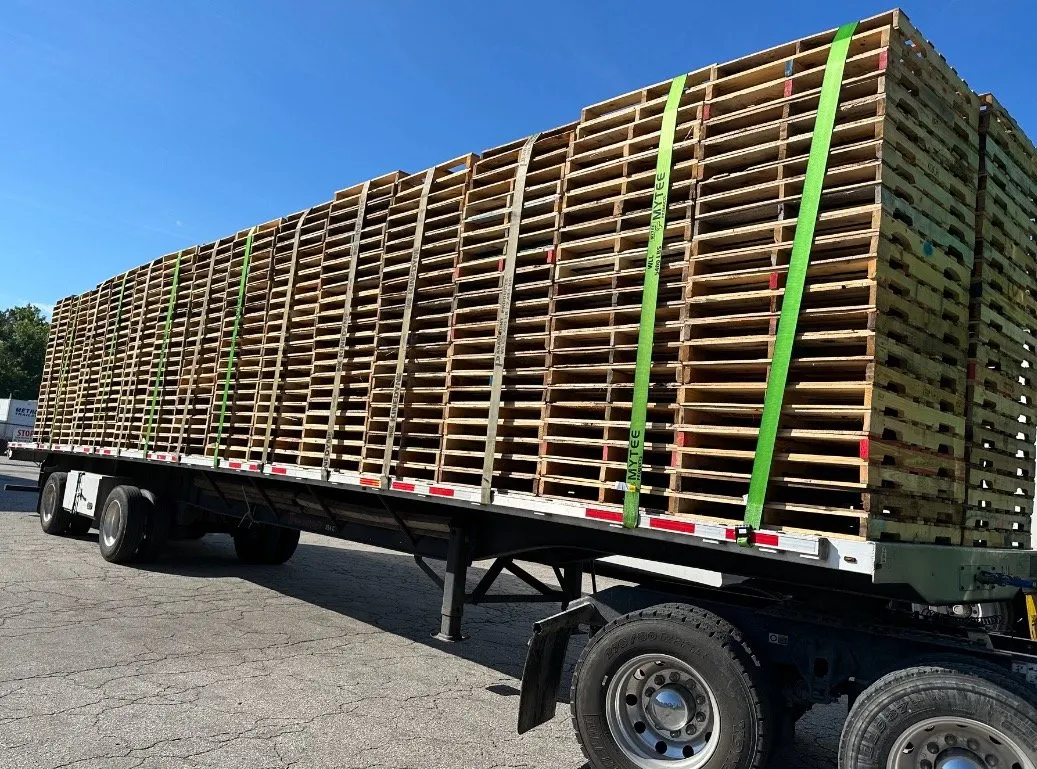
Yes. We buy back used pallets from New York collectors, recyclers, and warehouses - 250-pallet minimum per load, single-size only (no mixed-size loads). Fast ACH payment, typically same-day or net-7 depending on volume. Pickup arranged on standard outbound delivery routes.
Yes. Backhaul logistics are coordinated on outbound delivery routes - empty or non-spec pallets get picked up on the return leg of new pallet deliveries. Per-pallet freight cost on the backhaul approaches zero for accounts running both new-pallet purchase + buyback simultaneously.
50 pallets per order minimum on buy-side. Sell-side (buyback) minimum is 250 pallets per single-size load. Volume tiers kick in automatically as cumulative monthly volume increases - 500+/week accounts qualify for standing-order programs with reserved delivery slots.
BOL, packing list, grade certifications standard. Heat-treated loads add IPPC stamps and ISPM-15 documentation. Pharma-grade loads add batch records. Food-grade loads add FSMA Sanitary Transportation Rule certifications. All documentation ships electronically before delivery.
Net-30 credit terms standard after the first 1-3 prepaid or COD loads while credit is being established. Submit a credit application with three trade references; approval typically processes within 48 hours. Volume accounts can negotiate net-45 or net-60.
Response under 2 business hours.
FSMA Section 204 traceability supported on every food-grade load; pallet ID linked to the lumber lot, kiln batch, and dispatch ticket in our chain-of-custody database.
Port of New York and New Jersey requires ISPM-15 stamp verification at Elizabeth Marine Terminal and Howland Hook; we coordinate with PNCT and APMT inspectors for certified export loads.
New York State Liquor Authority regulations require returnable-pallet documentation for wholesale alcohol distribution; our beverage-grade stock with NYSLA-compliant identification serves Brooklyn, Yonkers, and Hudson Valley distributors.
Recycled-Grade A pallets meet 48x40 GMA spec with cosmetic wear only; no broken boards, no replaced stringers, all original GMA stamp visible; suitable for primary food-grade and pharmaceutical loads.
Lumber spec for new GMA stock: mixed hardwood (oak, maple, ash, hickory) with minimum 600 SG (specific gravity); kiln dried to <19% moisture; visible defects limited to wane on outer 1/3 of deck board only.
Buyback programs pay current market rate for returned pallets in Grade A condition; minimum 50 pallets per pickup; integrated with our recycling stream for sustainability reporting.
E-commerce fulfillment centers around Orlando and Lakeland use mixed-SKU GMA pallets for inbound, plus pallets-with-cardboard for outbound to last-mile carriers; we coordinate delivery with their dock-scheduling system (FreightSmart, DOCK365).
Pricing structure: new 48x40 GMA stock ranges $14-18 per pallet in 500+ lot pricing; recycled Grade A runs $7-10 per pallet; recycled Grade B at $5-7; custom builds priced per spec on a quote basis.
Our Lakeland and Jacksonville recycling streams process 200,000+ pallets per year; broken stock is repaired or chipped for mulch (sold separately); zero-landfill goal targeted for 2027.