Industry-tuned custom-size pallets for chemical & petrochemical buyers across New York.
Get a Price →Industrial-scale Custom-Size Pallets for Chemical & Petrochemical for New York, New York customers requires more than just stock on hand - it requires consistent dimensional tolerances, batch-quality records, and documentation that satisfies SOX, FDA, USDA, ISO 9001, and similar audit frameworks. United States Pallets ships every Custom-Size Pallets for Chemical & Petrochemical load with the documentation packet pre-attached electronically, no dock-side delays.
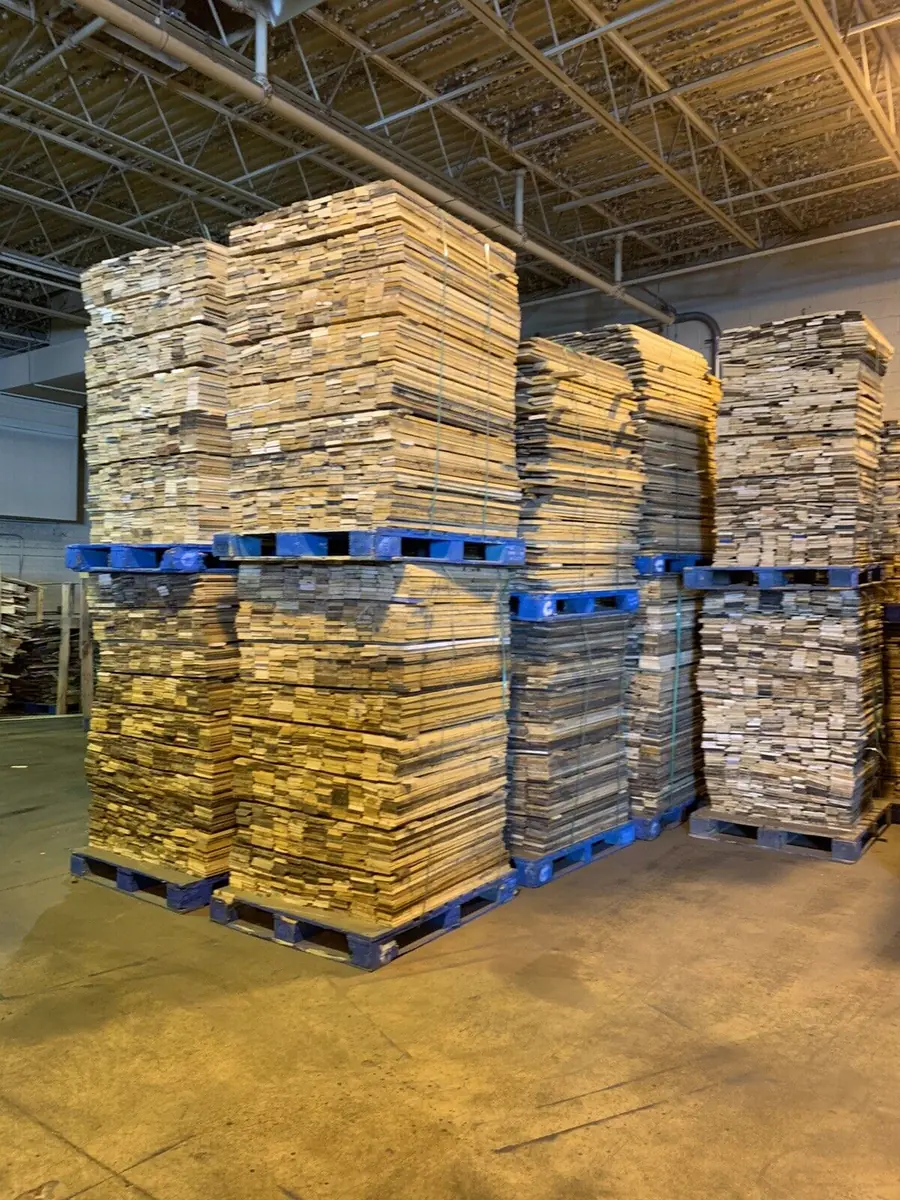
Industrial-scale Custom-Size Pallets for Chemical & Petrochemical for New York, New York customers requires more than just stock on hand - it requires consistent dimensional tolerances, batch-quality records, and documentation that satisfies SOX, FDA, USDA, ISO 9001, and similar audit frameworks. United States Pallets ships every Custom-Size Pallets for Chemical & Petrochemical load with the documentation packet pre-attached electronically, no dock-side delays.
Yes. Backhaul logistics are coordinated on outbound delivery routes - empty or non-spec pallets get picked up on the return leg of new pallet deliveries. Per-pallet freight cost on the backhaul approaches zero for accounts running both new-pallet purchase + buyback simultaneously.
Yes. We deliver to every commercial address in New York, with same-day shipping standard in our Southeast/Mid-Atlantic core and scheduled weekly delivery elsewhere. New York-area accounts are typical - submit a quote with your dock location and we route accordingly.
Yes. Standing-order programs for New York operations running 500+ pallets/week lock in tiered pricing, reserve delivery slots, and run on autopilot in the background. Custom contract terms available for accounts running 2,000+/week.
Local New York suppliers offer geographic proximity. United States Pallets offers nationwide sourcing depth, multi-grade inventory always in stock, sub-2-business-hour quote response, audit-ready documentation, and standing-order automation that local yards typically don\'t match.
Yes, with ISPM-15 heat-treated pallets carrying IPPC stamps and full ISPM-15 documentation. Required for international shipments to all WTO member countries. Common for New York customers with port access via New York\'s major export gateways.
Response under 2 business hours.
GMA 48x40 four-way stringer construction conforms to the National Wooden Pallet & Container Association (NWPCA) 2014 Uniform Standard; deck board configuration 7-board top, 5-board bottom.
New York City fire-code FDNY rules restrict combustible storage in commercial occupancies; our flame-retardant treated stock meets Class A NFPA 230 for high-rise warehouse staging.
Hudson Valley agricultural packers require USDA-compliant phytosanitary documentation for apple, peach, and dairy exports; we supply ISPM-15 certified pallets with NY-specific origin documentation.
Block pallets (four-way entry) use nine 4-inch hardwood blocks with continuous-face top deck; ideal for ASRS (automated storage and retrieval) and AGV (automated guided vehicle) operations where stringer interruptions cause read-failures.
Custom 42x42 pallet builds use 7/8 inch deck boards for telecommunications-equipment loads; nail-pattern density doubled to handle 5,000 lb static load; runner spacing optimized for 4,000 lb-capacity narrow-aisle reach trucks.
Drop-trailer programs maintain a customer-dedicated 53-foot trailer on-site; we swap full-for-empty on a scheduled 24/48/72-hour rotation; preferred for high-throughput dock operations.
Aerospace component manufacturers (Brevard, Pinellas counties) use ISPM-15 export crates for international supplier shipments; build-to-print specs include foam-lined interiors and humidity-control packets.
Lumber index pricing: we benchmark against the Random Lengths southern yellow pine #2 index for hardwood-blend spec; updates monthly; standing-order pricing protects against +/-15% market swings.
Sustainability reports provided quarterly to standing-order customers; documents pallets recycled, lumber diverted from landfill, and CO2-equivalent savings vs new-only sourcing.