Industry-tuned custom-size pallets for chemical & petrochemical buyers across North Carolina.
Get a Price →Pallet demand in North Carolina, North Carolina is shaped by the local economy and the regional supply chain - distribution, manufacturing, and food/beverage operations all consume pallets at predictable cadences. United States Pallets aligns our Custom-Size Pallets for Chemical & Petrochemical delivery rhythm to those operations, with same-day rush options when production schedules tighten and standing-order programs for predictable weekly volume.
When North Carolina, North Carolina operations need Custom-Size Pallets for Chemical & Petrochemical at scale, the supplier shortlist comes down to three things: inventory depth, delivery reliability, and documentation. United States Pallets engineers our Custom-Size Pallets for Chemical & Petrochemical program to win on all three - new GMA stock plus recycled Grade A and B always available, scheduled weekly delivery, and BOL/IPPC/grade certifications electronic before each load arrives.
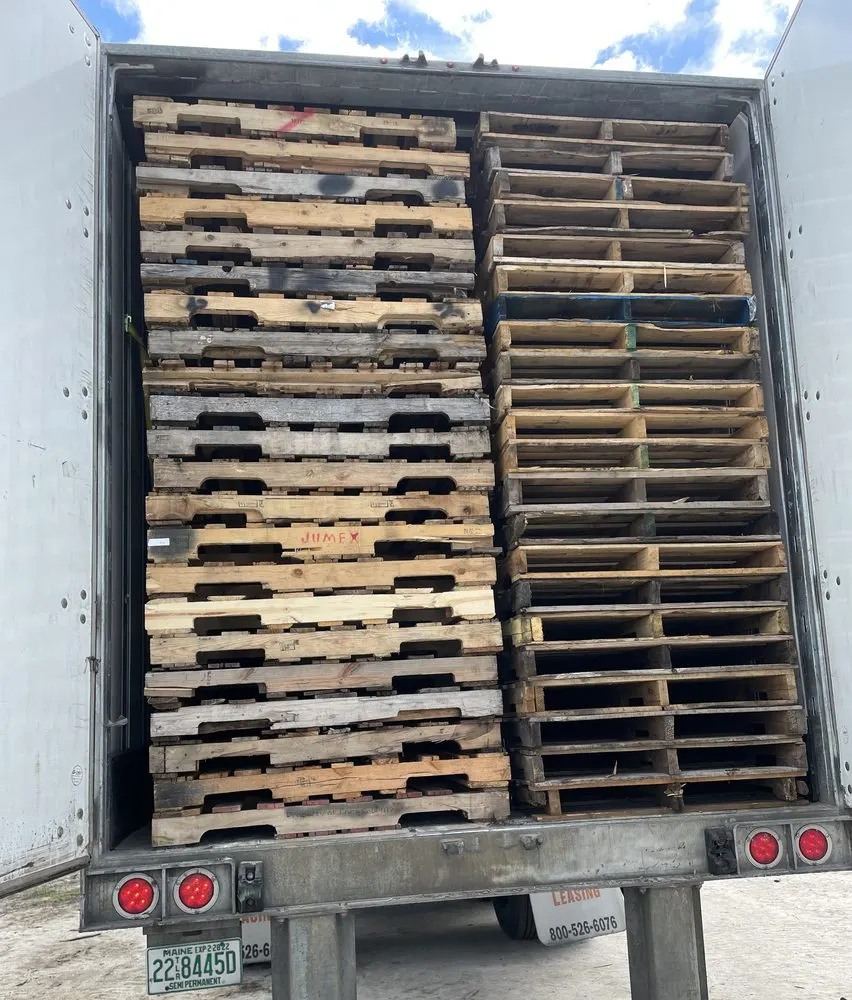
50 pallets per order minimum on buy-side. Sell-side (buyback) minimum is 250 pallets per single-size load. Volume tiers kick in automatically as cumulative monthly volume increases - 500+/week accounts qualify for standing-order programs with reserved delivery slots.
Yes. We buy back used pallets from North Carolina collectors, recyclers, and warehouses - 250-pallet minimum per load, single-size only (no mixed-size loads). Fast ACH payment, typically same-day or net-7 depending on volume. Pickup arranged on standard outbound delivery routes.
Yes. Standing-order programs for North Carolina operations running 500+ pallets/week lock in tiered pricing, reserve delivery slots, and run on autopilot in the background. Custom contract terms available for accounts running 2,000+/week.
Local North Carolina suppliers offer geographic proximity. United States Pallets offers nationwide sourcing depth, multi-grade inventory always in stock, sub-2-business-hour quote response, audit-ready documentation, and standing-order automation that local yards typically don\'t match.
Net-30 credit terms standard after the first 1-3 prepaid or COD loads while credit is being established. Submit a credit application with three trade references; approval typically processes within 48 hours. Volume accounts can negotiate net-45 or net-60.
Response under 2 business hours.
FSMA Section 204 traceability supported on every food-grade load; pallet ID linked to the lumber lot, kiln batch, and dispatch ticket in our chain-of-custody database.
North Carolina Department of Transportation oversize-load permits restrict pallet shipments via I-40, I-77, and I-95; our DOT-permitted carriers handle Charlotte-area, Triangle-corridor, and coastal Wilmington routing.
Port of Wilmington and Port of Morehead City require ISPM-15 stamp verification at container terminals; we coordinate with NC Ports stevedores for certified export loads, with 14-foot harbor draft supporting Panamax vessels.
Pallet weight: new GMA averages 38-42 lb per unit; recycled Grade A averages 35-39 lb; lighter chemical-industry 40x40 pallets weigh 28-32 lb; freight estimation should use 40 lb/pallet for inbound planning.
Standard 48x40 GMA pallets feature 5/8 inch deck boards with a 4-board face pattern; bottom configuration is 3-board for four-way fork entry; nail pattern uses 2.5 inch screw-shank galvanized fasteners.
Dry-van loads handle weather-sensitive pallet stock and food-grade freight; sealed loads with bill-of-lading documentation; supports DOT-required commercial routing.
Pharmaceutical distribution centers in Hillsborough and Orange counties require GDP-validated cold-chain pallets; we supply plastic-construction reusable pallets that wash down for sterile transfer applications.
Buyback pricing for returned pallets: $3-5 per Grade A unit; $1-2 per Grade B; minimum 50-pallet pickup; integrated with our recycling stream for sustainability accounting.
Lumber sourcing prioritizes regional Southeast US hardwood mills (FL, AL, GA, MS); reduces transport carbon vs Pacific Northwest stock; supports regional logging economies.