Industry-tuned custom-size pallets for furniture & home goods buyers across Washington.
Get a Price →Custom-Size Pallets for Furniture & Home Goods in Washington, Washington is foundational infrastructure for any commercial operation moving goods through Washington's industrial supply chain. United States Pallets (Washington customers reach us at our national dispatch line) provides Custom-Size Pallets for Furniture & Home Goods on a 50-pallet minimum with same-day shipping in our Southeast/Mid-Atlantic core and scheduled weekly delivery to Washington elsewhere.
United States Pallets is the national-network alternative to local Washington pallet suppliers for Washington-area B2B buyers. Where regional vendors offer geographic proximity, USP offers nationwide sourcing depth, multi-grade always-in-stock inventory, sub-2-hour quote response, and the documentation discipline Custom-Size Pallets for Furniture & Home Goods customers need at scale.
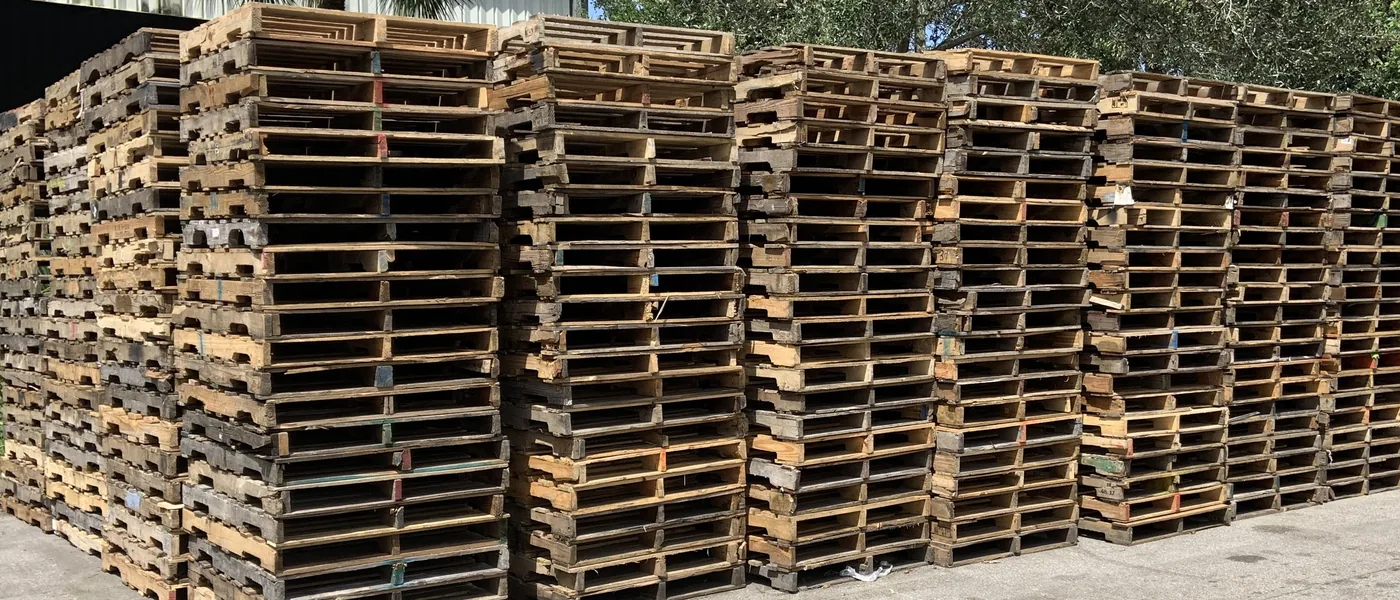
Yes. We buy back used pallets from Washington collectors, recyclers, and warehouses - 250-pallet minimum per load, single-size only (no mixed-size loads). Fast ACH payment, typically same-day or net-7 depending on volume. Pickup arranged on standard outbound delivery routes.
Net-30 credit terms standard after the first 1-3 prepaid or COD loads while credit is being established. Submit a credit application with three trade references; approval typically processes within 48 hours. Volume accounts can negotiate net-45 or net-60.
Yes. Backhaul logistics are coordinated on outbound delivery routes - empty or non-spec pallets get picked up on the return leg of new pallet deliveries. Per-pallet freight cost on the backhaul approaches zero for accounts running both new-pallet purchase + buyback simultaneously.
Yes. Standing-order programs for Washington operations running 500+ pallets/week lock in tiered pricing, reserve delivery slots, and run on autopilot in the background. Custom contract terms available for accounts running 2,000+/week.
Yes. We deliver to every commercial address in Washington, with same-day shipping standard in our Southeast/Mid-Atlantic core and scheduled weekly delivery elsewhere. Washington-area accounts are typical - submit a quote with your dock location and we route accordingly.
Response under 2 business hours.
GMA 48x40 four-way stringer construction conforms to the National Wooden Pallet & Container Association (NWPCA) 2014 Uniform Standard; deck board configuration 7-board top, 5-board bottom.
Washington State Department of Agriculture phytosanitary rules require ISPM-15 documentation on pallets carrying treated apples, cherries, and hops; our heat-treated stock with phytosanitary certification serves Wenatchee, Yakima, and Tri-Cities packers.
Washington State Department of Transportation oversize-load permits restrict pallet shipments via I-5, I-90, and I-82; our WSDOT-permitted carriers handle Puget Sound, Yakima Valley, and Spokane-corridor routing.
Recycled-Grade B pallets meet structural spec but may have up to 2 replaced deck boards; suitable for industrial loads outside food/pharma; price point 30-40% below new GMA.
Block pallets (four-way entry) use nine 4-inch hardwood blocks with continuous-face top deck; ideal for ASRS (automated storage and retrieval) and AGV (automated guided vehicle) operations where stringer interruptions cause read-failures.
Buyback programs pay current market rate for returned pallets in Grade A condition; minimum 50 pallets per pickup; integrated with our recycling stream for sustainability reporting.
Cold storage facilities (Plant City corridor) use HDPE plastic pallets that wash down at 180F; suitable for USDA Grade A dairy plants and frozen-protein operations; we lease as well as sell.
Lumber index pricing: we benchmark against the Random Lengths southern yellow pine #2 index for hardwood-blend spec; updates monthly; standing-order pricing protects against +/-15% market swings.
Our Lakeland and Jacksonville recycling streams process 200,000+ pallets per year; broken stock is repaired or chipped for mulch (sold separately); zero-landfill goal targeted for 2027.