Industry-tuned custom-size pallets for industrial machinery buyers across Pennsylvania.
Get a Price →Pallet demand in Pennsylvania, Pennsylvania is shaped by the local economy and the regional supply chain - distribution, manufacturing, and food/beverage operations all consume pallets at predictable cadences. United States Pallets aligns our Custom-Size Pallets for Industrial Machinery delivery rhythm to those operations, with same-day rush options when production schedules tighten and standing-order programs for predictable weekly volume.
Industrial-scale Custom-Size Pallets for Industrial Machinery for Pennsylvania, Pennsylvania customers requires more than just stock on hand - it requires consistent dimensional tolerances, batch-quality records, and documentation that satisfies SOX, FDA, USDA, ISO 9001, and similar audit frameworks. United States Pallets ships every Custom-Size Pallets for Industrial Machinery load with the documentation packet pre-attached electronically, no dock-side delays.
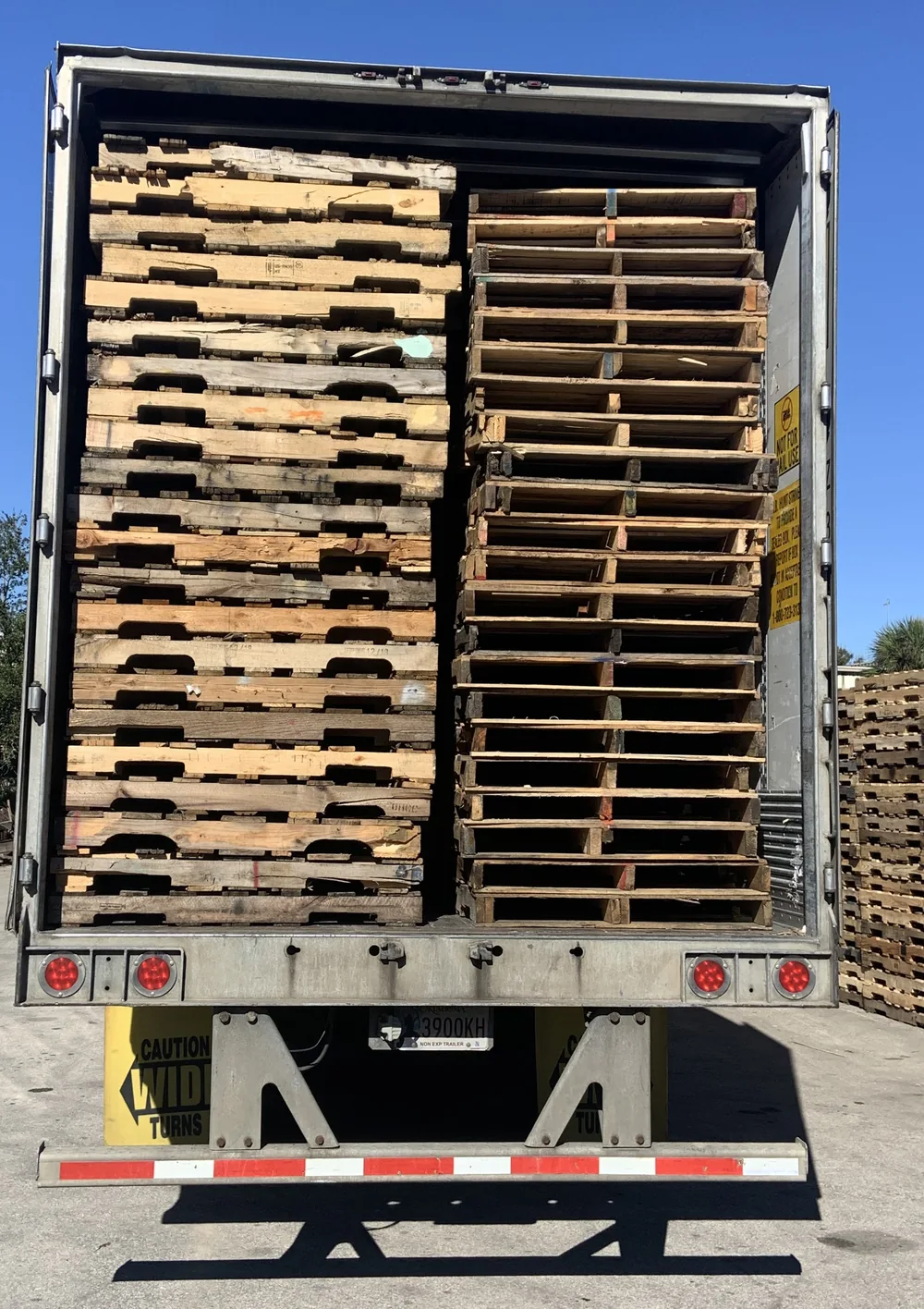
Yes. We buy back used pallets from Pennsylvania collectors, recyclers, and warehouses - 250-pallet minimum per load, single-size only (no mixed-size loads). Fast ACH payment, typically same-day or net-7 depending on volume. Pickup arranged on standard outbound delivery routes.
BOL, packing list, grade certifications standard. Heat-treated loads add IPPC stamps and ISPM-15 documentation. Pharma-grade loads add batch records. Food-grade loads add FSMA Sanitary Transportation Rule certifications. All documentation ships electronically before delivery.
50 pallets per order minimum on buy-side. Sell-side (buyback) minimum is 250 pallets per single-size load. Volume tiers kick in automatically as cumulative monthly volume increases - 500+/week accounts qualify for standing-order programs with reserved delivery slots.
Yes, with ISPM-15 heat-treated pallets carrying IPPC stamps and full ISPM-15 documentation. Required for international shipments to all WTO member countries. Common for Pennsylvania customers with port access via Pennsylvania\'s major export gateways.
Net-30 credit terms standard after the first 1-3 prepaid or COD loads while credit is being established. Submit a credit application with three trade references; approval typically processes within 48 hours. Volume accounts can negotiate net-45 or net-60.
Response under 2 business hours.
FSMA Section 204 traceability supported on every food-grade load; pallet ID linked to the lumber lot, kiln batch, and dispatch ticket in our chain-of-custody database.
Pennsylvania Department of Agriculture spotted lanternfly quarantine rules require pallet inspection at 51 quarantined county lines; our partner inspectors maintain compliance documentation for SLF-affected shipments.
Lancaster County agricultural packers require ISPM-15 documentation for produce export to Canada; we maintain seasonal inventory at Harrisburg and Lancaster yards for Pennsylvania Dutch wholesale distribution.
Lumber spec for new GMA stock: mixed hardwood (oak, maple, ash, hickory) with minimum 600 SG (specific gravity); kiln dried to <19% moisture; visible defects limited to wane on outer 1/3 of deck board only.
Pallet weight: new GMA averages 38-42 lb per unit; recycled Grade A averages 35-39 lb; lighter chemical-industry 40x40 pallets weigh 28-32 lb; freight estimation should use 40 lb/pallet for inbound planning.
Live-load operations bring the trailer to your dock for a 90-minute window; loader/unloader provided; suited to customers without dedicated dock space or with intermittent volume.
Cold storage facilities (Plant City corridor) use HDPE plastic pallets that wash down at 180F; suitable for USDA Grade A dairy plants and frozen-protein operations; we lease as well as sell.
Lumber index pricing: we benchmark against the Random Lengths southern yellow pine #2 index for hardwood-blend spec; updates monthly; standing-order pricing protects against +/-15% market swings.
Our Lakeland and Jacksonville recycling streams process 200,000+ pallets per year; broken stock is repaired or chipped for mulch (sold separately); zero-landfill goal targeted for 2027.