Industry-tuned custom-size pallets for snack foods buyers across North Carolina.
Get a Price →When North Carolina, North Carolina operations need Custom-Size Pallets for Snack Foods at scale, the supplier shortlist comes down to three things: inventory depth, delivery reliability, and documentation. United States Pallets engineers our Custom-Size Pallets for Snack Foods program to win on all three - new GMA stock plus recycled Grade A and B always available, scheduled weekly delivery, and BOL/IPPC/grade certifications electronic before each load arrives.
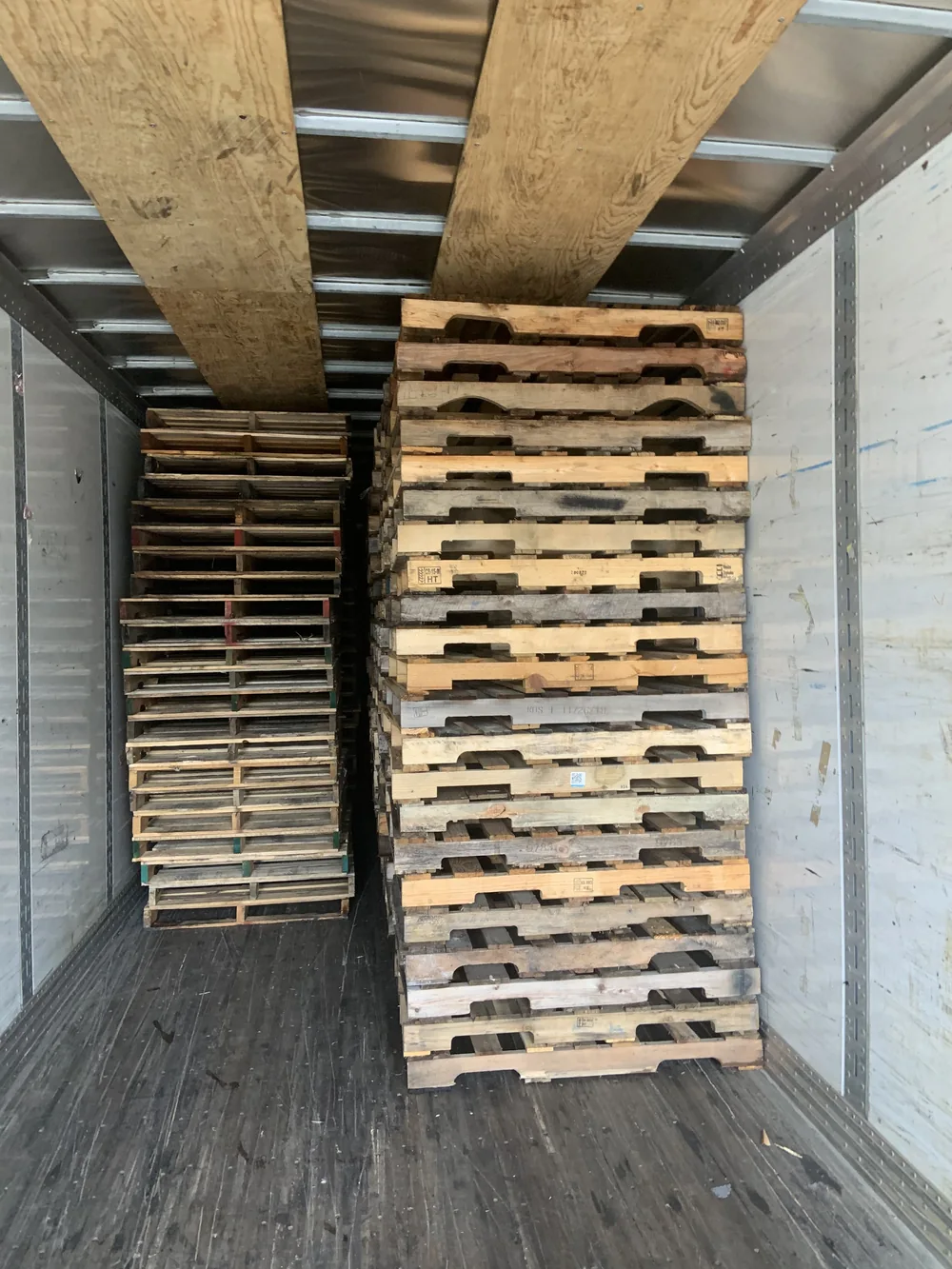
When North Carolina, North Carolina operations need Custom-Size Pallets for Snack Foods at scale, the supplier shortlist comes down to three things: inventory depth, delivery reliability, and documentation. United States Pallets engineers our Custom-Size Pallets for Snack Foods program to win on all three - new GMA stock plus recycled Grade A and B always available, scheduled weekly delivery, and BOL/IPPC/grade certifications electronic before each load arrives.
50 pallets per order minimum on buy-side. Sell-side (buyback) minimum is 250 pallets per single-size load. Volume tiers kick in automatically as cumulative monthly volume increases - 500+/week accounts qualify for standing-order programs with reserved delivery slots.
Yes. Backhaul logistics are coordinated on outbound delivery routes - empty or non-spec pallets get picked up on the return leg of new pallet deliveries. Per-pallet freight cost on the backhaul approaches zero for accounts running both new-pallet purchase + buyback simultaneously.
Yes. We buy back used pallets from North Carolina collectors, recyclers, and warehouses - 250-pallet minimum per load, single-size only (no mixed-size loads). Fast ACH payment, typically same-day or net-7 depending on volume. Pickup arranged on standard outbound delivery routes.
BOL, packing list, grade certifications standard. Heat-treated loads add IPPC stamps and ISPM-15 documentation. Pharma-grade loads add batch records. Food-grade loads add FSMA Sanitary Transportation Rule certifications. All documentation ships electronically before delivery.
Yes. We deliver to every commercial address in North Carolina, with same-day shipping standard in our Southeast/Mid-Atlantic core and scheduled weekly delivery elsewhere. North Carolina-area accounts are typical - submit a quote with your dock location and we route accordingly.
Response under 2 business hours.
FSMA Section 204 traceability supported on every food-grade load; pallet ID linked to the lumber lot, kiln batch, and dispatch ticket in our chain-of-custody database.
North Carolina Department of Agriculture and Consumer Services (NCDA&CS) phytosanitary rules require ISPM-15 documentation on every export load from Wilmington and Morehead City ports; we coordinate with NC State Ports Authority inspectors.
North Carolina Department of Transportation oversize-load permits restrict pallet shipments via I-40, I-77, and I-95; our DOT-permitted carriers handle Charlotte-area, Triangle-corridor, and coastal Wilmington routing.
ISPM-15 export pallets receive heat treatment to 56C core temperature for 30 minutes; stamping shows IPPC logo, country code 'US', registered facility number, and treatment code 'HT'.
Deck board edge type defaults to chamfered for forklift safety; square-edge available on request for ASRS compatibility; rounded-edge banding tracks available for high-throughput line-side delivery.
Flatbed delivery handles oversized loads or pallets with overhanging product; tarping included; preferred for export crates and bulk lumber shipments.
Construction supply yards (Home Depot, Lowe's distribution) move lumber and hardware on 48x40 GMA in 5,000+ pallet weekly cycles; we supply both the inbound load pallets and the return-stream recycled stock.
Pricing structure: new 48x40 GMA stock ranges $14-18 per pallet in 500+ lot pricing; recycled Grade A runs $7-10 per pallet; recycled Grade B at $5-7; custom builds priced per spec on a quote basis.
Sustainability reports provided quarterly to standing-order customers; documents pallets recycled, lumber diverted from landfill, and CO2-equivalent savings vs new-only sourcing.