Industry-tuned fda food-grade pallets for grocery & retail buyers across North Carolina.
Get a Price →Pallet demand in North Carolina, North Carolina is shaped by the local economy and the regional supply chain - distribution, manufacturing, and food/beverage operations all consume pallets at predictable cadences. United States Pallets aligns our FDA Food-Grade Pallets for Grocery & Retail delivery rhythm to those operations, with same-day rush options when production schedules tighten and standing-order programs for predictable weekly volume.
North Carolina businesses handling commercial pallet supply for North Carolina-area operations need a supplier that delivers consistent grade quality, dimensional tolerances tighter than industry standard, and audit-ready documentation. United States Pallets FDA Food-Grade Pallets for Grocery & Retail for North Carolina meets each of those bars, with quote response under 2 business hours and net-30 credit terms after the first 1-3 prepaid loads.
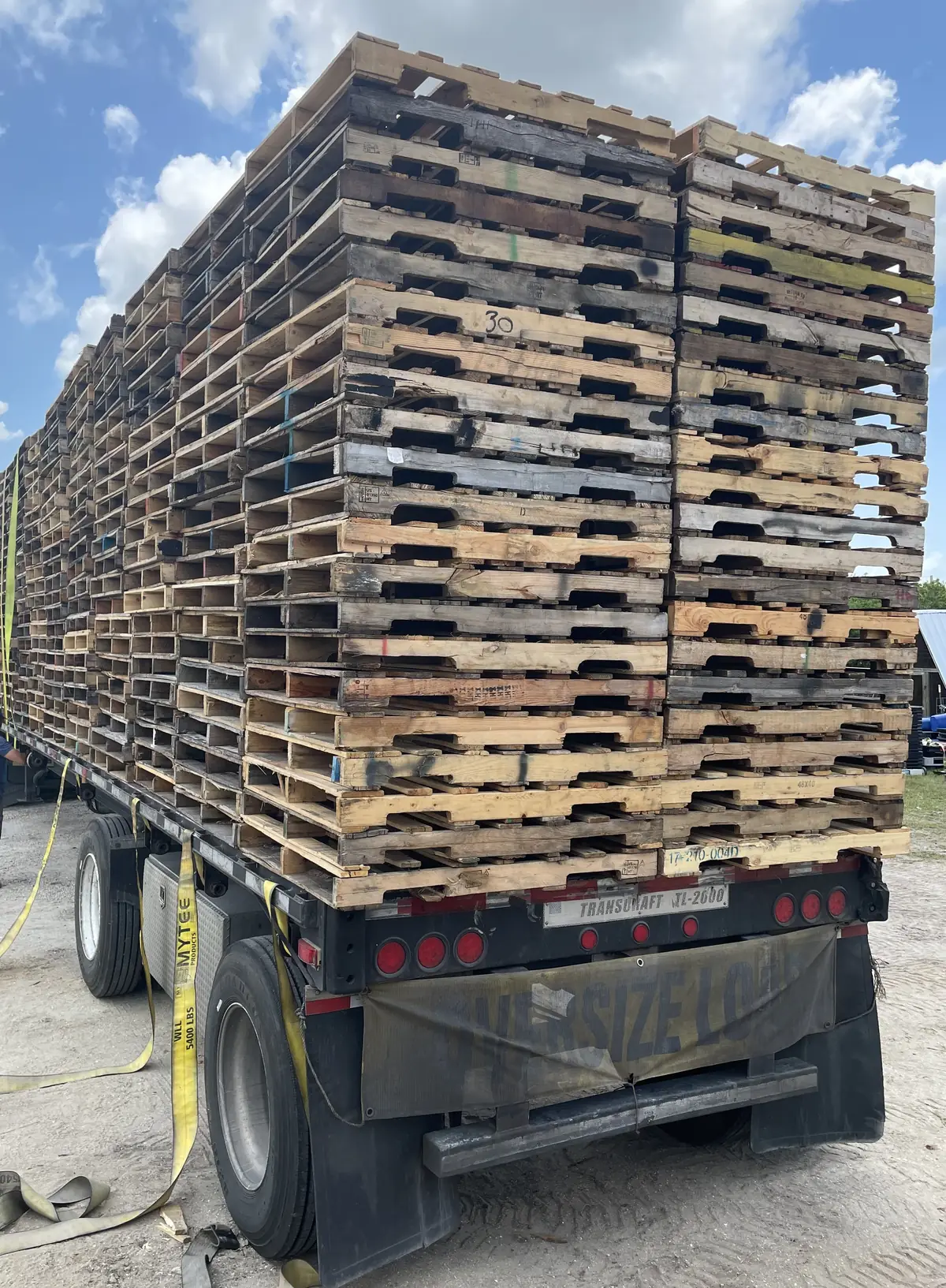
Same-day shipping in our Southeast/Mid-Atlantic core (FL, GA, AL, TN, MS, SC, NC, KY, VA) and scheduled weekly delivery elsewhere. Express options available for North Carolina rush orders. Quote response under 2 business hours, dispatch within hours of order confirmation.
BOL, packing list, grade certifications standard. Heat-treated loads add IPPC stamps and ISPM-15 documentation. Pharma-grade loads add batch records. Food-grade loads add FSMA Sanitary Transportation Rule certifications. All documentation ships electronically before delivery.
Net-30 credit terms standard after the first 1-3 prepaid or COD loads while credit is being established. Submit a credit application with three trade references; approval typically processes within 48 hours. Volume accounts can negotiate net-45 or net-60.
Local North Carolina suppliers offer geographic proximity. United States Pallets offers nationwide sourcing depth, multi-grade inventory always in stock, sub-2-business-hour quote response, audit-ready documentation, and standing-order automation that local yards typically don\'t match.
Yes. Backhaul logistics are coordinated on outbound delivery routes - empty or non-spec pallets get picked up on the return leg of new pallet deliveries. Per-pallet freight cost on the backhaul approaches zero for accounts running both new-pallet purchase + buyback simultaneously.
Response under 2 business hours.
All pallets stamped IPPC HT for ISPM-15 export compliance to 180+ countries; documentation includes treatment temperature logs and the registered facility number.
Port of Wilmington and Port of Morehead City require ISPM-15 stamp verification at container terminals; we coordinate with NC Ports stevedores for certified export loads, with 14-foot harbor draft supporting Panamax vessels.
North Carolina furniture manufacturers in High Point, Hickory, and Lenoir use custom oversized pallets for assembled freight; 60x40 and 72x48 builds available on 5-day production lead time for furniture-market exhibitors.
ISPM-15 export pallets receive heat treatment to 56C core temperature for 30 minutes; stamping shows IPPC logo, country code 'US', registered facility number, and treatment code 'HT'.
Pallet weight: new GMA averages 38-42 lb per unit; recycled Grade A averages 35-39 lb; lighter chemical-industry 40x40 pallets weigh 28-32 lb; freight estimation should use 40 lb/pallet for inbound planning.
Same-day delivery available within 75 miles of our Tampa, Orlando, Jacksonville, Miami, and Lakeland yards; minimum 24 pallets; small-order pricing applies on freight.
Cold storage facilities (Plant City corridor) use HDPE plastic pallets that wash down at 180F; suitable for USDA Grade A dairy plants and frozen-protein operations; we lease as well as sell.
Pricing structure: new 48x40 GMA stock ranges $14-18 per pallet in 500+ lot pricing; recycled Grade A runs $7-10 per pallet; recycled Grade B at $5-7; custom builds priced per spec on a quote basis.
Sustainability reports provided quarterly to standing-order customers; documents pallets recycled, lumber diverted from landfill, and CO2-equivalent savings vs new-only sourcing.