Industry-tuned fda food-grade pallets for hospitality & foodservice buyers across South Carolina.
Get a Price →Industrial-scale FDA Food-Grade Pallets for Hospitality & Foodservice for South Carolina, South Carolina customers requires more than just stock on hand - it requires consistent dimensional tolerances, batch-quality records, and documentation that satisfies SOX, FDA, USDA, ISO 9001, and similar audit frameworks. United States Pallets ships every FDA Food-Grade Pallets for Hospitality & Foodservice load with the documentation packet pre-attached electronically, no dock-side delays.
FDA Food-Grade Pallets for Hospitality & Foodservice in South Carolina, South Carolina is foundational infrastructure for any commercial operation moving goods through South Carolina's industrial supply chain. United States Pallets (South Carolina customers reach us at our national dispatch line) provides FDA Food-Grade Pallets for Hospitality & Foodservice on a 50-pallet minimum with same-day shipping in our Southeast/Mid-Atlantic core and scheduled weekly delivery to South Carolina elsewhere.
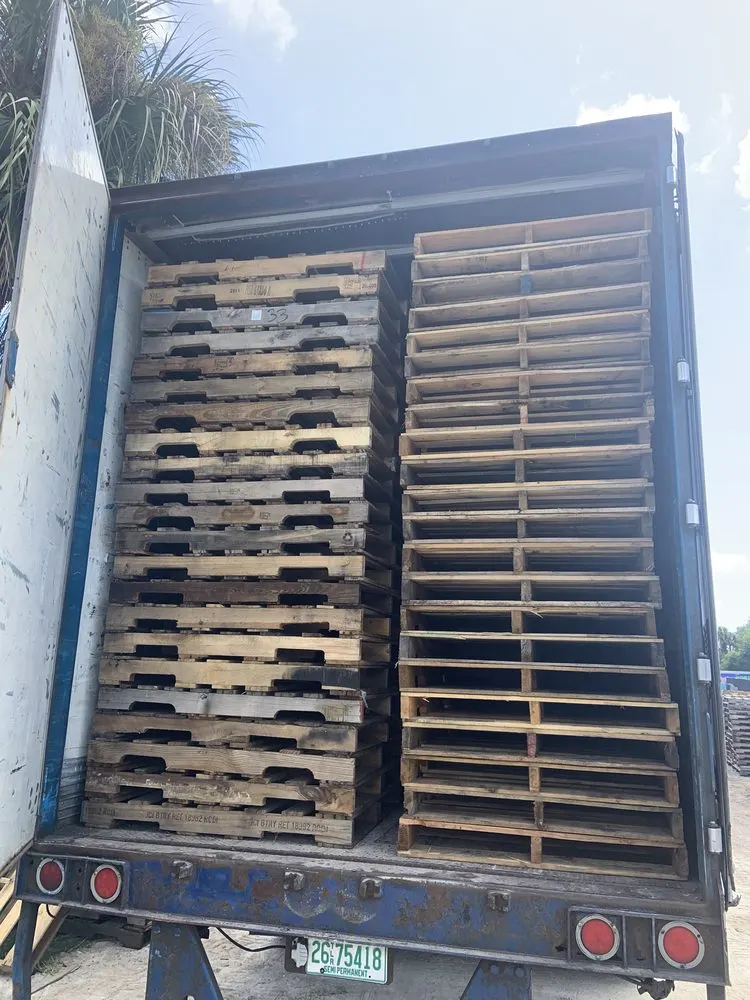
Same-day shipping in our Southeast/Mid-Atlantic core (FL, GA, AL, TN, MS, SC, NC, KY, VA) and scheduled weekly delivery elsewhere. Express options available for South Carolina rush orders. Quote response under 2 business hours, dispatch within hours of order confirmation.
Yes, with ISPM-15 heat-treated pallets carrying IPPC stamps and full ISPM-15 documentation. Required for international shipments to all WTO member countries. Common for South Carolina customers with port access via South Carolina\'s major export gateways.
Yes. Backhaul logistics are coordinated on outbound delivery routes - empty or non-spec pallets get picked up on the return leg of new pallet deliveries. Per-pallet freight cost on the backhaul approaches zero for accounts running both new-pallet purchase + buyback simultaneously.
BOL, packing list, grade certifications standard. Heat-treated loads add IPPC stamps and ISPM-15 documentation. Pharma-grade loads add batch records. Food-grade loads add FSMA Sanitary Transportation Rule certifications. All documentation ships electronically before delivery.
Yes. Standing-order programs for South Carolina operations running 500+ pallets/week lock in tiered pricing, reserve delivery slots, and run on autopilot in the background. Custom contract terms available for accounts running 2,000+/week.
Response under 2 business hours.
FSMA Section 204 traceability supported on every food-grade load; pallet ID linked to the lumber lot, kiln batch, and dispatch ticket in our chain-of-custody database.
Drop-trailer programs maintain a customer-dedicated 53-foot trailer on-site; we swap full-for-empty on a scheduled 24/48/72-hour rotation; preferred for high-throughput dock operations.
Live-load operations bring the trailer to your dock for a 90-minute window; loader/unloader provided; suited to customers without dedicated dock space or with intermittent volume.
ISPM-15 export pallets receive heat treatment to 56C core temperature for 30 minutes; stamping shows IPPC logo, country code 'US', registered facility number, and treatment code 'HT'.
Pallet weight: new GMA averages 38-42 lb per unit; recycled Grade A averages 35-39 lb; lighter chemical-industry 40x40 pallets weigh 28-32 lb; freight estimation should use 40 lb/pallet for inbound planning.
Standard delivery scheduling: orders confirmed by 2 PM EST ship same day from the nearest yard; orders after 2 PM ship next-business-day; weekend dispatch available with 24-hour notice for premium accounts.
Restaurant supply distributors move pallets between regional warehouses and individual restaurants on small-truck (26-foot box truck) routes; we offer mini-pallet 24x24 and 32x32 builds for restaurant kitchen door access.
Volume pricing kicks in at 100 pallets, 500 pallets, and 2,000 pallets per month; sustained standing orders lock pricing for 12 months; spot orders subject to current lumber market pricing.
Our Lakeland and Jacksonville recycling streams process 200,000+ pallets per year; broken stock is repaired or chipped for mulch (sold separately); zero-landfill goal targeted for 2027.