Industry-tuned fda food-grade pallets for pet supplies & animal health buyers across Georgia.
Get a Price →Pallet demand in Georgia, Georgia is shaped by the local economy and the regional supply chain - distribution, manufacturing, and food/beverage operations all consume pallets at predictable cadences. United States Pallets aligns our FDA Food-Grade Pallets for Pet Supplies & Animal Health delivery rhythm to those operations, with same-day rush options when production schedules tighten and standing-order programs for predictable weekly volume.
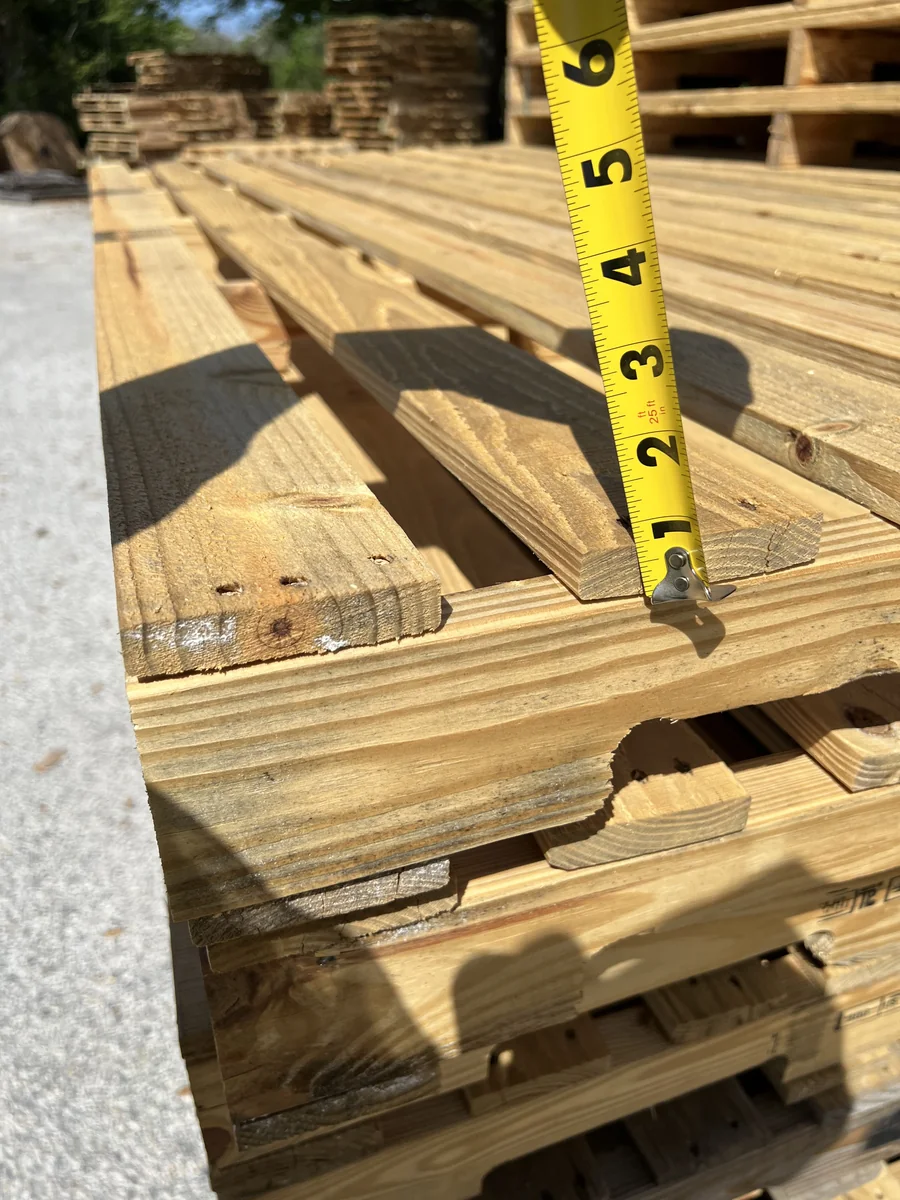
Pallet demand in Georgia, Georgia is shaped by the local economy and the regional supply chain - distribution, manufacturing, and food/beverage operations all consume pallets at predictable cadences. United States Pallets aligns our FDA Food-Grade Pallets for Pet Supplies & Animal Health delivery rhythm to those operations, with same-day rush options when production schedules tighten and standing-order programs for predictable weekly volume.
Yes. We buy back used pallets from Georgia collectors, recyclers, and warehouses - 250-pallet minimum per load, single-size only (no mixed-size loads). Fast ACH payment, typically same-day or net-7 depending on volume. Pickup arranged on standard outbound delivery routes.
Yes. Backhaul logistics are coordinated on outbound delivery routes - empty or non-spec pallets get picked up on the return leg of new pallet deliveries. Per-pallet freight cost on the backhaul approaches zero for accounts running both new-pallet purchase + buyback simultaneously.
Local Georgia suppliers offer geographic proximity. United States Pallets offers nationwide sourcing depth, multi-grade inventory always in stock, sub-2-business-hour quote response, audit-ready documentation, and standing-order automation that local yards typically don\'t match.
BOL, packing list, grade certifications standard. Heat-treated loads add IPPC stamps and ISPM-15 documentation. Pharma-grade loads add batch records. Food-grade loads add FSMA Sanitary Transportation Rule certifications. All documentation ships electronically before delivery.
Same-day shipping in our Southeast/Mid-Atlantic core (FL, GA, AL, TN, MS, SC, NC, KY, VA) and scheduled weekly delivery elsewhere. Express options available for Georgia rush orders. Quote response under 2 business hours, dispatch within hours of order confirmation.
Response under 2 business hours.
Kiln-dried hardwood meets NWPCA Uniform Standard for Wood Pallets; moisture content verified <19% at dispatch, blade-cut deck boards, no visible bark.
Georgia poultry packers in Gainesville, Athens, and South Georgia require FDA 21 CFR 178.3520 indirect food additive compliant pallets; our food-grade stock serves Tyson, Pilgrim's, and Wayne Farms supply chains.
Port of Savannah Garden City Terminal and Ocean Terminal require ISPM-15 stamp verification; we coordinate with Ports America and APM Terminals inspectors for certified export loads, the busiest container port on the South Atlantic.
Pallet weight: new GMA averages 38-42 lb per unit; recycled Grade A averages 35-39 lb; lighter chemical-industry 40x40 pallets weigh 28-32 lb; freight estimation should use 40 lb/pallet for inbound planning.
Block pallets (four-way entry) use nine 4-inch hardwood blocks with continuous-face top deck; ideal for ASRS (automated storage and retrieval) and AGV (automated guided vehicle) operations where stringer interruptions cause read-failures.
Standing-order programs schedule a recurring weekly truckload (or partial) for the same delivery window; price-locked for 12 months; preferred for 3PL warehouse refill cycles.
Manufacturing customers running JIT (just-in-time) lines require pallets delivered to specific dock doors on 2-hour windows; we offer GPS-tracked delivery with 15-minute arrival ETAs.
Volume pricing kicks in at 100 pallets, 500 pallets, and 2,000 pallets per month; sustained standing orders lock pricing for 12 months; spot orders subject to current lumber market pricing.
Sustainability reports provided quarterly to standing-order customers; documents pallets recycled, lumber diverted from landfill, and CO2-equivalent savings vs new-only sourcing.