Industry-tuned ispm-15 heat-treated export pallets for automotive tier-1 suppliers buyers across California.
Get a Price →California businesses handling commercial pallet supply for California-area operations need a supplier that delivers consistent grade quality, dimensional tolerances tighter than industry standard, and audit-ready documentation. United States Pallets ISPM-15 Heat-Treated Export Pallets for Automotive Tier-1 Suppliers for California meets each of those bars, with quote response under 2 business hours and net-30 credit terms after the first 1-3 prepaid loads.
Industrial-scale ISPM-15 Heat-Treated Export Pallets for Automotive Tier-1 Suppliers for California, California customers requires more than just stock on hand - it requires consistent dimensional tolerances, batch-quality records, and documentation that satisfies SOX, FDA, USDA, ISO 9001, and similar audit frameworks. United States Pallets ships every ISPM-15 Heat-Treated Export Pallets for Automotive Tier-1 Suppliers load with the documentation packet pre-attached electronically, no dock-side delays.
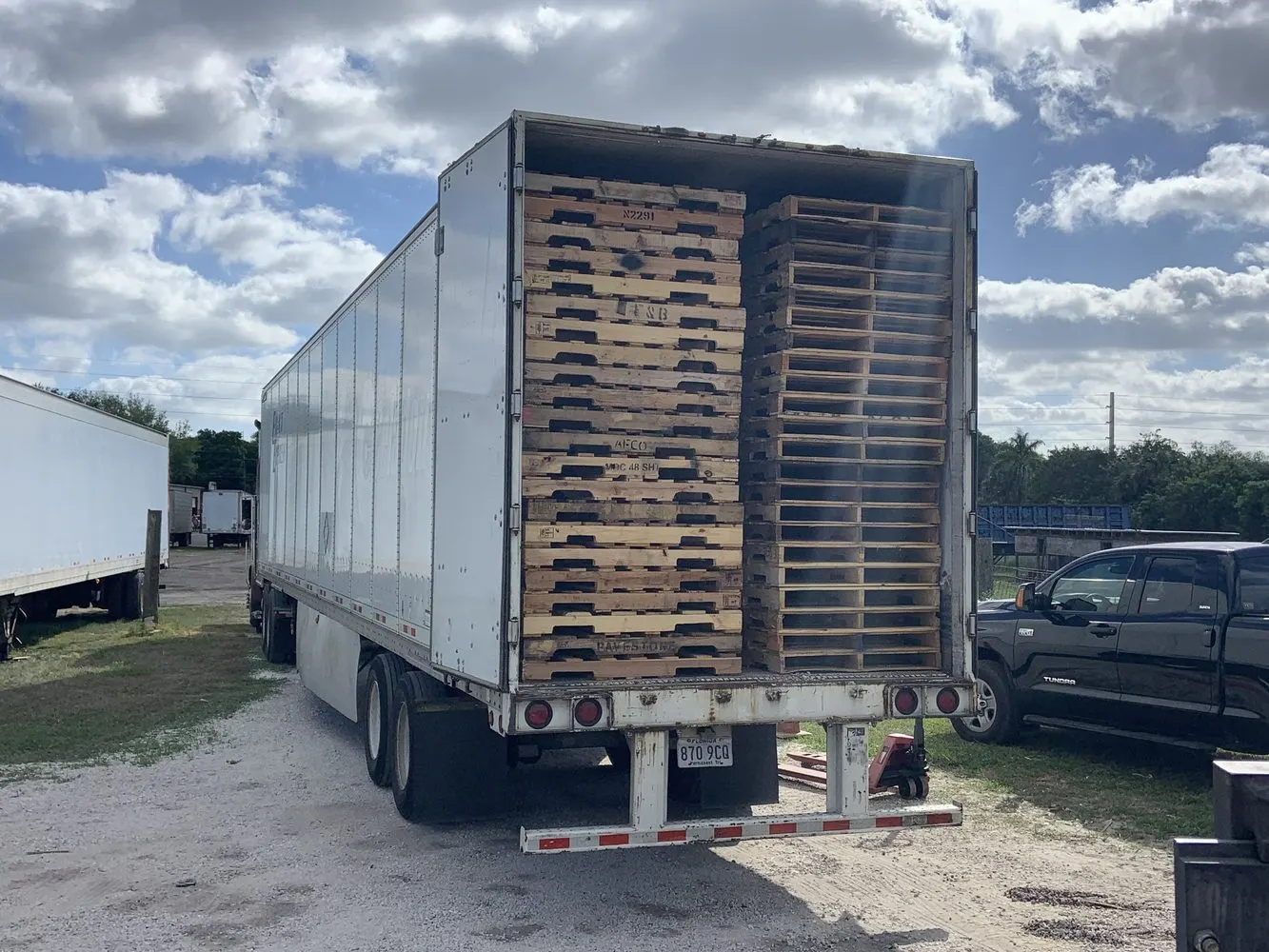
Yes, with ISPM-15 heat-treated pallets carrying IPPC stamps and full ISPM-15 documentation. Required for international shipments to all WTO member countries. Common for California customers with port access via California\'s major export gateways.
BOL, packing list, grade certifications standard. Heat-treated loads add IPPC stamps and ISPM-15 documentation. Pharma-grade loads add batch records. Food-grade loads add FSMA Sanitary Transportation Rule certifications. All documentation ships electronically before delivery.
Net-30 credit terms standard after the first 1-3 prepaid or COD loads while credit is being established. Submit a credit application with three trade references; approval typically processes within 48 hours. Volume accounts can negotiate net-45 or net-60.
50 pallets per order minimum on buy-side. Sell-side (buyback) minimum is 250 pallets per single-size load. Volume tiers kick in automatically as cumulative monthly volume increases - 500+/week accounts qualify for standing-order programs with reserved delivery slots.
Yes. Standing-order programs for California operations running 500+ pallets/week lock in tiered pricing, reserve delivery slots, and run on autopilot in the background. Custom contract terms available for accounts running 2,000+/week.
Response under 2 business hours.
Heat-treatment chamber maintained at 56C core for 30 minutes per ISPM-15 Annex 1; each load shipped with a treatment certificate signed by a USDA-registered inspector.
California Proposition 65 requires warning labels on pallets containing listed chemicals; our heat-treated stock uses no listed chemicals and ships with Prop 65 compliance attestations for every commercial invoice.
Port of Los Angeles and Port of Long Beach require ISPM-15 documentation on every export load; we coordinate with TraPac, APL, and Yusen terminal operators for certified loads through pier gate inspections.
Recycled-Grade A pallets meet 48x40 GMA spec with cosmetic wear only; no broken boards, no replaced stringers, all original GMA stamp visible; suitable for primary food-grade and pharmaceutical loads.
Recycled-Grade B pallets meet structural spec but may have up to 2 replaced deck boards; suitable for industrial loads outside food/pharma; price point 30-40% below new GMA.
Standard delivery scheduling: orders confirmed by 2 PM EST ship same day from the nearest yard; orders after 2 PM ship next-business-day; weekend dispatch available with 24-hour notice for premium accounts.
Citrus packhouses operate seasonal volume peaks November-April; we maintain dedicated Polk County and Indian River inventory to support 6-12 truckload weekly delivery during peak; standing-order pricing locks rates Oct 1.
Volume pricing kicks in at 100 pallets, 500 pallets, and 2,000 pallets per month; sustained standing orders lock pricing for 12 months; spot orders subject to current lumber market pricing.
Sustainability reports provided quarterly to standing-order customers; documents pallets recycled, lumber diverted from landfill, and CO2-equivalent savings vs new-only sourcing.