Industry-tuned ispm-15 heat-treated export pallets for beer, wine & spirits buyers across South Carolina.
Get a Price →ISPM-15 Heat-Treated Export Pallets for Beer, Wine & Spirits in South Carolina, South Carolina is foundational infrastructure for any commercial operation moving goods through South Carolina's industrial supply chain. United States Pallets (South Carolina customers reach us at our national dispatch line) provides ISPM-15 Heat-Treated Export Pallets for Beer, Wine & Spirits on a 50-pallet minimum with same-day shipping in our Southeast/Mid-Atlantic core and scheduled weekly delivery to South Carolina elsewhere.
Industrial-scale ISPM-15 Heat-Treated Export Pallets for Beer, Wine & Spirits for South Carolina, South Carolina customers requires more than just stock on hand - it requires consistent dimensional tolerances, batch-quality records, and documentation that satisfies SOX, FDA, USDA, ISO 9001, and similar audit frameworks. United States Pallets ships every ISPM-15 Heat-Treated Export Pallets for Beer, Wine & Spirits load with the documentation packet pre-attached electronically, no dock-side delays.
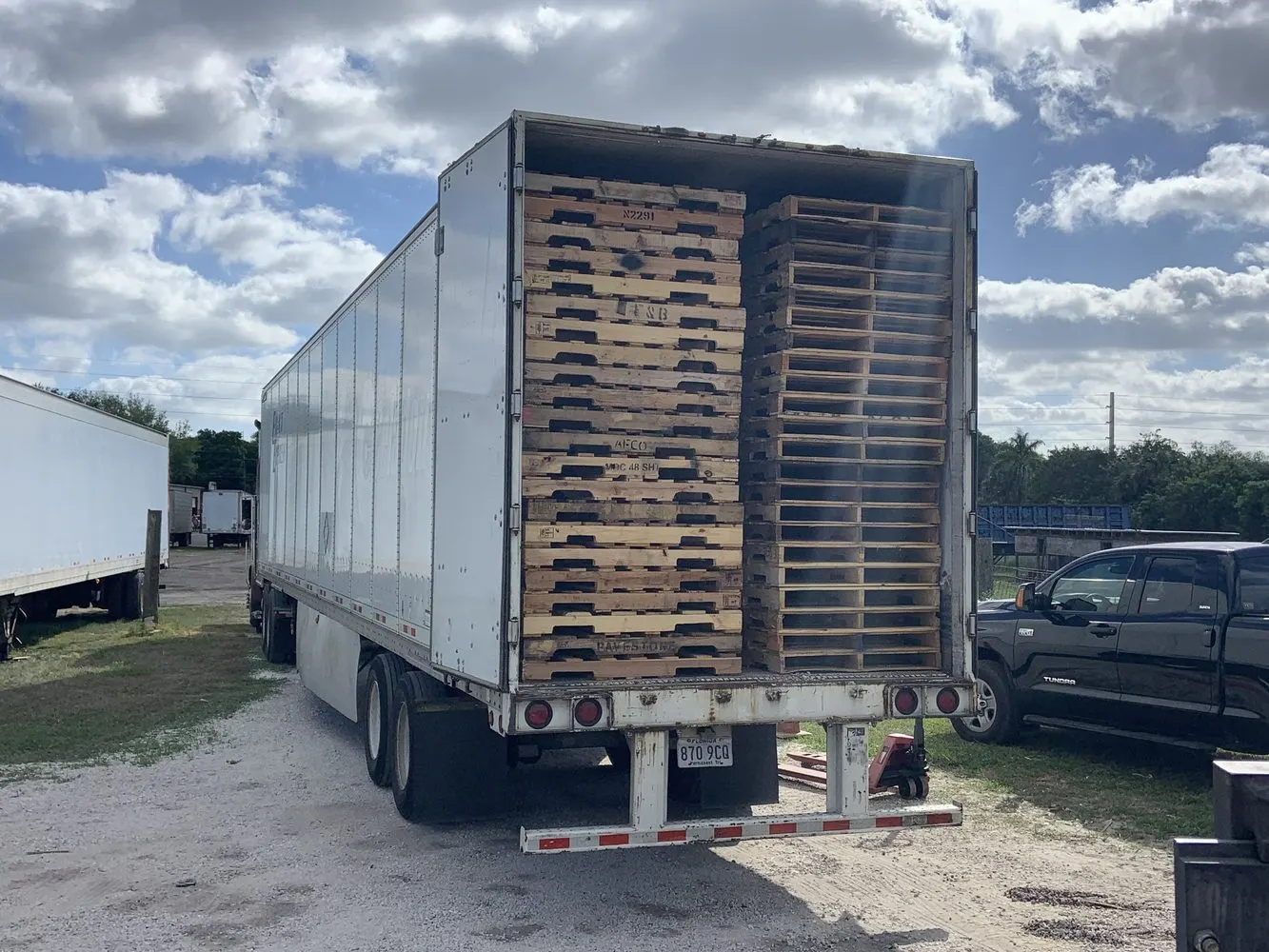
50 pallets per order minimum on buy-side. Sell-side (buyback) minimum is 250 pallets per single-size load. Volume tiers kick in automatically as cumulative monthly volume increases - 500+/week accounts qualify for standing-order programs with reserved delivery slots.
Yes. We deliver to every commercial address in South Carolina, with same-day shipping standard in our Southeast/Mid-Atlantic core and scheduled weekly delivery elsewhere. South Carolina-area accounts are typical - submit a quote with your dock location and we route accordingly.
Yes. Standing-order programs for South Carolina operations running 500+ pallets/week lock in tiered pricing, reserve delivery slots, and run on autopilot in the background. Custom contract terms available for accounts running 2,000+/week.
BOL, packing list, grade certifications standard. Heat-treated loads add IPPC stamps and ISPM-15 documentation. Pharma-grade loads add batch records. Food-grade loads add FSMA Sanitary Transportation Rule certifications. All documentation ships electronically before delivery.
Yes. Backhaul logistics are coordinated on outbound delivery routes - empty or non-spec pallets get picked up on the return leg of new pallet deliveries. Per-pallet freight cost on the backhaul approaches zero for accounts running both new-pallet purchase + buyback simultaneously.
Response under 2 business hours.
FSMA Section 204 traceability supported on every food-grade load; pallet ID linked to the lumber lot, kiln batch, and dispatch ticket in our chain-of-custody database.
Standard delivery scheduling: orders confirmed by 2 PM EST ship same day from the nearest yard; orders after 2 PM ship next-business-day; weekend dispatch available with 24-hour notice for premium accounts.
Drop-trailer programs maintain a customer-dedicated 53-foot trailer on-site; we swap full-for-empty on a scheduled 24/48/72-hour rotation; preferred for high-throughput dock operations.
ISPM-15 export pallets receive heat treatment to 56C core temperature for 30 minutes; stamping shows IPPC logo, country code 'US', registered facility number, and treatment code 'HT'.
Recycled-Grade B pallets meet structural spec but may have up to 2 replaced deck boards; suitable for industrial loads outside food/pharma; price point 30-40% below new GMA.
Buyback programs pay current market rate for returned pallets in Grade A condition; minimum 50 pallets per pickup; integrated with our recycling stream for sustainability reporting.
Cold storage facilities (Plant City corridor) use HDPE plastic pallets that wash down at 180F; suitable for USDA Grade A dairy plants and frozen-protein operations; we lease as well as sell.
ISPM-15 export documentation included on every applicable load at no additional cost; some competitors charge $50-150 per load for the certificate; we don't.
Sustainability reports provided quarterly to standing-order customers; documents pallets recycled, lumber diverted from landfill, and CO2-equivalent savings vs new-only sourcing.