Industry-tuned ispm-15 heat-treated export pallets for biotech & life sciences buyers across Texas.
Get a Price →Pallet demand in Texas, Texas is shaped by the local economy and the regional supply chain - distribution, manufacturing, and food/beverage operations all consume pallets at predictable cadences. United States Pallets aligns our ISPM-15 Heat-Treated Export Pallets for Biotech & Life Sciences delivery rhythm to those operations, with same-day rush options when production schedules tighten and standing-order programs for predictable weekly volume.
When Texas, Texas operations need ISPM-15 Heat-Treated Export Pallets for Biotech & Life Sciences at scale, the supplier shortlist comes down to three things: inventory depth, delivery reliability, and documentation. United States Pallets engineers our ISPM-15 Heat-Treated Export Pallets for Biotech & Life Sciences program to win on all three - new GMA stock plus recycled Grade A and B always available, scheduled weekly delivery, and BOL/IPPC/grade certifications electronic before each load arrives.
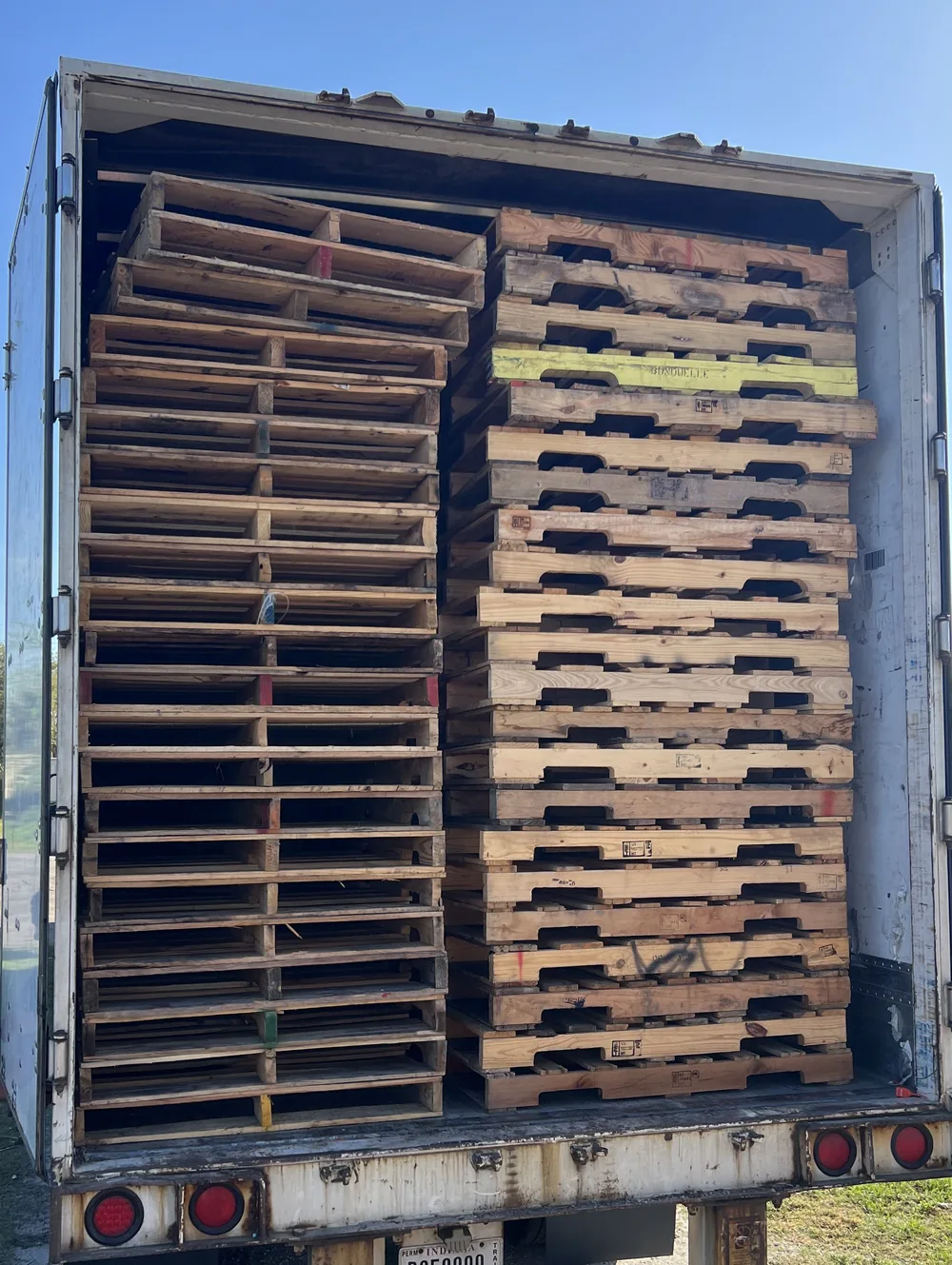
Local Texas suppliers offer geographic proximity. United States Pallets offers nationwide sourcing depth, multi-grade inventory always in stock, sub-2-business-hour quote response, audit-ready documentation, and standing-order automation that local yards typically don\'t match.
Yes, with ISPM-15 heat-treated pallets carrying IPPC stamps and full ISPM-15 documentation. Required for international shipments to all WTO member countries. Common for Texas customers with port access via Texas\'s major export gateways.
Yes. Backhaul logistics are coordinated on outbound delivery routes - empty or non-spec pallets get picked up on the return leg of new pallet deliveries. Per-pallet freight cost on the backhaul approaches zero for accounts running both new-pallet purchase + buyback simultaneously.
Yes. We buy back used pallets from Texas collectors, recyclers, and warehouses - 250-pallet minimum per load, single-size only (no mixed-size loads). Fast ACH payment, typically same-day or net-7 depending on volume. Pickup arranged on standard outbound delivery routes.
Net-30 credit terms standard after the first 1-3 prepaid or COD loads while credit is being established. Submit a credit application with three trade references; approval typically processes within 48 hours. Volume accounts can negotiate net-45 or net-60.
Response under 2 business hours.
Heat-treatment chamber maintained at 56C core for 30 minutes per ISPM-15 Annex 1; each load shipped with a treatment certificate signed by a USDA-registered inspector.
Cross-border maquiladora freight at Laredo, Brownsville, and El Paso requires USMCA-compliant phytosanitary documentation; we provide bilingual treatment certificates accepted by SAT Mexican customs.
Texas Commission on Environmental Quality (TCEQ) classifies wood pallets under Texas Administrative Code 332 Subchapter E for recycling; our partner facilities in Houston, Dallas-Fort Worth, and San Antonio maintain TCEQ recycling permits.
Deck board edge type defaults to chamfered for forklift safety; square-edge available on request for ASRS compatibility; rounded-edge banding tracks available for high-throughput line-side delivery.
Recycled-Grade B pallets meet structural spec but may have up to 2 replaced deck boards; suitable for industrial loads outside food/pharma; price point 30-40% below new GMA.
Live-load operations bring the trailer to your dock for a 90-minute window; loader/unloader provided; suited to customers without dedicated dock space or with intermittent volume.
E-commerce fulfillment centers around Orlando and Lakeland use mixed-SKU GMA pallets for inbound, plus pallets-with-cardboard for outbound to last-mile carriers; we coordinate delivery with their dock-scheduling system (FreightSmart, DOCK365).
Pricing structure: new 48x40 GMA stock ranges $14-18 per pallet in 500+ lot pricing; recycled Grade A runs $7-10 per pallet; recycled Grade B at $5-7; custom builds priced per spec on a quote basis.
Lumber sourcing prioritizes regional Southeast US hardwood mills (FL, AL, GA, MS); reduces transport carbon vs Pacific Northwest stock; supports regional logging economies.