Industry-tuned ispm-15 heat-treated export pallets for coffee & tea buyers across Massachusetts.
Get a Price →Pallet demand in Massachusetts, Massachusetts is shaped by the local economy and the regional supply chain - distribution, manufacturing, and food/beverage operations all consume pallets at predictable cadences. United States Pallets aligns our ISPM-15 Heat-Treated Export Pallets for Coffee & Tea delivery rhythm to those operations, with same-day rush options when production schedules tighten and standing-order programs for predictable weekly volume.
ISPM-15 Heat-Treated Export Pallets for Coffee & Tea suppliers serving Massachusetts businesses range from regional yards with limited inventory to national networks with deep multi-grade stock. United States Pallets sits in the second category, structured specifically for high-volume B2B operations - 50+ pallets per order minimum, scheduled programs for 500+/week accounts, and dimensional consistency tight enough for AGV-equipped warehouses.
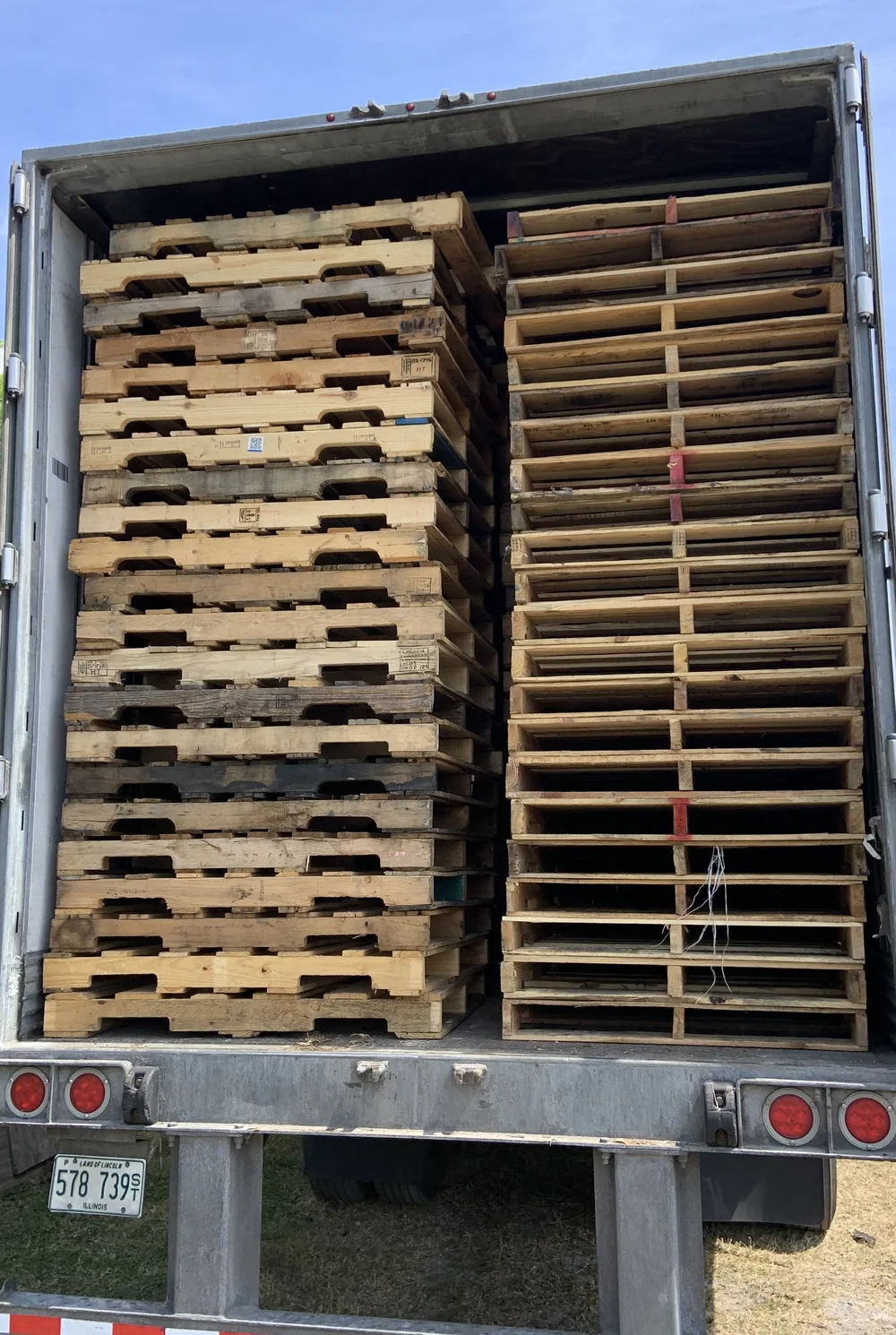
Local Massachusetts suppliers offer geographic proximity. United States Pallets offers nationwide sourcing depth, multi-grade inventory always in stock, sub-2-business-hour quote response, audit-ready documentation, and standing-order automation that local yards typically don\'t match.
Yes. We buy back used pallets from Massachusetts collectors, recyclers, and warehouses - 250-pallet minimum per load, single-size only (no mixed-size loads). Fast ACH payment, typically same-day or net-7 depending on volume. Pickup arranged on standard outbound delivery routes.
BOL, packing list, grade certifications standard. Heat-treated loads add IPPC stamps and ISPM-15 documentation. Pharma-grade loads add batch records. Food-grade loads add FSMA Sanitary Transportation Rule certifications. All documentation ships electronically before delivery.
Yes. Backhaul logistics are coordinated on outbound delivery routes - empty or non-spec pallets get picked up on the return leg of new pallet deliveries. Per-pallet freight cost on the backhaul approaches zero for accounts running both new-pallet purchase + buyback simultaneously.
Yes. We deliver to every commercial address in Massachusetts, with same-day shipping standard in our Southeast/Mid-Atlantic core and scheduled weekly delivery elsewhere. Massachusetts-area accounts are typical - submit a quote with your dock location and we route accordingly.
Response under 2 business hours.
FSMA Section 204 traceability supported on every food-grade load; pallet ID linked to the lumber lot, kiln batch, and dispatch ticket in our chain-of-custody database.
Same-day delivery available within 75 miles of our Tampa, Orlando, Jacksonville, Miami, and Lakeland yards; minimum 24 pallets; small-order pricing applies on freight.
Drop-trailer programs maintain a customer-dedicated 53-foot trailer on-site; we swap full-for-empty on a scheduled 24/48/72-hour rotation; preferred for high-throughput dock operations.
Deck board edge type defaults to chamfered for forklift safety; square-edge available on request for ASRS compatibility; rounded-edge banding tracks available for high-throughput line-side delivery.
Recycled-Grade A pallets meet 48x40 GMA spec with cosmetic wear only; no broken boards, no replaced stringers, all original GMA stamp visible; suitable for primary food-grade and pharmaceutical loads.
Flatbed delivery handles oversized loads or pallets with overhanging product; tarping included; preferred for export crates and bulk lumber shipments.
E-commerce fulfillment centers around Orlando and Lakeland use mixed-SKU GMA pallets for inbound, plus pallets-with-cardboard for outbound to last-mile carriers; we coordinate delivery with their dock-scheduling system (FreightSmart, DOCK365).
Pricing structure: new 48x40 GMA stock ranges $14-18 per pallet in 500+ lot pricing; recycled Grade A runs $7-10 per pallet; recycled Grade B at $5-7; custom builds priced per spec on a quote basis.
Pallet recycling diverts ~80% of returned stock from landfill; recycled pallets carry 60-70% lower embodied carbon than new GMA; our annual sustainability report documents tons diverted per customer.