Industry-tuned ispm-15 heat-treated export pallets for lawn & garden supply buyers across California.
Get a Price →ISPM-15 Heat-Treated Export Pallets for Lawn & Garden Supply in California, California is foundational infrastructure for any commercial operation moving goods through California's industrial supply chain. United States Pallets (California customers reach us at our national dispatch line) provides ISPM-15 Heat-Treated Export Pallets for Lawn & Garden Supply on a 50-pallet minimum with same-day shipping in our Southeast/Mid-Atlantic core and scheduled weekly delivery to California elsewhere.
Whether you're operating a single California warehouse or a multi-site network across California, the ISPM-15 Heat-Treated Export Pallets for Lawn & Garden Supply requirements are the same: consistent grade, on-time delivery, accurate count, and clean paperwork. United States Pallets built our ISPM-15 Heat-Treated Export Pallets for Lawn & Garden Supply program around exactly that profile of customer.
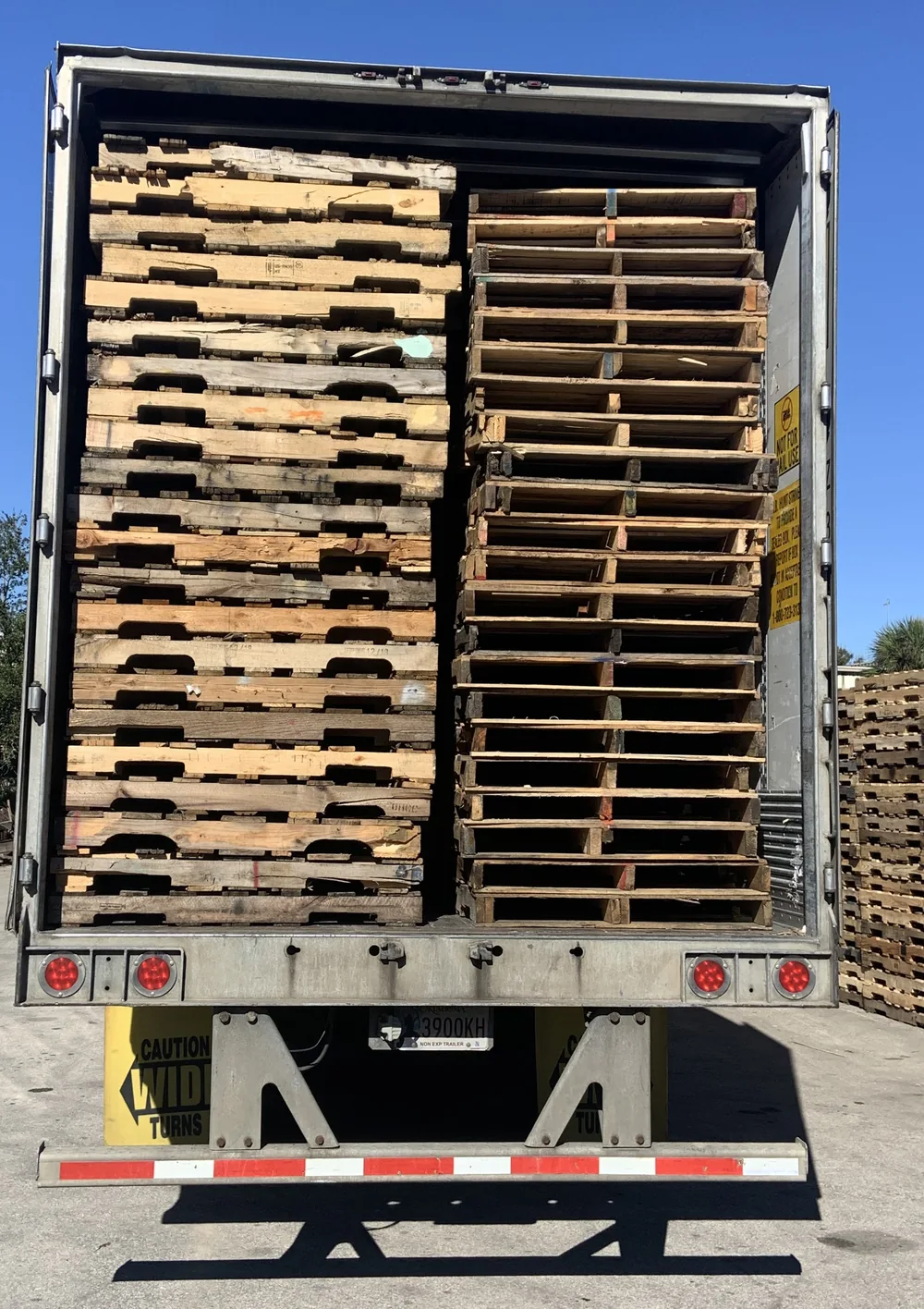
Yes. We buy back used pallets from California collectors, recyclers, and warehouses - 250-pallet minimum per load, single-size only (no mixed-size loads). Fast ACH payment, typically same-day or net-7 depending on volume. Pickup arranged on standard outbound delivery routes.
Net-30 credit terms standard after the first 1-3 prepaid or COD loads while credit is being established. Submit a credit application with three trade references; approval typically processes within 48 hours. Volume accounts can negotiate net-45 or net-60.
Yes. Backhaul logistics are coordinated on outbound delivery routes - empty or non-spec pallets get picked up on the return leg of new pallet deliveries. Per-pallet freight cost on the backhaul approaches zero for accounts running both new-pallet purchase + buyback simultaneously.
Yes, with ISPM-15 heat-treated pallets carrying IPPC stamps and full ISPM-15 documentation. Required for international shipments to all WTO member countries. Common for California customers with port access via California\'s major export gateways.
50 pallets per order minimum on buy-side. Sell-side (buyback) minimum is 250 pallets per single-size load. Volume tiers kick in automatically as cumulative monthly volume increases - 500+/week accounts qualify for standing-order programs with reserved delivery slots.
Response under 2 business hours.
GMA 48x40 four-way stringer construction conforms to the National Wooden Pallet & Container Association (NWPCA) 2014 Uniform Standard; deck board configuration 7-board top, 5-board bottom.
California wildfire compliance under SB 1241 requires fire-resistant materials within 30-foot defensible-space zones; our heat-treated solid hardwood meets Class A fire rating for staging areas outside structures.
California Senate Bill 54 Extended Producer Responsibility for packaging requires recyclable pallet documentation by 2032; we maintain post-consumer recycled content records for every customer load to support compliance reporting.
Recycled-Grade B pallets meet structural spec but may have up to 2 replaced deck boards; suitable for industrial loads outside food/pharma; price point 30-40% below new GMA.
Lumber spec for new GMA stock: mixed hardwood (oak, maple, ash, hickory) with minimum 600 SG (specific gravity); kiln dried to <19% moisture; visible defects limited to wane on outer 1/3 of deck board only.
Drop-trailer programs maintain a customer-dedicated 53-foot trailer on-site; we swap full-for-empty on a scheduled 24/48/72-hour rotation; preferred for high-throughput dock operations.
Healthcare and medical-device manufacturers (Pinellas County corridor) use custom foam-lined pallets to protect $50K+ equipment shipments; build-to-print available on 3-day lead time.
Lumber index pricing: we benchmark against the Random Lengths southern yellow pine #2 index for hardwood-blend spec; updates monthly; standing-order pricing protects against +/-15% market swings.
Sustainability reports provided quarterly to standing-order customers; documents pallets recycled, lumber diverted from landfill, and CO2-equivalent savings vs new-only sourcing.