Industry-tuned ispm-15 heat-treated export pallets for lumber & forest products buyers across New York.
Get a Price →When New York, New York operations need ISPM-15 Heat-Treated Export Pallets for Lumber & Forest Products at scale, the supplier shortlist comes down to three things: inventory depth, delivery reliability, and documentation. United States Pallets engineers our ISPM-15 Heat-Treated Export Pallets for Lumber & Forest Products program to win on all three - new GMA stock plus recycled Grade A and B always available, scheduled weekly delivery, and BOL/IPPC/grade certifications electronic before each load arrives.
Whether you're operating a single New York warehouse or a multi-site network across New York, the ISPM-15 Heat-Treated Export Pallets for Lumber & Forest Products requirements are the same: consistent grade, on-time delivery, accurate count, and clean paperwork. United States Pallets built our ISPM-15 Heat-Treated Export Pallets for Lumber & Forest Products program around exactly that profile of customer.
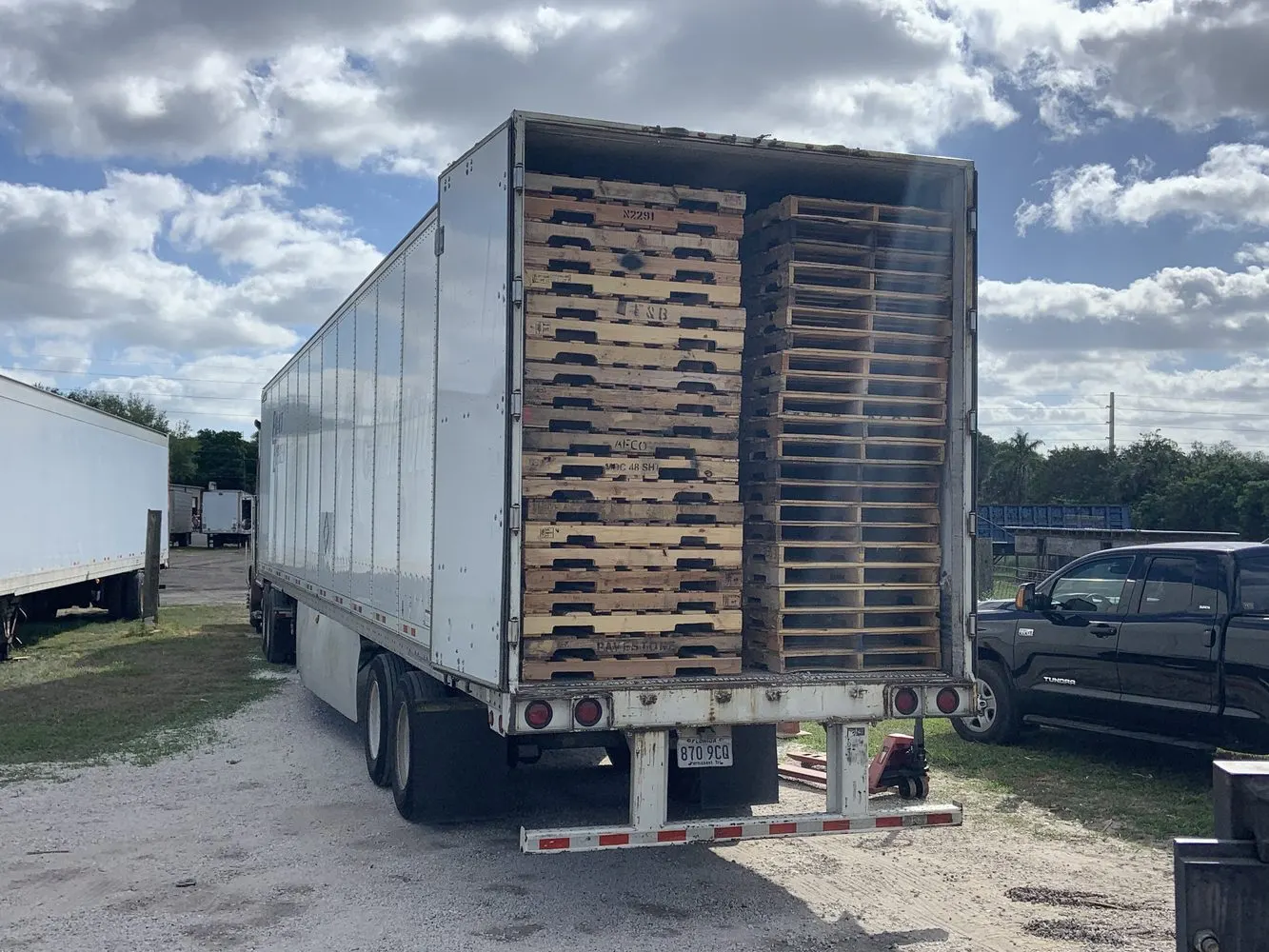
Yes. We deliver to every commercial address in New York, with same-day shipping standard in our Southeast/Mid-Atlantic core and scheduled weekly delivery elsewhere. New York-area accounts are typical - submit a quote with your dock location and we route accordingly.
BOL, packing list, grade certifications standard. Heat-treated loads add IPPC stamps and ISPM-15 documentation. Pharma-grade loads add batch records. Food-grade loads add FSMA Sanitary Transportation Rule certifications. All documentation ships electronically before delivery.
Yes. We buy back used pallets from New York collectors, recyclers, and warehouses - 250-pallet minimum per load, single-size only (no mixed-size loads). Fast ACH payment, typically same-day or net-7 depending on volume. Pickup arranged on standard outbound delivery routes.
50 pallets per order minimum on buy-side. Sell-side (buyback) minimum is 250 pallets per single-size load. Volume tiers kick in automatically as cumulative monthly volume increases - 500+/week accounts qualify for standing-order programs with reserved delivery slots.
Yes. Standing-order programs for New York operations running 500+ pallets/week lock in tiered pricing, reserve delivery slots, and run on autopilot in the background. Custom contract terms available for accounts running 2,000+/week.
Response under 2 business hours.
Kiln-dried hardwood meets NWPCA Uniform Standard for Wood Pallets; moisture content verified <19% at dispatch, blade-cut deck boards, no visible bark.
New York City Department of Sanitation Local Law 199 requires commercial waste haulers to document pallet recycling; our recycling certificates satisfy DSNY reporting requirements for Manhattan, Bronx, Brooklyn, and Queens customers.
New York State Department of Transportation oversize-load permits restrict pallet shipments via I-87 Thruway and I-95; our DOT-permitted carriers handle JFK-area, Albany-corridor, and Buffalo-Niagara routing.
Custom 42x42 pallet builds use 7/8 inch deck boards for telecommunications-equipment loads; nail-pattern density doubled to handle 5,000 lb static load; runner spacing optimized for 4,000 lb-capacity narrow-aisle reach trucks.
Deck board edge type defaults to chamfered for forklift safety; square-edge available on request for ASRS compatibility; rounded-edge banding tracks available for high-throughput line-side delivery.
Dry-van loads handle weather-sensitive pallet stock and food-grade freight; sealed loads with bill-of-lading documentation; supports DOT-required commercial routing.
Beverage distributors (beer, soda, water) move primarily 48x40 GMA in dry-van loads; standard week sees Mon/Wed/Fri delivery rotation; volume discounts kick in at 200+ pallets per week sustained.
Lumber index pricing: we benchmark against the Random Lengths southern yellow pine #2 index for hardwood-blend spec; updates monthly; standing-order pricing protects against +/-15% market swings.
Sustainability reports provided quarterly to standing-order customers; documents pallets recycled, lumber diverted from landfill, and CO2-equivalent savings vs new-only sourcing.