Industry-tuned ispm-15 heat-treated export pallets for packaging & shipping supply buyers across Georgia.
Get a Price →Industrial-scale ISPM-15 Heat-Treated Export Pallets for Packaging & Shipping Supply for Georgia, Georgia customers requires more than just stock on hand - it requires consistent dimensional tolerances, batch-quality records, and documentation that satisfies SOX, FDA, USDA, ISO 9001, and similar audit frameworks. United States Pallets ships every ISPM-15 Heat-Treated Export Pallets for Packaging & Shipping Supply load with the documentation packet pre-attached electronically, no dock-side delays.
Whether you're operating a single Georgia warehouse or a multi-site network across Georgia, the ISPM-15 Heat-Treated Export Pallets for Packaging & Shipping Supply requirements are the same: consistent grade, on-time delivery, accurate count, and clean paperwork. United States Pallets built our ISPM-15 Heat-Treated Export Pallets for Packaging & Shipping Supply program around exactly that profile of customer.
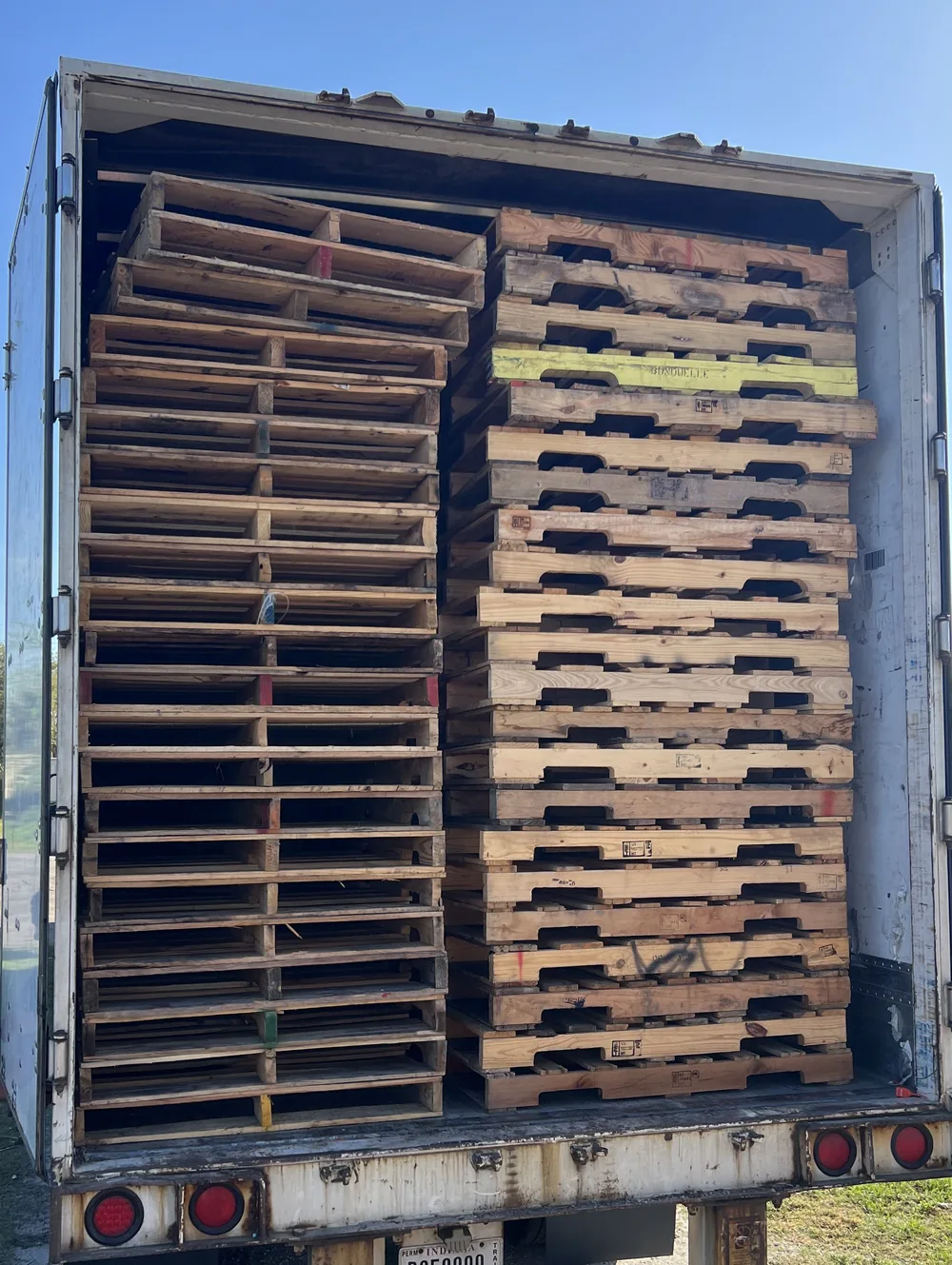
Same-day shipping in our Southeast/Mid-Atlantic core (FL, GA, AL, TN, MS, SC, NC, KY, VA) and scheduled weekly delivery elsewhere. Express options available for Georgia rush orders. Quote response under 2 business hours, dispatch within hours of order confirmation.
Yes. We deliver to every commercial address in Georgia, with same-day shipping standard in our Southeast/Mid-Atlantic core and scheduled weekly delivery elsewhere. Georgia-area accounts are typical - submit a quote with your dock location and we route accordingly.
Local Georgia suppliers offer geographic proximity. United States Pallets offers nationwide sourcing depth, multi-grade inventory always in stock, sub-2-business-hour quote response, audit-ready documentation, and standing-order automation that local yards typically don\'t match.
50 pallets per order minimum on buy-side. Sell-side (buyback) minimum is 250 pallets per single-size load. Volume tiers kick in automatically as cumulative monthly volume increases - 500+/week accounts qualify for standing-order programs with reserved delivery slots.
Net-30 credit terms standard after the first 1-3 prepaid or COD loads while credit is being established. Submit a credit application with three trade references; approval typically processes within 48 hours. Volume accounts can negotiate net-45 or net-60.
Response under 2 business hours.
All pallets stamped IPPC HT for ISPM-15 export compliance to 180+ countries; documentation includes treatment temperature logs and the registered facility number.
Georgia Environmental Protection Division (GA EPD) regulates wood pallet recycling under Solid Waste Management Rules; our partner facilities in Atlanta, Savannah, and Augusta maintain GA EPD registration.
Georgia poultry packers in Gainesville, Athens, and South Georgia require FDA 21 CFR 178.3520 indirect food additive compliant pallets; our food-grade stock serves Tyson, Pilgrim's, and Wayne Farms supply chains.
48x40 GMA load capacity is 2,800 lb racked (face-loaded), 4,600 lb static, and 2,500 lb dynamic per ASME MH1 2016; deck board span 3.5 inches; deflection under rated load <0.5 inch.
Recycled-Grade A pallets meet 48x40 GMA spec with cosmetic wear only; no broken boards, no replaced stringers, all original GMA stamp visible; suitable for primary food-grade and pharmaceutical loads.
Standing-order programs schedule a recurring weekly truckload (or partial) for the same delivery window; price-locked for 12 months; preferred for 3PL warehouse refill cycles.
Bakery operations typically order weekly 48x40 GMA stock for flour and sugar inbound, plus 36x36 for retail-ready display loads; common customers in the Tampa Bay area include large wholesale and grocery-aligned bakeries.
Volume pricing kicks in at 100 pallets, 500 pallets, and 2,000 pallets per month; sustained standing orders lock pricing for 12 months; spot orders subject to current lumber market pricing.
Sustainability reports provided quarterly to standing-order customers; documents pallets recycled, lumber diverted from landfill, and CO2-equivalent savings vs new-only sourcing.