Industry-tuned ispm-15 heat-treated export pallets for pet supplies & animal health buyers across Pennsylvania.
Get a Price →Whether you're operating a single Pennsylvania warehouse or a multi-site network across Pennsylvania, the ISPM-15 Heat-Treated Export Pallets for Pet Supplies & Animal Health requirements are the same: consistent grade, on-time delivery, accurate count, and clean paperwork. United States Pallets built our ISPM-15 Heat-Treated Export Pallets for Pet Supplies & Animal Health program around exactly that profile of customer.
Pennsylvania businesses handling commercial pallet supply for Pennsylvania-area operations need a supplier that delivers consistent grade quality, dimensional tolerances tighter than industry standard, and audit-ready documentation. United States Pallets ISPM-15 Heat-Treated Export Pallets for Pet Supplies & Animal Health for Pennsylvania meets each of those bars, with quote response under 2 business hours and net-30 credit terms after the first 1-3 prepaid loads.
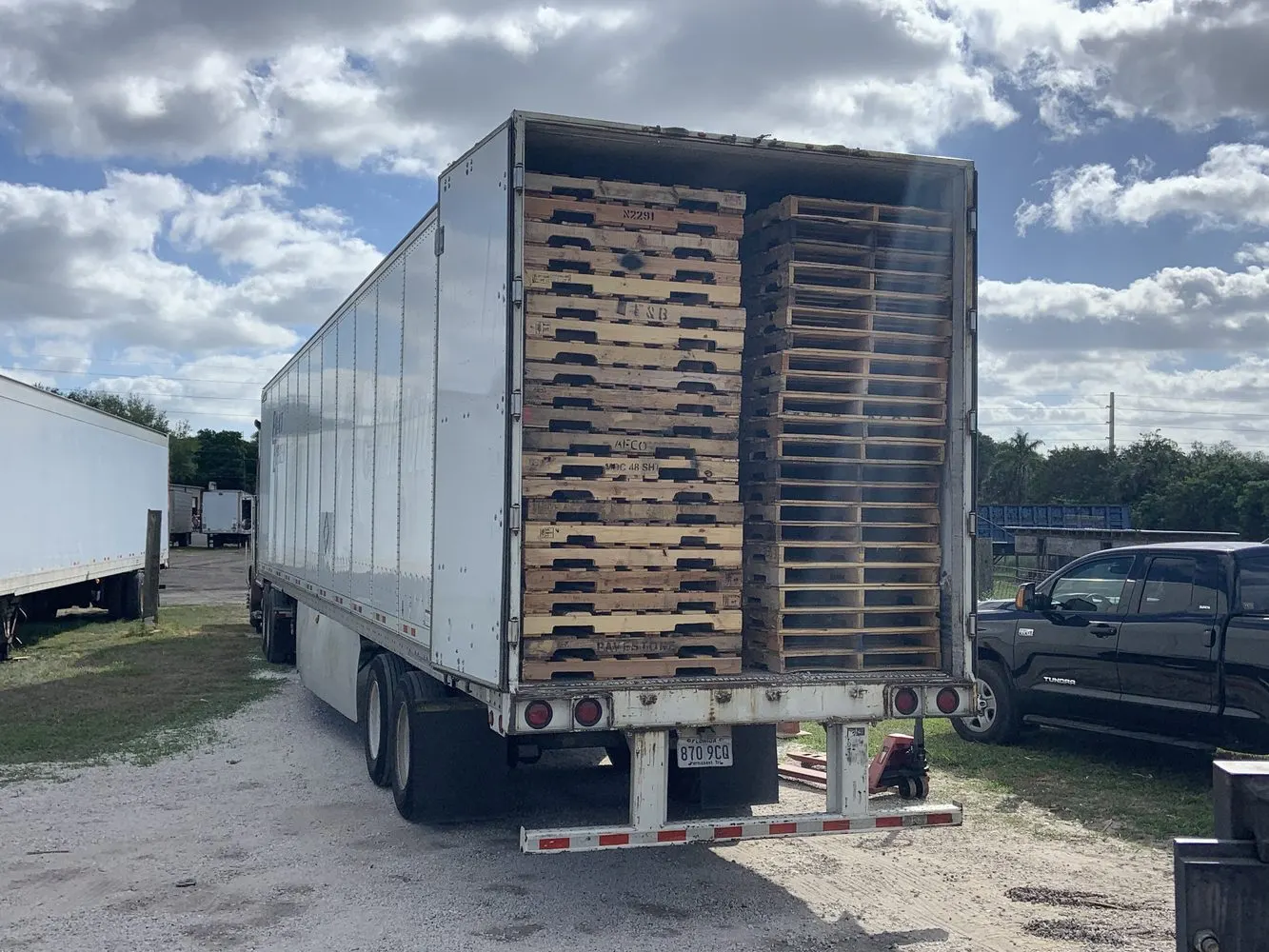
50 pallets per order minimum on buy-side. Sell-side (buyback) minimum is 250 pallets per single-size load. Volume tiers kick in automatically as cumulative monthly volume increases - 500+/week accounts qualify for standing-order programs with reserved delivery slots.
Yes. We deliver to every commercial address in Pennsylvania, with same-day shipping standard in our Southeast/Mid-Atlantic core and scheduled weekly delivery elsewhere. Pennsylvania-area accounts are typical - submit a quote with your dock location and we route accordingly.
Yes, with ISPM-15 heat-treated pallets carrying IPPC stamps and full ISPM-15 documentation. Required for international shipments to all WTO member countries. Common for Pennsylvania customers with port access via Pennsylvania\'s major export gateways.
Yes. We buy back used pallets from Pennsylvania collectors, recyclers, and warehouses - 250-pallet minimum per load, single-size only (no mixed-size loads). Fast ACH payment, typically same-day or net-7 depending on volume. Pickup arranged on standard outbound delivery routes.
Yes. Backhaul logistics are coordinated on outbound delivery routes - empty or non-spec pallets get picked up on the return leg of new pallet deliveries. Per-pallet freight cost on the backhaul approaches zero for accounts running both new-pallet purchase + buyback simultaneously.
Response under 2 business hours.
GMA 48x40 four-way stringer construction conforms to the National Wooden Pallet & Container Association (NWPCA) 2014 Uniform Standard; deck board configuration 7-board top, 5-board bottom.
Lancaster County agricultural packers require ISPM-15 documentation for produce export to Canada; we maintain seasonal inventory at Harrisburg and Lancaster yards for Pennsylvania Dutch wholesale distribution.
Pennsylvania Department of Agriculture spotted lanternfly quarantine rules require pallet inspection at 51 quarantined county lines; our partner inspectors maintain compliance documentation for SLF-affected shipments.
Block pallets (four-way entry) use nine 4-inch hardwood blocks with continuous-face top deck; ideal for ASRS (automated storage and retrieval) and AGV (automated guided vehicle) operations where stringer interruptions cause read-failures.
ISPM-15 export pallets receive heat treatment to 56C core temperature for 30 minutes; stamping shows IPPC logo, country code 'US', registered facility number, and treatment code 'HT'.
Drop-trailer programs maintain a customer-dedicated 53-foot trailer on-site; we swap full-for-empty on a scheduled 24/48/72-hour rotation; preferred for high-throughput dock operations.
Aerospace component manufacturers (Brevard, Pinellas counties) use ISPM-15 export crates for international supplier shipments; build-to-print specs include foam-lined interiors and humidity-control packets.
Buyback pricing for returned pallets: $3-5 per Grade A unit; $1-2 per Grade B; minimum 50-pallet pickup; integrated with our recycling stream for sustainability accounting.
Lumber sourcing prioritizes regional Southeast US hardwood mills (FL, AL, GA, MS); reduces transport carbon vs Pacific Northwest stock; supports regional logging economies.