Industry-tuned pharmaceutical & gdp pallets for agriculture & produce buyers across Illinois.
Get a Price →Whether you're operating a single Illinois warehouse or a multi-site network across Illinois, the Pharmaceutical & GDP Pallets for Agriculture & Produce requirements are the same: consistent grade, on-time delivery, accurate count, and clean paperwork. United States Pallets built our Pharmaceutical & GDP Pallets for Agriculture & Produce program around exactly that profile of customer.
Pharmaceutical & GDP Pallets for Agriculture & Produce in Illinois, Illinois is foundational infrastructure for any commercial operation moving goods through Illinois's industrial supply chain. United States Pallets (Illinois customers reach us at our national dispatch line) provides Pharmaceutical & GDP Pallets for Agriculture & Produce on a 50-pallet minimum with same-day shipping in our Southeast/Mid-Atlantic core and scheduled weekly delivery to Illinois elsewhere.
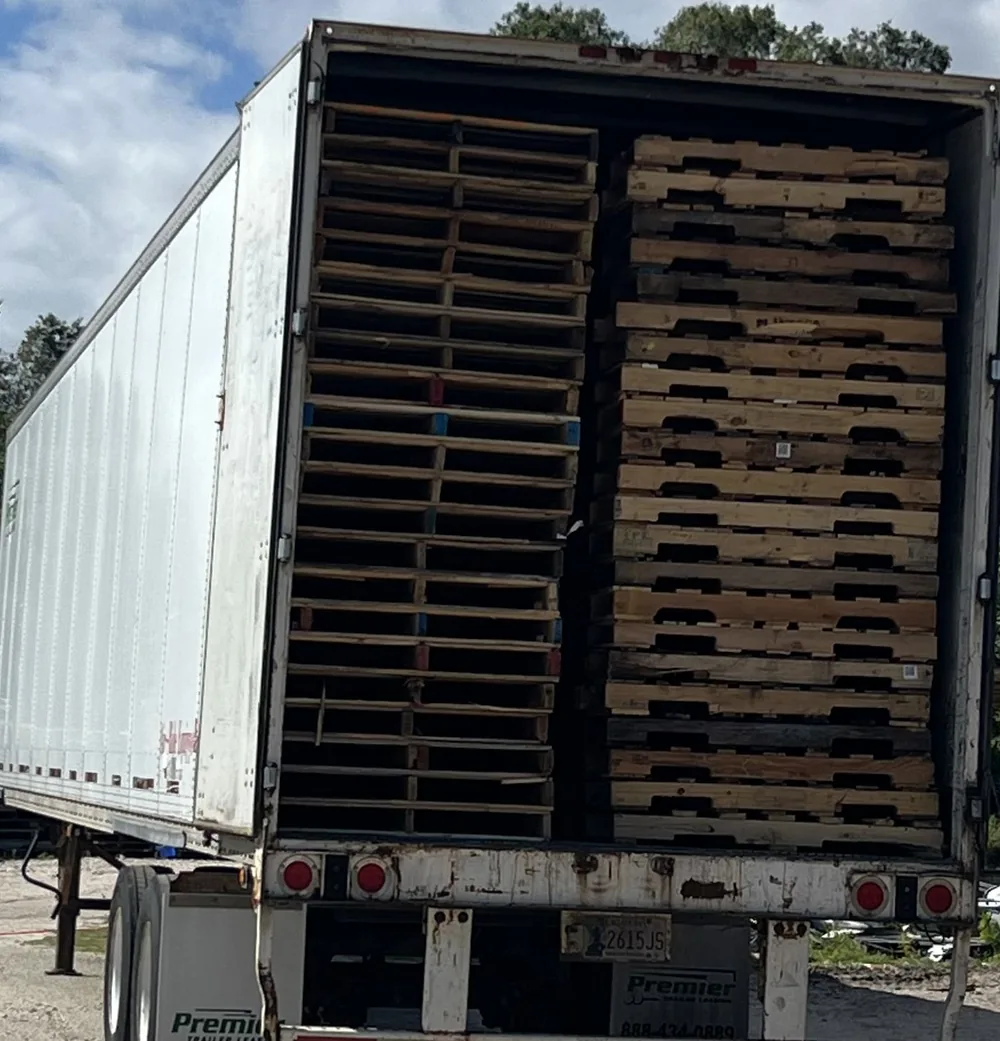
Local Illinois suppliers offer geographic proximity. United States Pallets offers nationwide sourcing depth, multi-grade inventory always in stock, sub-2-business-hour quote response, audit-ready documentation, and standing-order automation that local yards typically don\'t match.
Yes. Backhaul logistics are coordinated on outbound delivery routes - empty or non-spec pallets get picked up on the return leg of new pallet deliveries. Per-pallet freight cost on the backhaul approaches zero for accounts running both new-pallet purchase + buyback simultaneously.
Same-day shipping in our Southeast/Mid-Atlantic core (FL, GA, AL, TN, MS, SC, NC, KY, VA) and scheduled weekly delivery elsewhere. Express options available for Illinois rush orders. Quote response under 2 business hours, dispatch within hours of order confirmation.
BOL, packing list, grade certifications standard. Heat-treated loads add IPPC stamps and ISPM-15 documentation. Pharma-grade loads add batch records. Food-grade loads add FSMA Sanitary Transportation Rule certifications. All documentation ships electronically before delivery.
Net-30 credit terms standard after the first 1-3 prepaid or COD loads while credit is being established. Submit a credit application with three trade references; approval typically processes within 48 hours. Volume accounts can negotiate net-45 or net-60.
Response under 2 business hours.
Heat-treatment chamber maintained at 56C core for 30 minutes per ISPM-15 Annex 1; each load shipped with a treatment certificate signed by a USDA-registered inspector.
Port of Chicago Calumet Harbor and Joliet inland-port operations require ISPM-15 documentation for export loads; we coordinate with Illinois International Port District and Joliet Terminal Railroad for certified loads.
BNSF and UP intermodal terminals in Chicago require pallets sized for 53-foot domestic containers; we supply 48x40 and 48x48 stock optimized for double-stack rail to Los Angeles and Long Beach.
Block pallets (four-way entry) use nine 4-inch hardwood blocks with continuous-face top deck; ideal for ASRS (automated storage and retrieval) and AGV (automated guided vehicle) operations where stringer interruptions cause read-failures.
Lumber spec for new GMA stock: mixed hardwood (oak, maple, ash, hickory) with minimum 600 SG (specific gravity); kiln dried to <19% moisture; visible defects limited to wane on outer 1/3 of deck board only.
Drop-trailer programs maintain a customer-dedicated 53-foot trailer on-site; we swap full-for-empty on a scheduled 24/48/72-hour rotation; preferred for high-throughput dock operations.
Marine industry suppliers (Fort Lauderdale, Stuart, Miami) use exterior-rated pallets that resist saltwater corrosion; treated lumber stock available; preferred for boat-component freight to Bahamas and Caribbean.
Buyback pricing for returned pallets: $3-5 per Grade A unit; $1-2 per Grade B; minimum 50-pallet pickup; integrated with our recycling stream for sustainability accounting.
Sustainability reports provided quarterly to standing-order customers; documents pallets recycled, lumber diverted from landfill, and CO2-equivalent savings vs new-only sourcing.