Industry-tuned recycled pallets - grade a & b for automotive tier-1 suppliers buyers across Georgia.
Get a Price →Georgia businesses handling commercial pallet supply for Georgia-area operations need a supplier that delivers consistent grade quality, dimensional tolerances tighter than industry standard, and audit-ready documentation. United States Pallets Recycled Pallets - Grade A & B for Automotive Tier-1 Suppliers for Georgia meets each of those bars, with quote response under 2 business hours and net-30 credit terms after the first 1-3 prepaid loads.
Industrial-scale Recycled Pallets - Grade A & B for Automotive Tier-1 Suppliers for Georgia, Georgia customers requires more than just stock on hand - it requires consistent dimensional tolerances, batch-quality records, and documentation that satisfies SOX, FDA, USDA, ISO 9001, and similar audit frameworks. United States Pallets ships every Recycled Pallets - Grade A & B for Automotive Tier-1 Suppliers load with the documentation packet pre-attached electronically, no dock-side delays.
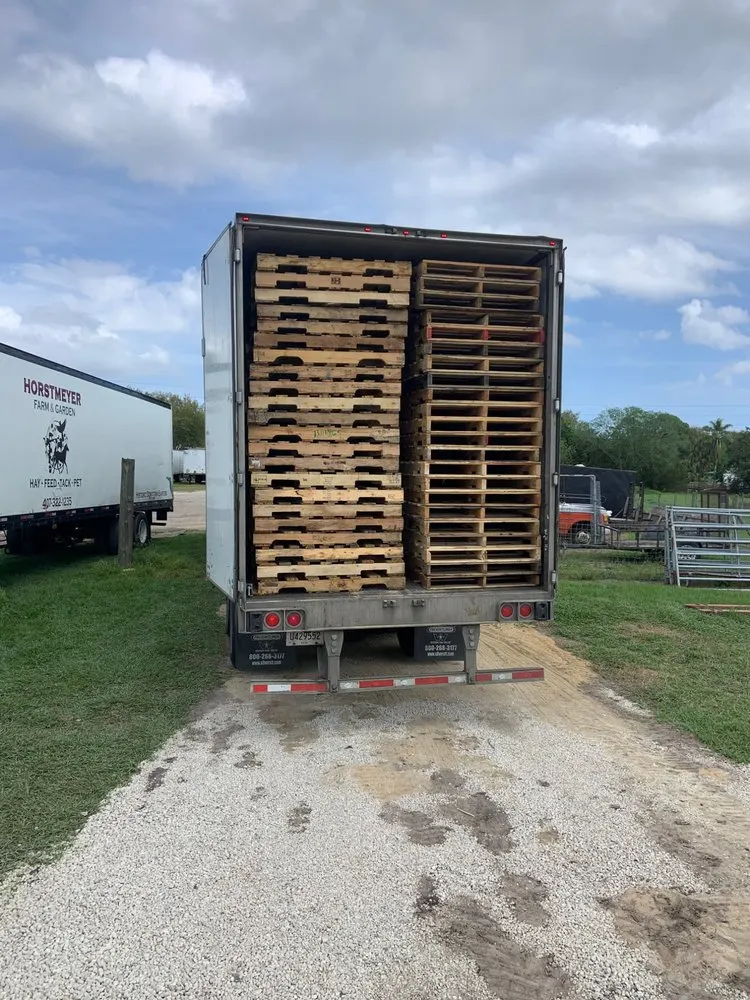
50 pallets per order minimum on buy-side. Sell-side (buyback) minimum is 250 pallets per single-size load. Volume tiers kick in automatically as cumulative monthly volume increases - 500+/week accounts qualify for standing-order programs with reserved delivery slots.
Yes, with ISPM-15 heat-treated pallets carrying IPPC stamps and full ISPM-15 documentation. Required for international shipments to all WTO member countries. Common for Georgia customers with port access via Georgia\'s major export gateways.
Yes. We deliver to every commercial address in Georgia, with same-day shipping standard in our Southeast/Mid-Atlantic core and scheduled weekly delivery elsewhere. Georgia-area accounts are typical - submit a quote with your dock location and we route accordingly.
BOL, packing list, grade certifications standard. Heat-treated loads add IPPC stamps and ISPM-15 documentation. Pharma-grade loads add batch records. Food-grade loads add FSMA Sanitary Transportation Rule certifications. All documentation ships electronically before delivery.
Yes. Backhaul logistics are coordinated on outbound delivery routes - empty or non-spec pallets get picked up on the return leg of new pallet deliveries. Per-pallet freight cost on the backhaul approaches zero for accounts running both new-pallet purchase + buyback simultaneously.
Response under 2 business hours.
GMA 48x40 four-way stringer construction conforms to the National Wooden Pallet & Container Association (NWPCA) 2014 Uniform Standard; deck board configuration 7-board top, 5-board bottom.
Georgia Environmental Protection Division (GA EPD) regulates wood pallet recycling under Solid Waste Management Rules; our partner facilities in Atlanta, Savannah, and Augusta maintain GA EPD registration.
Georgia Department of Transportation oversize-load permits restrict pallet shipments above 80,000 lb GVW; our DOT-permitted carriers handle Atlanta-area, Macon-corridor, and coastal Savannah-Brunswick routing.
48x40 GMA load capacity is 2,800 lb racked (face-loaded), 4,600 lb static, and 2,500 lb dynamic per ASME MH1 2016; deck board span 3.5 inches; deflection under rated load <0.5 inch.
Custom 42x42 pallet builds use 7/8 inch deck boards for telecommunications-equipment loads; nail-pattern density doubled to handle 5,000 lb static load; runner spacing optimized for 4,000 lb-capacity narrow-aisle reach trucks.
Dry-van loads handle weather-sensitive pallet stock and food-grade freight; sealed loads with bill-of-lading documentation; supports DOT-required commercial routing.
Marine industry suppliers (Fort Lauderdale, Stuart, Miami) use exterior-rated pallets that resist saltwater corrosion; treated lumber stock available; preferred for boat-component freight to Bahamas and Caribbean.
Buyback pricing for returned pallets: $3-5 per Grade A unit; $1-2 per Grade B; minimum 50-pallet pickup; integrated with our recycling stream for sustainability accounting.
Our Lakeland and Jacksonville recycling streams process 200,000+ pallets per year; broken stock is repaired or chipped for mulch (sold separately); zero-landfill goal targeted for 2027.