Industry-tuned recycled pallets - grade a & b for bakery & confectionery buyers across New York.
Get a Price →When New York, New York operations need Recycled Pallets - Grade A & B for Bakery & Confectionery at scale, the supplier shortlist comes down to three things: inventory depth, delivery reliability, and documentation. United States Pallets engineers our Recycled Pallets - Grade A & B for Bakery & Confectionery program to win on all three - new GMA stock plus recycled Grade A and B always available, scheduled weekly delivery, and BOL/IPPC/grade certifications electronic before each load arrives.
United States Pallets is the national-network alternative to local New York pallet suppliers for New York-area B2B buyers. Where regional vendors offer geographic proximity, USP offers nationwide sourcing depth, multi-grade always-in-stock inventory, sub-2-hour quote response, and the documentation discipline Recycled Pallets - Grade A & B for Bakery & Confectionery customers need at scale.
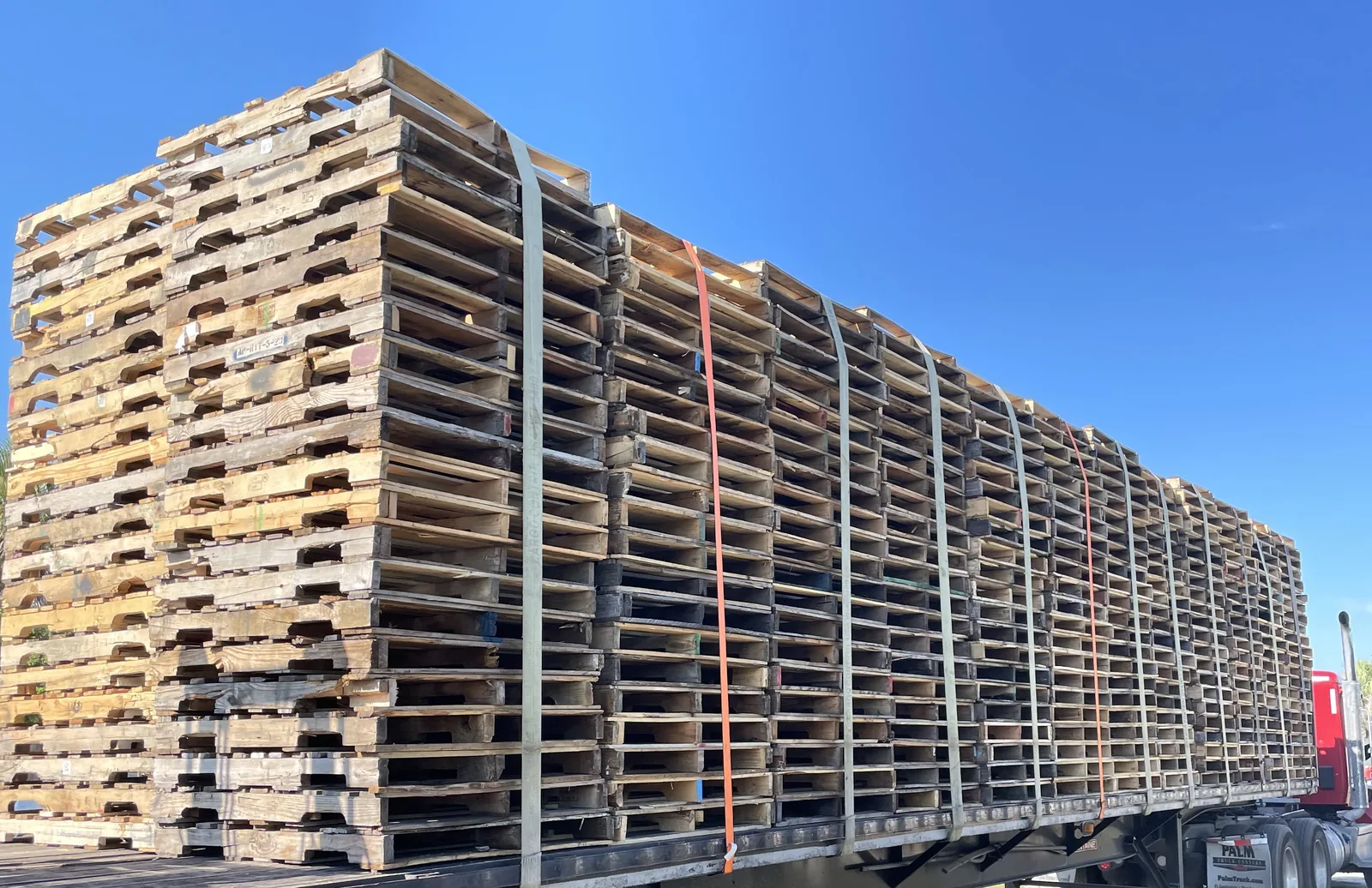
50 pallets per order minimum on buy-side. Sell-side (buyback) minimum is 250 pallets per single-size load. Volume tiers kick in automatically as cumulative monthly volume increases - 500+/week accounts qualify for standing-order programs with reserved delivery slots.
BOL, packing list, grade certifications standard. Heat-treated loads add IPPC stamps and ISPM-15 documentation. Pharma-grade loads add batch records. Food-grade loads add FSMA Sanitary Transportation Rule certifications. All documentation ships electronically before delivery.
Local New York suppliers offer geographic proximity. United States Pallets offers nationwide sourcing depth, multi-grade inventory always in stock, sub-2-business-hour quote response, audit-ready documentation, and standing-order automation that local yards typically don\'t match.
Yes. We deliver to every commercial address in New York, with same-day shipping standard in our Southeast/Mid-Atlantic core and scheduled weekly delivery elsewhere. New York-area accounts are typical - submit a quote with your dock location and we route accordingly.
Yes. We buy back used pallets from New York collectors, recyclers, and warehouses - 250-pallet minimum per load, single-size only (no mixed-size loads). Fast ACH payment, typically same-day or net-7 depending on volume. Pickup arranged on standard outbound delivery routes.
Response under 2 business hours.
All pallets stamped IPPC HT for ISPM-15 export compliance to 180+ countries; documentation includes treatment temperature logs and the registered facility number.
Port of New York and New Jersey requires ISPM-15 stamp verification at Elizabeth Marine Terminal and Howland Hook; we coordinate with PNCT and APMT inspectors for certified export loads.
New York City Department of Sanitation Local Law 199 requires commercial waste haulers to document pallet recycling; our recycling certificates satisfy DSNY reporting requirements for Manhattan, Bronx, Brooklyn, and Queens customers.
Recycled-Grade B pallets meet structural spec but may have up to 2 replaced deck boards; suitable for industrial loads outside food/pharma; price point 30-40% below new GMA.
Standard 48x40 GMA pallets feature 5/8 inch deck boards with a 4-board face pattern; bottom configuration is 3-board for four-way fork entry; nail pattern uses 2.5 inch screw-shank galvanized fasteners.
Live-load operations bring the trailer to your dock for a 90-minute window; loader/unloader provided; suited to customers without dedicated dock space or with intermittent volume.
Restaurant supply distributors move pallets between regional warehouses and individual restaurants on small-truck (26-foot box truck) routes; we offer mini-pallet 24x24 and 32x32 builds for restaurant kitchen door access.
Pricing structure: new 48x40 GMA stock ranges $14-18 per pallet in 500+ lot pricing; recycled Grade A runs $7-10 per pallet; recycled Grade B at $5-7; custom builds priced per spec on a quote basis.
Our Lakeland and Jacksonville recycling streams process 200,000+ pallets per year; broken stock is repaired or chipped for mulch (sold separately); zero-landfill goal targeted for 2027.