Industry-tuned recycled pallets - grade a & b for grocery & retail buyers across North Carolina.
Get a Price →Pallet demand in North Carolina, North Carolina is shaped by the local economy and the regional supply chain - distribution, manufacturing, and food/beverage operations all consume pallets at predictable cadences. United States Pallets aligns our Recycled Pallets - Grade A & B for Grocery & Retail delivery rhythm to those operations, with same-day rush options when production schedules tighten and standing-order programs for predictable weekly volume.
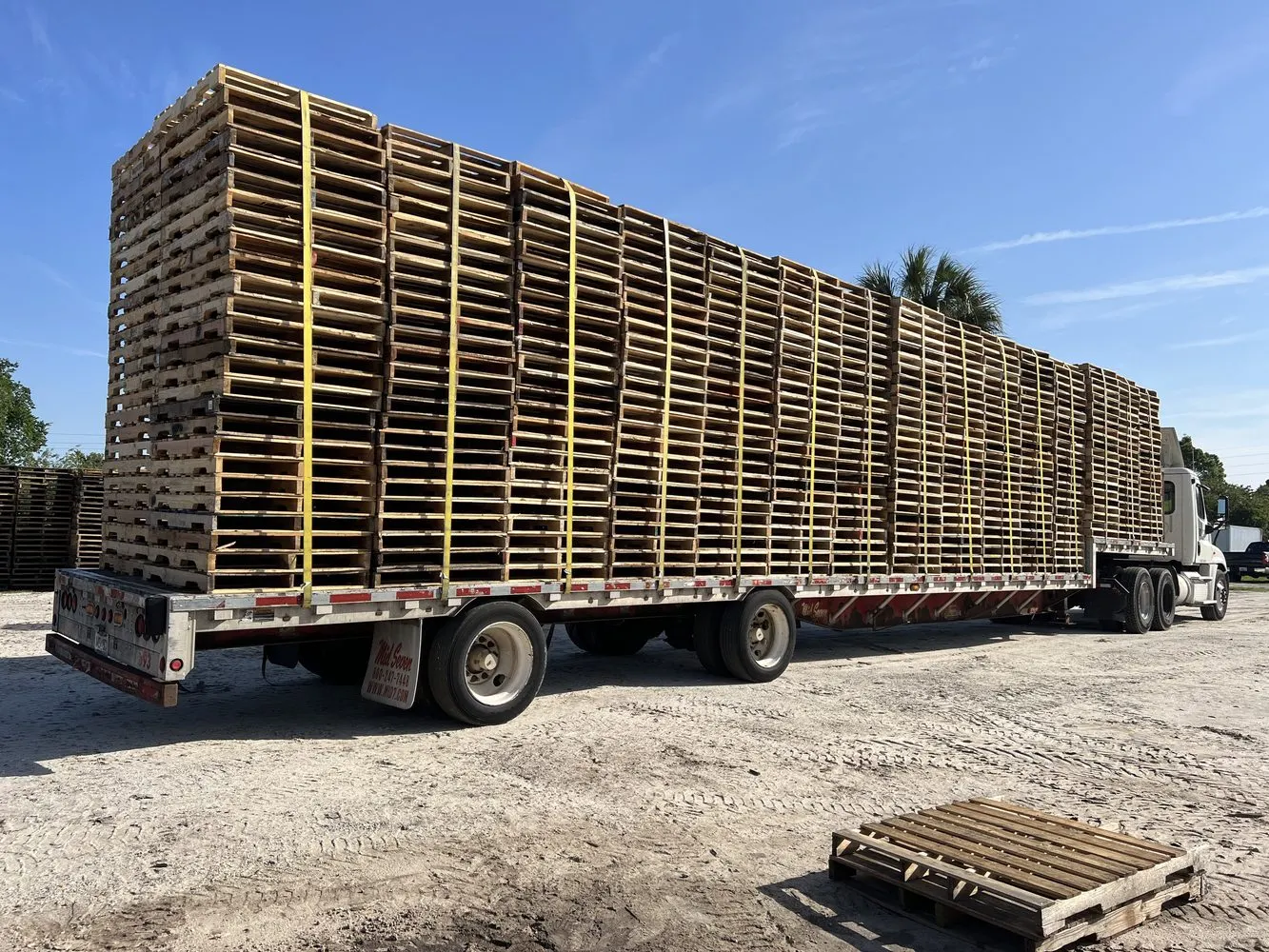
Recycled Pallets - Grade A & B for Grocery & Retail in North Carolina, North Carolina is foundational infrastructure for any commercial operation moving goods through North Carolina's industrial supply chain. United States Pallets (North Carolina customers reach us at our national dispatch line) provides Recycled Pallets - Grade A & B for Grocery & Retail on a 50-pallet minimum with same-day shipping in our Southeast/Mid-Atlantic core and scheduled weekly delivery to North Carolina elsewhere.
Yes. We buy back used pallets from North Carolina collectors, recyclers, and warehouses - 250-pallet minimum per load, single-size only (no mixed-size loads). Fast ACH payment, typically same-day or net-7 depending on volume. Pickup arranged on standard outbound delivery routes.
Yes, with ISPM-15 heat-treated pallets carrying IPPC stamps and full ISPM-15 documentation. Required for international shipments to all WTO member countries. Common for North Carolina customers with port access via North Carolina\'s major export gateways.
Local North Carolina suppliers offer geographic proximity. United States Pallets offers nationwide sourcing depth, multi-grade inventory always in stock, sub-2-business-hour quote response, audit-ready documentation, and standing-order automation that local yards typically don\'t match.
Same-day shipping in our Southeast/Mid-Atlantic core (FL, GA, AL, TN, MS, SC, NC, KY, VA) and scheduled weekly delivery elsewhere. Express options available for North Carolina rush orders. Quote response under 2 business hours, dispatch within hours of order confirmation.
Yes. Standing-order programs for North Carolina operations running 500+ pallets/week lock in tiered pricing, reserve delivery slots, and run on autopilot in the background. Custom contract terms available for accounts running 2,000+/week.
Response under 2 business hours.
Heat-treatment chamber maintained at 56C core for 30 minutes per ISPM-15 Annex 1; each load shipped with a treatment certificate signed by a USDA-registered inspector.
North Carolina furniture manufacturers in High Point, Hickory, and Lenoir use custom oversized pallets for assembled freight; 60x40 and 72x48 builds available on 5-day production lead time for furniture-market exhibitors.
Port of Wilmington and Port of Morehead City require ISPM-15 stamp verification at container terminals; we coordinate with NC Ports stevedores for certified export loads, with 14-foot harbor draft supporting Panamax vessels.
Recycled-Grade B pallets meet structural spec but may have up to 2 replaced deck boards; suitable for industrial loads outside food/pharma; price point 30-40% below new GMA.
ISPM-15 export pallets receive heat treatment to 56C core temperature for 30 minutes; stamping shows IPPC logo, country code 'US', registered facility number, and treatment code 'HT'.
Live-load operations bring the trailer to your dock for a 90-minute window; loader/unloader provided; suited to customers without dedicated dock space or with intermittent volume.
Citrus packers in Indian River County require Florida-specific phytosanitary documentation per USDA Marketing Order 905; we provide the documentation on every load.
Custom pallet pricing depends on lumber spec, build complexity, and quantity: small runs (50-200 units) typically $35-55 per unit; large runs (500+ units) drop to $22-32 per unit; quotes returned in <2 hours.
Our Lakeland and Jacksonville recycling streams process 200,000+ pallets per year; broken stock is repaired or chipped for mulch (sold separately); zero-landfill goal targeted for 2027.