Industry-tuned stringer pallets for construction & building materials buyers across California.
Get a Price →Industrial-scale Stringer Pallets for Construction & Building Materials for California, California customers requires more than just stock on hand - it requires consistent dimensional tolerances, batch-quality records, and documentation that satisfies SOX, FDA, USDA, ISO 9001, and similar audit frameworks. United States Pallets ships every Stringer Pallets for Construction & Building Materials load with the documentation packet pre-attached electronically, no dock-side delays.
United States Pallets is the national-network alternative to local California pallet suppliers for California-area B2B buyers. Where regional vendors offer geographic proximity, USP offers nationwide sourcing depth, multi-grade always-in-stock inventory, sub-2-hour quote response, and the documentation discipline Stringer Pallets for Construction & Building Materials customers need at scale.
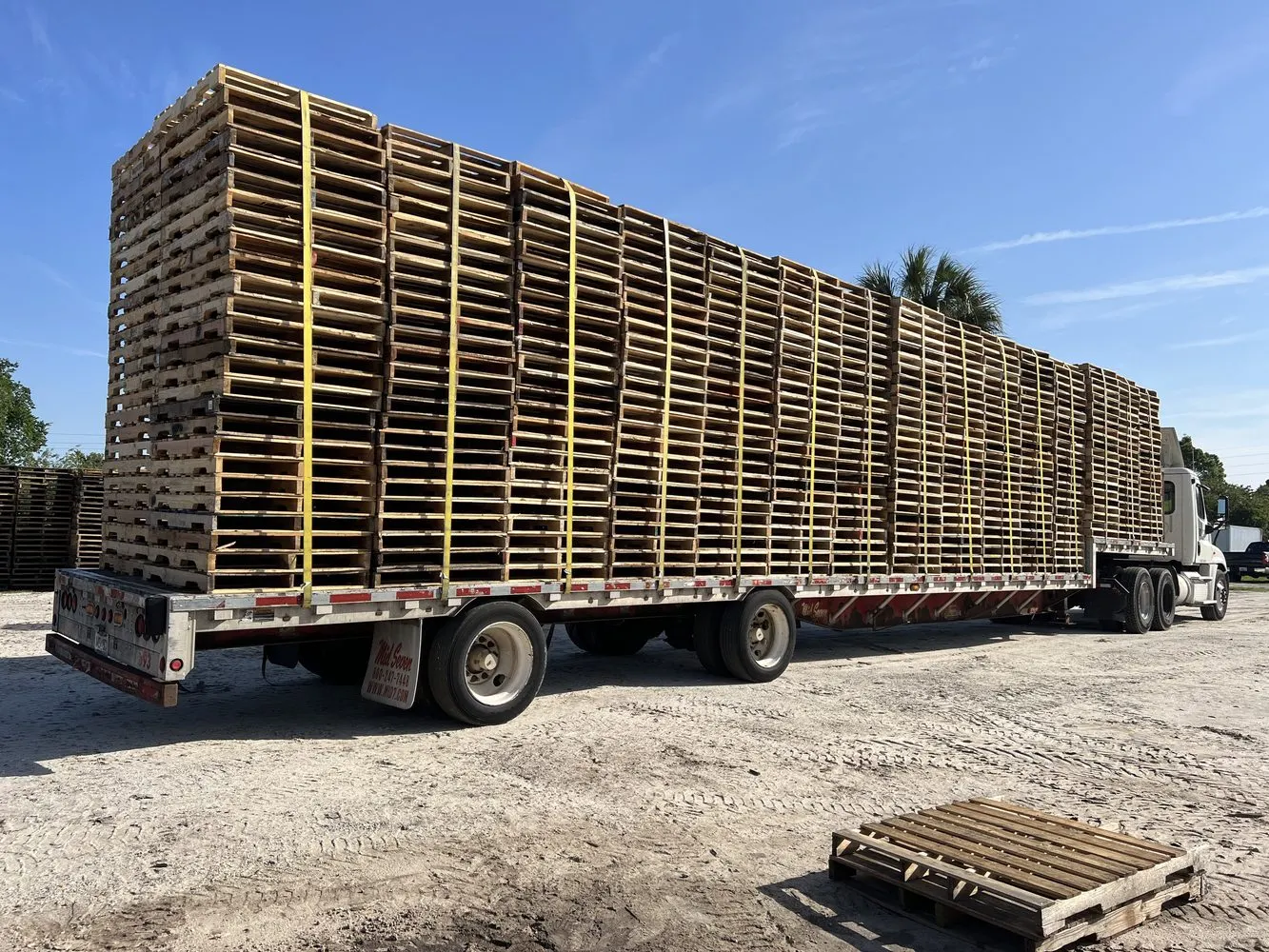
50 pallets per order minimum on buy-side. Sell-side (buyback) minimum is 250 pallets per single-size load. Volume tiers kick in automatically as cumulative monthly volume increases - 500+/week accounts qualify for standing-order programs with reserved delivery slots.
Yes. Backhaul logistics are coordinated on outbound delivery routes - empty or non-spec pallets get picked up on the return leg of new pallet deliveries. Per-pallet freight cost on the backhaul approaches zero for accounts running both new-pallet purchase + buyback simultaneously.
Same-day shipping in our Southeast/Mid-Atlantic core (FL, GA, AL, TN, MS, SC, NC, KY, VA) and scheduled weekly delivery elsewhere. Express options available for California rush orders. Quote response under 2 business hours, dispatch within hours of order confirmation.
Yes. We deliver to every commercial address in California, with same-day shipping standard in our Southeast/Mid-Atlantic core and scheduled weekly delivery elsewhere. California-area accounts are typical - submit a quote with your dock location and we route accordingly.
Yes. Standing-order programs for California operations running 500+ pallets/week lock in tiered pricing, reserve delivery slots, and run on autopilot in the background. Custom contract terms available for accounts running 2,000+/week.
Response under 2 business hours.
Kiln-dried hardwood meets NWPCA Uniform Standard for Wood Pallets; moisture content verified <19% at dispatch, blade-cut deck boards, no visible bark.
California Proposition 65 requires warning labels on pallets containing listed chemicals; our heat-treated stock uses no listed chemicals and ships with Prop 65 compliance attestations for every commercial invoice.
California Code of Regulations Title 14 Section 17855 requires wood pallet recyclers to maintain CalRecycle facility permits; our partner network includes permitted facilities in Fontana, Stockton, and Fresno for return-stream service.
Custom 42x42 pallet builds use 7/8 inch deck boards for telecommunications-equipment loads; nail-pattern density doubled to handle 5,000 lb static load; runner spacing optimized for 4,000 lb-capacity narrow-aisle reach trucks.
Deck board edge type defaults to chamfered for forklift safety; square-edge available on request for ASRS compatibility; rounded-edge banding tracks available for high-throughput line-side delivery.
Standing-order programs schedule a recurring weekly truckload (or partial) for the same delivery window; price-locked for 12 months; preferred for 3PL warehouse refill cycles.
Bakery operations typically order weekly 48x40 GMA stock for flour and sugar inbound, plus 36x36 for retail-ready display loads; common customers in the Tampa Bay area include large wholesale and grocery-aligned bakeries.
Volume pricing kicks in at 100 pallets, 500 pallets, and 2,000 pallets per month; sustained standing orders lock pricing for 12 months; spot orders subject to current lumber market pricing.
Our Lakeland and Jacksonville recycling streams process 200,000+ pallets per year; broken stock is repaired or chipped for mulch (sold separately); zero-landfill goal targeted for 2027.