Industry-tuned stringer pallets for electronics & semiconductors buyers across North Carolina.
Get a Price →Stringer Pallets for Electronics & Semiconductors suppliers serving North Carolina businesses range from regional yards with limited inventory to national networks with deep multi-grade stock. United States Pallets sits in the second category, structured specifically for high-volume B2B operations - 50+ pallets per order minimum, scheduled programs for 500+/week accounts, and dimensional consistency tight enough for AGV-equipped warehouses.
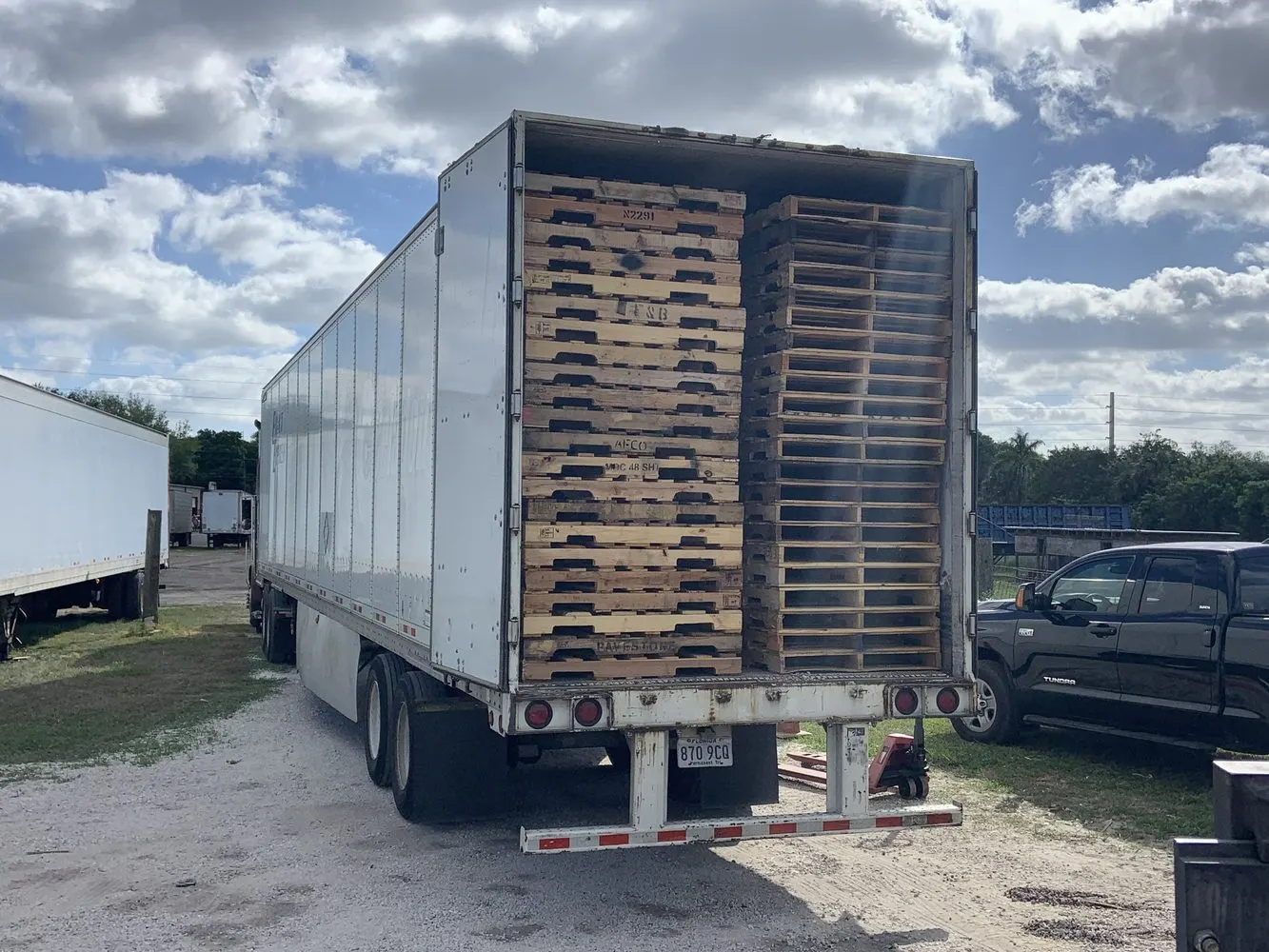
Stringer Pallets for Electronics & Semiconductors suppliers serving North Carolina businesses range from regional yards with limited inventory to national networks with deep multi-grade stock. United States Pallets sits in the second category, structured specifically for high-volume B2B operations - 50+ pallets per order minimum, scheduled programs for 500+/week accounts, and dimensional consistency tight enough for AGV-equipped warehouses.
Yes. Standing-order programs for North Carolina operations running 500+ pallets/week lock in tiered pricing, reserve delivery slots, and run on autopilot in the background. Custom contract terms available for accounts running 2,000+/week.
Same-day shipping in our Southeast/Mid-Atlantic core (FL, GA, AL, TN, MS, SC, NC, KY, VA) and scheduled weekly delivery elsewhere. Express options available for North Carolina rush orders. Quote response under 2 business hours, dispatch within hours of order confirmation.
50 pallets per order minimum on buy-side. Sell-side (buyback) minimum is 250 pallets per single-size load. Volume tiers kick in automatically as cumulative monthly volume increases - 500+/week accounts qualify for standing-order programs with reserved delivery slots.
Yes. We deliver to every commercial address in North Carolina, with same-day shipping standard in our Southeast/Mid-Atlantic core and scheduled weekly delivery elsewhere. North Carolina-area accounts are typical - submit a quote with your dock location and we route accordingly.
Local North Carolina suppliers offer geographic proximity. United States Pallets offers nationwide sourcing depth, multi-grade inventory always in stock, sub-2-business-hour quote response, audit-ready documentation, and standing-order automation that local yards typically don\'t match.
Response under 2 business hours.
GMA 48x40 four-way stringer construction conforms to the National Wooden Pallet & Container Association (NWPCA) 2014 Uniform Standard; deck board configuration 7-board top, 5-board bottom.
North Carolina Department of Environmental Quality regulates wood pallet recycling under 15A NCAC 13B; our partner facilities in Charlotte, Raleigh, and Greensboro maintain NCDEQ registration for return-stream service.
North Carolina Department of Transportation oversize-load permits restrict pallet shipments via I-40, I-77, and I-95; our DOT-permitted carriers handle Charlotte-area, Triangle-corridor, and coastal Wilmington routing.
Custom 42x42 pallet builds use 7/8 inch deck boards for telecommunications-equipment loads; nail-pattern density doubled to handle 5,000 lb static load; runner spacing optimized for 4,000 lb-capacity narrow-aisle reach trucks.
Recycled-Grade A pallets meet 48x40 GMA spec with cosmetic wear only; no broken boards, no replaced stringers, all original GMA stamp visible; suitable for primary food-grade and pharmaceutical loads.
Same-day delivery available within 75 miles of our Tampa, Orlando, Jacksonville, Miami, and Lakeland yards; minimum 24 pallets; small-order pricing applies on freight.
Bakery operations typically order weekly 48x40 GMA stock for flour and sugar inbound, plus 36x36 for retail-ready display loads; common customers in the Tampa Bay area include large wholesale and grocery-aligned bakeries.
Volume pricing kicks in at 100 pallets, 500 pallets, and 2,000 pallets per month; sustained standing orders lock pricing for 12 months; spot orders subject to current lumber market pricing.
Lumber sourcing prioritizes regional Southeast US hardwood mills (FL, AL, GA, MS); reduces transport carbon vs Pacific Northwest stock; supports regional logging economies.