Industry-tuned stringer pallets for grocery & retail buyers across California.
Get a Price →When California, California operations need Stringer Pallets for Grocery & Retail at scale, the supplier shortlist comes down to three things: inventory depth, delivery reliability, and documentation. United States Pallets engineers our Stringer Pallets for Grocery & Retail program to win on all three - new GMA stock plus recycled Grade A and B always available, scheduled weekly delivery, and BOL/IPPC/grade certifications electronic before each load arrives.
Whether you're operating a single California warehouse or a multi-site network across California, the Stringer Pallets for Grocery & Retail requirements are the same: consistent grade, on-time delivery, accurate count, and clean paperwork. United States Pallets built our Stringer Pallets for Grocery & Retail program around exactly that profile of customer.
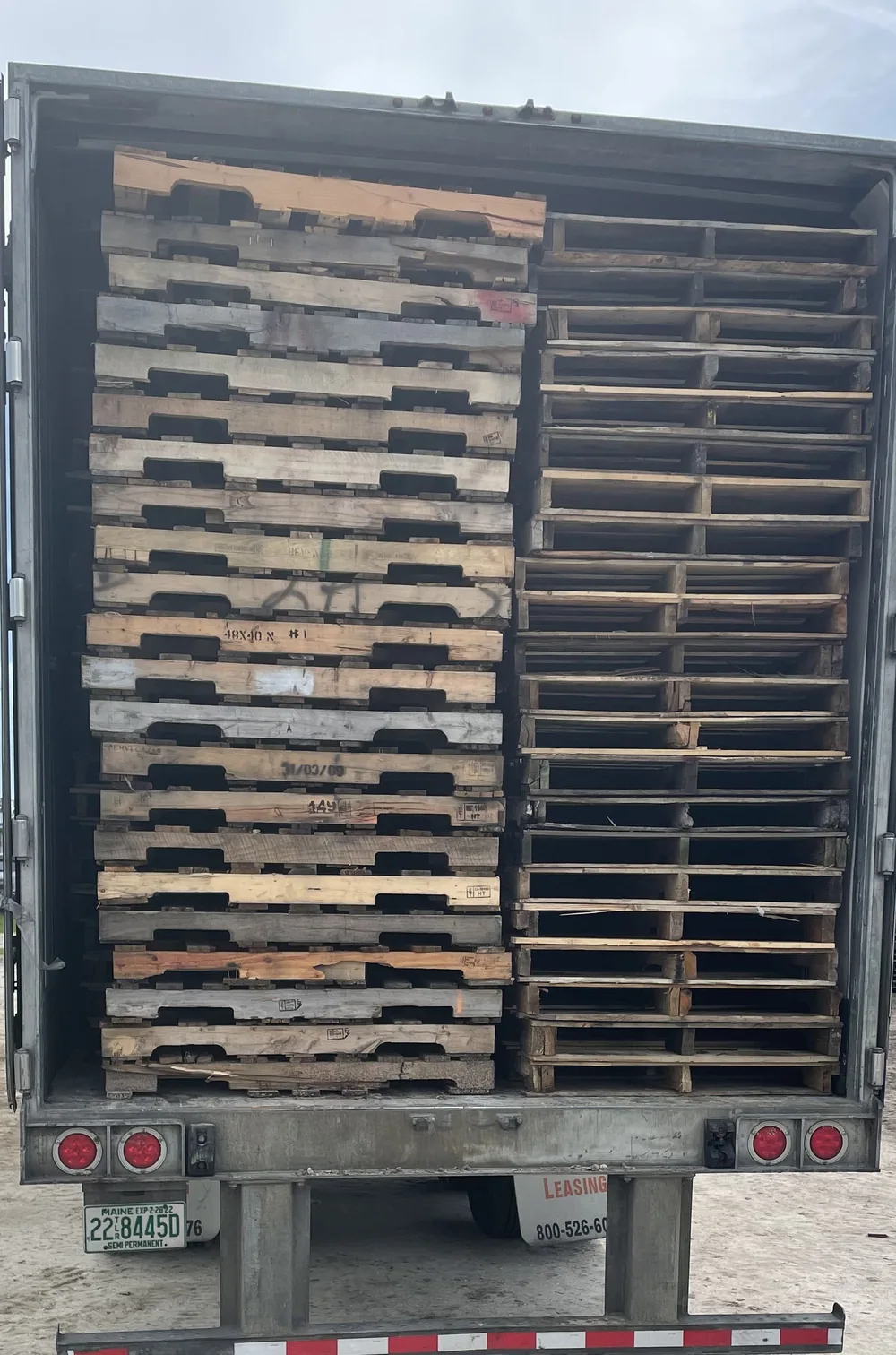
Yes. We deliver to every commercial address in California, with same-day shipping standard in our Southeast/Mid-Atlantic core and scheduled weekly delivery elsewhere. California-area accounts are typical - submit a quote with your dock location and we route accordingly.
BOL, packing list, grade certifications standard. Heat-treated loads add IPPC stamps and ISPM-15 documentation. Pharma-grade loads add batch records. Food-grade loads add FSMA Sanitary Transportation Rule certifications. All documentation ships electronically before delivery.
Net-30 credit terms standard after the first 1-3 prepaid or COD loads while credit is being established. Submit a credit application with three trade references; approval typically processes within 48 hours. Volume accounts can negotiate net-45 or net-60.
Yes. Backhaul logistics are coordinated on outbound delivery routes - empty or non-spec pallets get picked up on the return leg of new pallet deliveries. Per-pallet freight cost on the backhaul approaches zero for accounts running both new-pallet purchase + buyback simultaneously.
Local California suppliers offer geographic proximity. United States Pallets offers nationwide sourcing depth, multi-grade inventory always in stock, sub-2-business-hour quote response, audit-ready documentation, and standing-order automation that local yards typically don\'t match.
Response under 2 business hours.
FSMA Section 204 traceability supported on every food-grade load; pallet ID linked to the lumber lot, kiln batch, and dispatch ticket in our chain-of-custody database.
California Senate Bill 54 Extended Producer Responsibility for packaging requires recyclable pallet documentation by 2032; we maintain post-consumer recycled content records for every customer load to support compliance reporting.
California Proposition 65 requires warning labels on pallets containing listed chemicals; our heat-treated stock uses no listed chemicals and ships with Prop 65 compliance attestations for every commercial invoice.
Custom 42x42 pallet builds use 7/8 inch deck boards for telecommunications-equipment loads; nail-pattern density doubled to handle 5,000 lb static load; runner spacing optimized for 4,000 lb-capacity narrow-aisle reach trucks.
Block pallets (four-way entry) use nine 4-inch hardwood blocks with continuous-face top deck; ideal for ASRS (automated storage and retrieval) and AGV (automated guided vehicle) operations where stringer interruptions cause read-failures.
Flatbed delivery handles oversized loads or pallets with overhanging product; tarping included; preferred for export crates and bulk lumber shipments.
Concrete and aggregate suppliers use bagged-goods stringers (heavier construction, denser nail pattern) to support 4,000+ lb cement-sack loads; we stock these in our Tampa Bay and Jacksonville warehouses.
Volume pricing kicks in at 100 pallets, 500 pallets, and 2,000 pallets per month; sustained standing orders lock pricing for 12 months; spot orders subject to current lumber market pricing.
Sustainability reports provided quarterly to standing-order customers; documents pallets recycled, lumber diverted from landfill, and CO2-equivalent savings vs new-only sourcing.