Industrial-grade southern yellow pine lumber for Washington pallet, crate, and shipping operations.
Get a Price →United States Pallets is the national-network alternative to local Washington pallet suppliers for Washington-area B2B buyers. Where regional vendors offer geographic proximity, USP offers nationwide sourcing depth, multi-grade always-in-stock inventory, sub-2-hour quote response, and the documentation discipline Southern Yellow Pine Lumber customers need at scale.
Southern Yellow Pine Lumber in Washington, Washington is foundational infrastructure for any commercial operation moving goods through Washington's industrial supply chain. United States Pallets (Washington customers reach us at our national dispatch line) provides Southern Yellow Pine Lumber on a 50-pallet minimum with same-day shipping in our Southeast/Mid-Atlantic core and scheduled weekly delivery to Washington elsewhere.
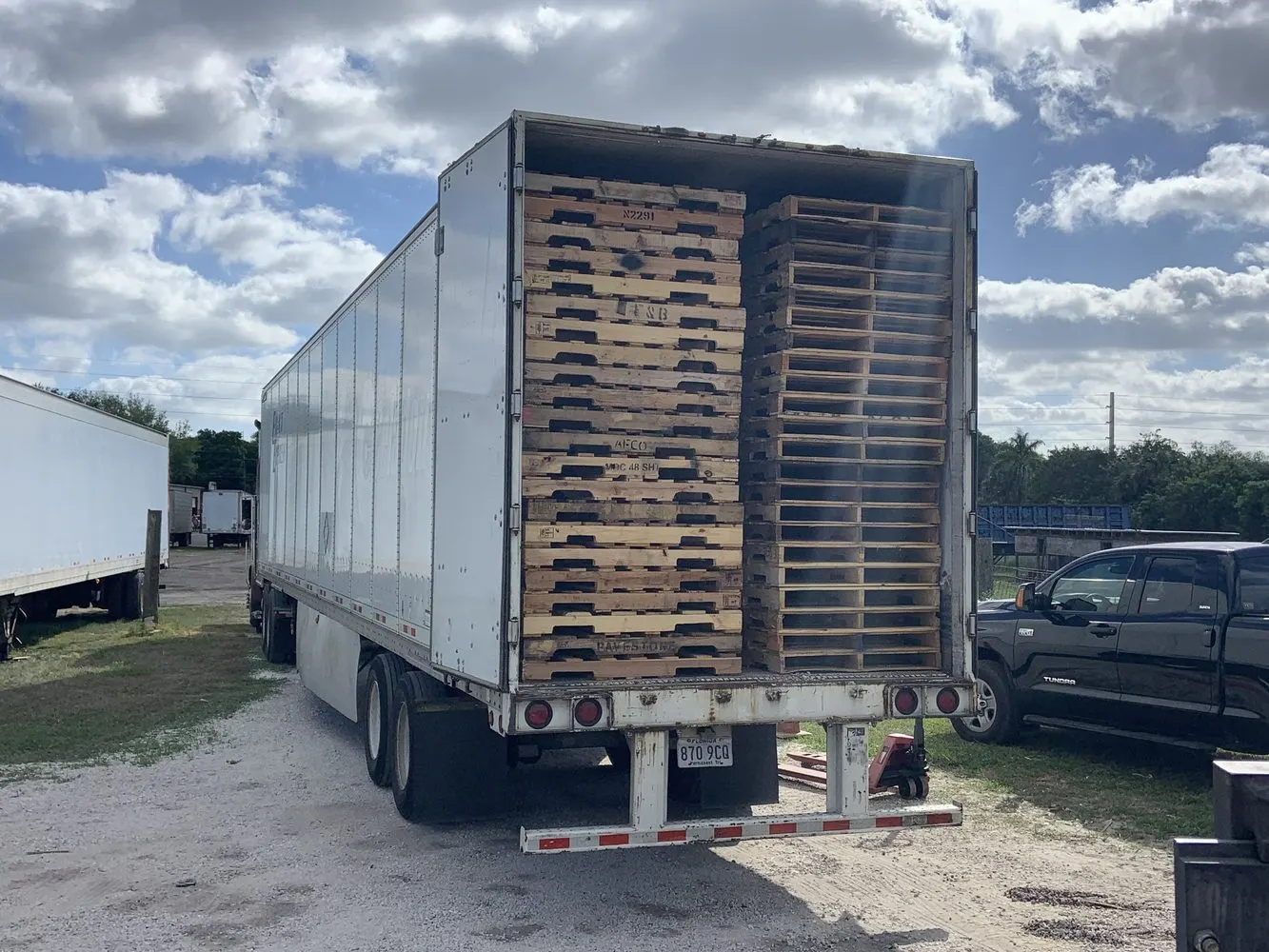
SYP lumber graded by SPIB for pallet and crate construction.
Yes, with ISPM-15 heat-treated pallets carrying IPPC stamps and full ISPM-15 documentation. Required for international shipments to all WTO member countries. Common for Washington customers with port access via Washington's major export gateways.
Yes. We buy back used pallets from Washington collectors, recyclers, and warehouses - 250-pallet minimum per load, single-size only (no mixed-size loads). Fast ACH payment, typically same-day or net-7 depending on volume. Pickup arranged on standard outbound delivery routes.
Net-30 credit terms standard after the first 1-3 prepaid or COD loads while credit is being established. Submit a credit application with three trade references; approval typically processes within 48 hours. Volume accounts can negotiate net-45 or net-60.
Same-day shipping in our Southeast/Mid-Atlantic core (FL, GA, AL, TN, MS, SC, NC, KY, VA) and scheduled weekly delivery elsewhere. Express options available for Washington rush orders. Quote response under 2 business hours, dispatch within hours of order confirmation.
Yes. We deliver to every commercial address in Washington, with same-day shipping standard in our Southeast/Mid-Atlantic core and scheduled weekly delivery elsewhere. Washington-area accounts are typical - submit a quote with your dock location and we route accordingly.
Response under 2 business hours.
Heat-treatment chamber maintained at 56C core for 30 minutes per ISPM-15 Annex 1; each load shipped with a treatment certificate signed by a USDA-registered inspector.
Pacific Northwest forest-products shippers at Port of Longview, Port of Vancouver USA, and Port of Olympia require heavy-duty pallets for lumber, plywood, and OSB loads; we supply reinforced stock rated for sustained 8,000 lb static load.
Washington State Department of Agriculture phytosanitary rules require ISPM-15 documentation on pallets carrying treated apples, cherries, and hops; our heat-treated stock with phytosanitary certification serves Wenatchee, Yakima, and Tri-Cities packers.
Standard 48x40 GMA pallets feature 5/8 inch deck boards with a 4-board face pattern; bottom configuration is 3-board for four-way fork entry; nail pattern uses 2.5 inch screw-shank galvanized fasteners.
Custom 42x42 pallet builds use 7/8 inch deck boards for telecommunications-equipment loads; nail-pattern density doubled to handle 5,000 lb static load; runner spacing optimized for 4,000 lb-capacity narrow-aisle reach trucks.
Flatbed delivery handles oversized loads or pallets with overhanging product; tarping included; preferred for export crates and bulk lumber shipments.
Restaurant supply distributors move pallets between regional warehouses and individual restaurants on small-truck (26-foot box truck) routes; we offer mini-pallet 24x24 and 32x32 builds for restaurant kitchen door access.
ISPM-15 export documentation included on every applicable load at no additional cost; some competitors charge $50-150 per load for the certificate; we don't.
Sustainability reports provided quarterly to standing-order customers; documents pallets recycled, lumber diverted from landfill, and CO2-equivalent savings vs new-only sourcing.